
About the Author
Charlie Kirk (October 14, 1993 – September 10, 2025) was the founder of Turning Point USA, a conservative organization; the host of The Charlie Kirk Show podcast; and the author of several books, including The College Scam and Stop in the Name of God. He became one of the most recognizable conservative voices in America.
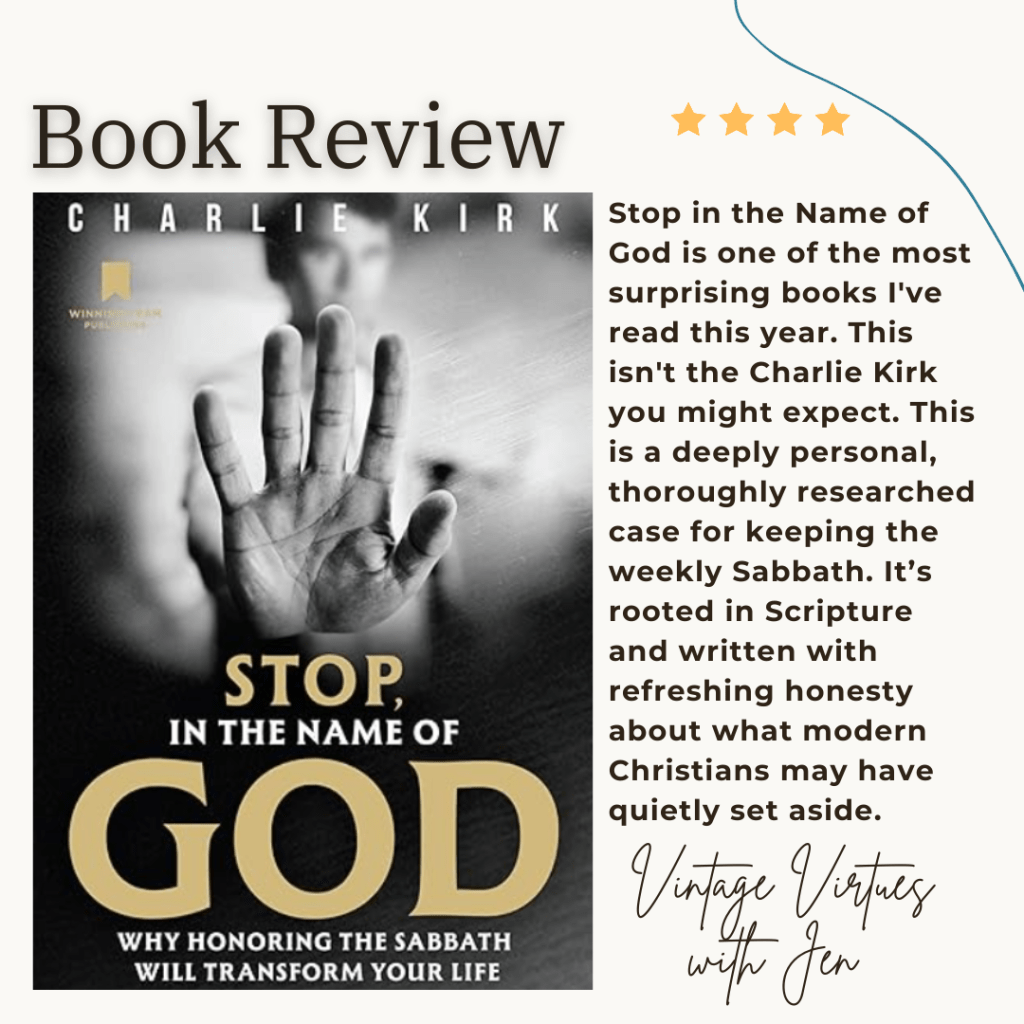
Stop in the Name of God is not the political commentary readers might expect from Kirk. Instead, it is a refreshing, deeply personal, and rigorously researched work born out of a simple question: Are you honoring the Sabbath? That question launched Kirk into an obsessive season of study, prayer, and biblical research that ultimately became this book.
Synopsis
What begins as a question about Sabbath observance quickly unfolds into something far more expansive. Stop in the Name of God is part biblical theology, part cultural diagnosis, and part personal manifesto. Kirk draws on Genesis 1:1, weaving together biblical data and scientific insight to build a thoughtful, layered case for the weekly Sabbath. Along the way, he explores the names of God, refutes atheism, examines the nature of time, and traces the history of the Sabbath day from its origins through church history and its influence on Western civilization, all within the first few chapters.
The historical examination of how Sabbath observance was changed over time is among the most striking portions of the book. Kirk does not shy away from the uncomfortable questions this history raises for modern Christians, and his willingness to confront the tension between ancient commandment and contemporary church practice gives the book an unusual and refreshing honesty.
Charlie Kirk guides readers through material that is at once scholarly and deeply pastoral, accessible to the general reader while still substantive enough to challenge those well-versed in theology and church history.
Key Points
- Opens with Genesis 1:1 and builds a biblical and scientific case for the Sabbath
- Explores the names of God and engages seriously with atheism
- Traces the history of Sabbath observance from ancient Israel through the early church and into Western civilization
- Examines humanity’s design for worship and the consequences of misplaced devotion
- Addresses the health benefits of Sabbath rest, drawing on research from Adventists and other Sabbath-keeping communities
- Discusses technology addiction, dopamine, and the impact of social media on mental health
- Advocates for the ethical treatment of animals
- Connects Sabbath to the dignity of all people
- Engages directly with Christian objections to Sabbath-keeping and examines the views of Martin Luther and John Calvin
- Describes Jewish practice and the rituals of Shabbat, and what Christians can learn from them
- Offers ten reasons to honor the Sabbath and practical steps for doing so
- Calls readers to reject digital distraction and embrace genuine connection and intentional rest
Strengths
- The historical research is thorough and genuinely illuminating, particularly regarding how the Sabbath day was altered through church history
- Kirk engages seriously with Christian objections to Sabbath observance, including the perspectives of Martin Luther and John Calvin, rather than dismissing them
- The chapter on mental health is compelling and timely, connecting the dots between social media, dopamine, and the human need for a day of rest
- Kirk’s treatment of slavery in the Bible is careful and well-argued, showing how the Sabbath elevated the dignity of servants, foreigners, and the marginalized
- The personal and pastoral tone in Chapter 9 is particularly powerful, written with evident vulnerability and spiritual weight
- The book challenges readers to see Sabbath observance not as legalism but as freedom, framing rest as the inheritance of the redeemed rather than the reward of the productive
- Practical insights in the later chapters make the book actionable, not merely theoretical
- Kirk makes a compelling case that Sabbath rest is, in the modern context, a radical act of resistance against the cult of productivity and constant noise
Weaknesses
- Readers expecting Kirk’s familiar political voice may be surprised by the devotional nature of the material
- The breadth of topics covered, from cosmology to church history to mental health, is impressive but can occasionally feel like a lot to absorb in a single read
- Some readers from a strictly Reformed background may take issue with how Kirk engages with the Sabbath question as it relates to the New Covenant, though he addresses this thoughtfully
Personal Reflection
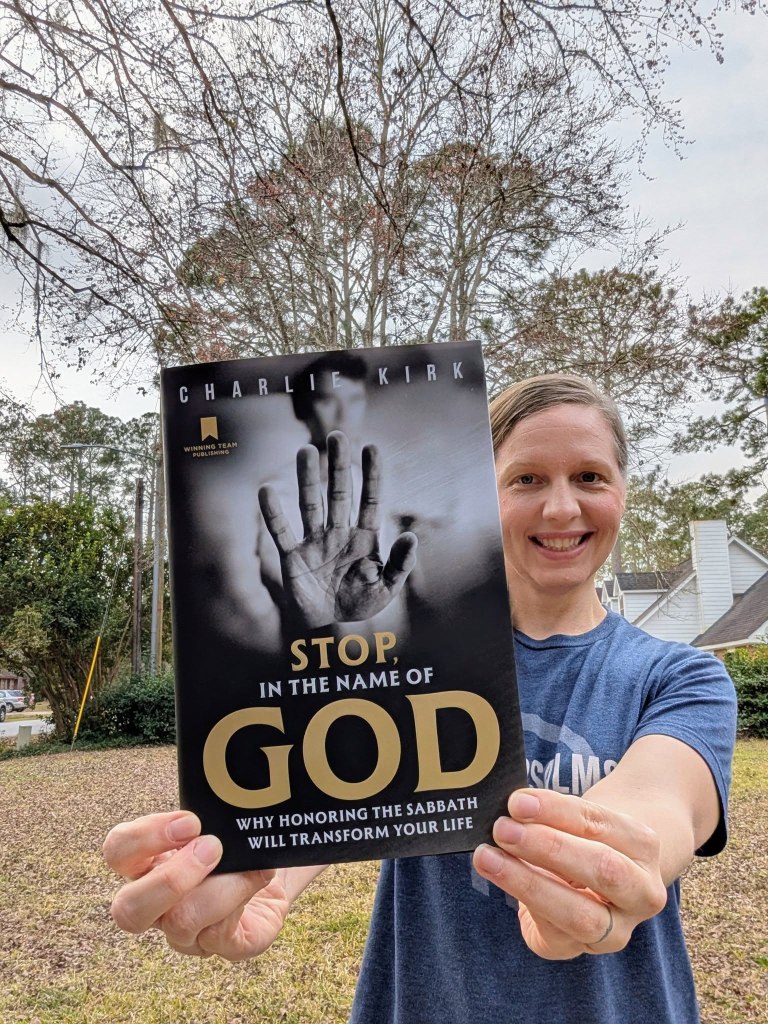
Stop in the Name of God surprised me. I picked it up expecting a straightforward treatment of the benefits of keeping the Sabbath, and instead found a book that is sweeping in its scope, serious in its scholarship, and rich in its spiritual honesty.
Chapter 6 hit particularly close to home. As a blogger and content creator, Kirk’s observations about technology addiction, social media, and the dopamine-driven nature of digital life were convicting. The research he cites connecting sabbath observance to better mental health, higher life satisfaction, and greater emotional stability is striking, and his point that “silence with God can heal what no therapy, drug, or achievement can touch” lingers long after the chapter ends.
The words at the close of that chapter are worth sitting with slowly. Slaves don’t rest. Only the free do. We were not rescued to earn our rest. We were rescued to receive it. That reframing of the Sabbath, not as obligation but as covenant inheritance, is one of the most clarifying things I have read on the subject.
Chapter 9 is written specifically to Christians. His honesty about the tension he felt in confronting a commandment that much of the modern church has quietly set aside is disarming. He does not berate. He reasons, he pleads, and he asks hard questions with genuine humility.
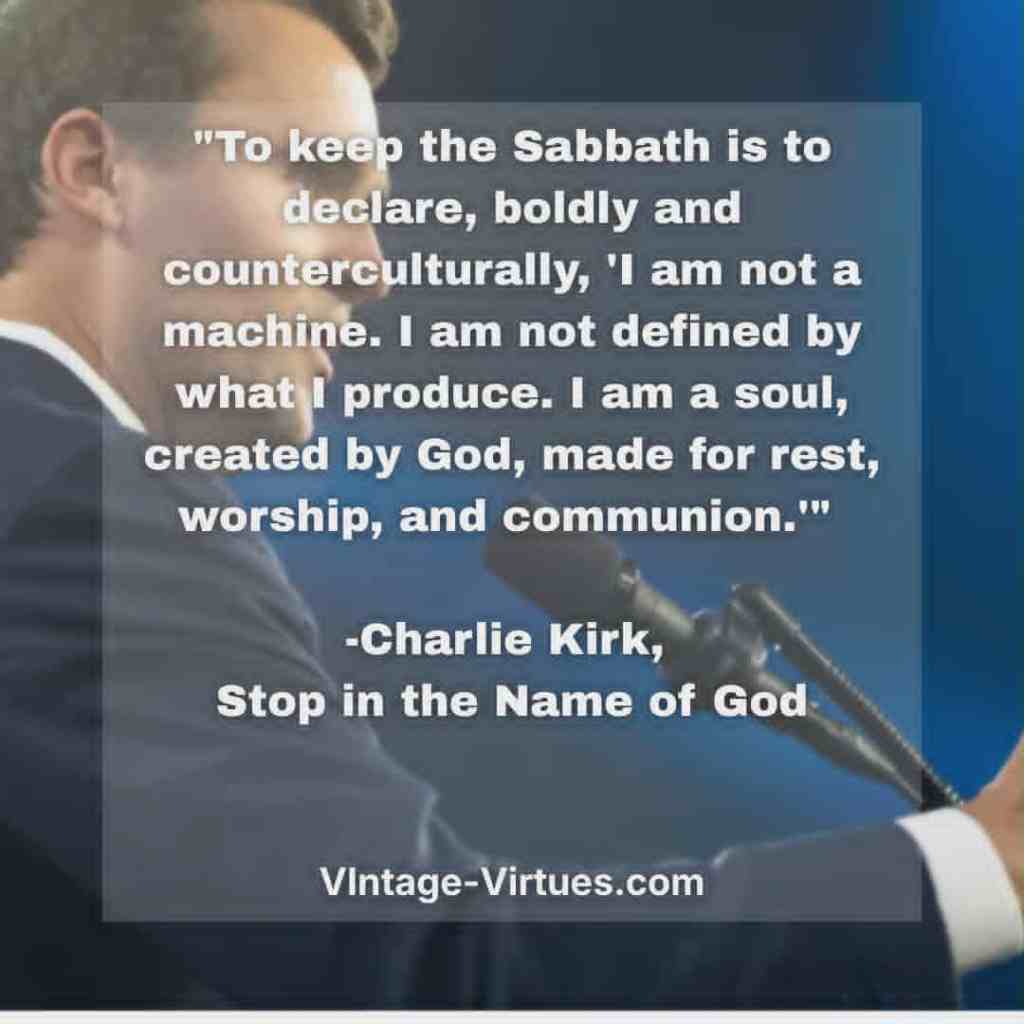
“I’ve spent years asking these questions with my Bible open and my heart burdened, trying to reconcile what feels like a glaring tension in scripture. There’s something deeply raw in confronting the reality that the same God who thundered commandments from Sinai, who etched the Sabbath into stone with his own finger, is now, according to many in the church, somehow content for that command to be obsolete. That feels jarring. At times, almost irreverent.”
—Charlie Kirk, Stop in the Name of God
Kirk’s engagement with Jewish practice and the meaning of Shabbat Shalom is handled with genuine respect and theological care. He is not calling Christians to Jewish ritual, but rather holy rest for all people.
Kirk argues that the Sabbath is the most neglected commandment among modern Christians and that this neglect is not without consequence. His final chapters offer both a challenge and an invitation: to reject the rejection of modern life’s relentless pace, to restore the moral order of time, and to honor the living God by simply stopping.
This book will step on toes. It is meant to. If you are willing to sit with the discomfort, you may find, as I did, that those toes needed stepping on.
Source Citation
Kirk, Charlie. Stop in the Name of God. Authors Note Press / Team Publishing, 2025.
Affiliate Disclosure
This post contains affiliate links. As an Amazon Associate and affiliate of other brands, I may earn a small commission from qualifying purchases. This is at no extra cost to you and helps support Vintage Virtues’ work. Thank you! See full Affiliate Disclosure here.
“Stop in the Name of God by Charlie Kirk: A Book Review” Copyright © 2026 Vintage Virtues. All rights reserved. No portion of this review may be reproduced without express written permission


Leave a Reply