
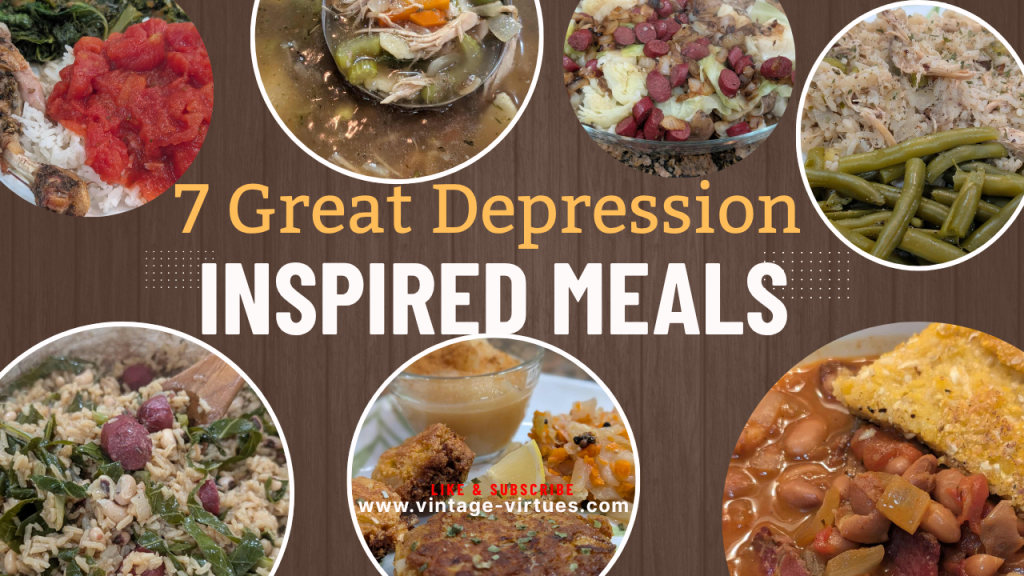
Between ongoing wars and rumors of war, tariffs, inflation, fertilizer and oil concerns, and rising anxiety over food costs, I’ve noticed that my article, “Mom’s Diner: Great Depression (1930s & 40s) Inspired Dinners,” is hitting an all-time high in traffic. So I’m sharing another week of Great Depression era-inspired meals for your family to try. The goal is simple: affordable meals that are filling, nourishing, and made to sustain a family through harder economic times. These practical, Great Depression-era-inspired meals are built around the same frugal principles that helped families feed themselves well during hard times.
This week, we’ll make Rustic Cabbage and Potatoes with Beef Sausage, Herb-Roasted Chicken Supper with Rice, Stewed Tomatoes, and Turnip Greens, Old-Fashioned Chicken Soup with Hand-Rolled Egg Noodles, Vintage Chicken & Rice Supper, Crispy Salmon Patties with Old-Fashioned Sides, Smoky Hoppin’ John with Beef Sausage and Greens, and Spiced Pinto Beans with Hot Water Cornbread and for desserts, Pinto Bean Pie and Old-Fashioned Baked Apples.
These recipes utilize whole foods and affordable, budget-friendly ingredients and, due to sensitivities in our household, are naturally gluten-free and dairy-free. Of course, you can customize these meals to your own dietary preferences.
Great Depression Meals Were Built on Strategy as Much as Ingredients
During the Great Depression, families became resourceful. This period taught earlier generations to stretch simple ingredients. Without the ability to visit stores freely, households relied on techniques that turned basics into satisfying meals.
These vintage recipes weren’t just about surviving on a tight budget. They were about dignity, tradition, and gathering the whole family around the table, even when times were hard. During this time, women became experts at turning inexpensive ingredients into comfort foods that nourished both body and soul. Perhaps that’s why there’s nothing quite like Grandma’s cooking.
One of the Smartest Thrift Strategies: Stretch One Chicken Across Multiple Meals
These recipes are inspired by that same Depression-era grit: simple, thoughtful, and still good enough to want on your table now. During the Great Depression years, fresh meat was often in short supply or too expensive for most families. When a chicken was purchased, nothing went to waste. Every part was used. That single bird could feed a large family for days.
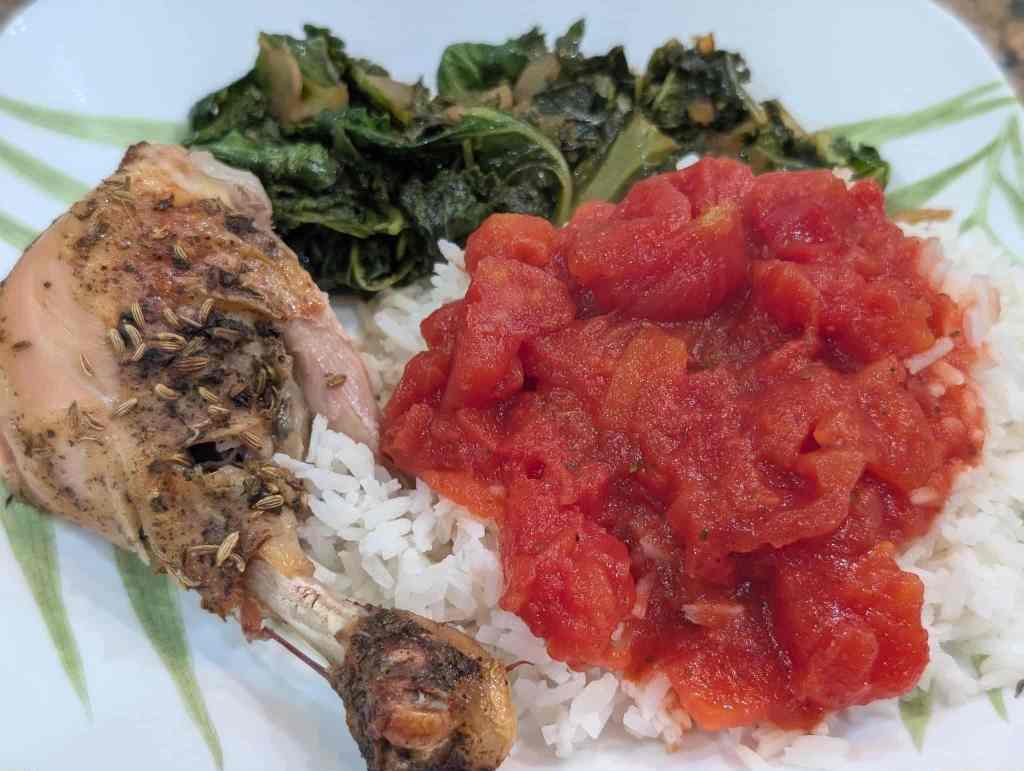
1. Herb-Roasted Chicken Supper with Rice, Stewed Tomatoes, and Turnip Greens
This whole chicken served as the base of three meals. It’s slow-roasted with simple herbs until it’s falling-off-the-bone tender, served with classic Depression-era sides.
The trick to baked chicken that’s full of flavor and falling off the bone is to cook it slow and low. Drizzle the chicken with about 1/4 cup of oil or butter, the juice of a lemon or vinegar (I used Apple Cider Vinegar), and finally salt, pepper, and Italian herbs to taste. Bake covered at 300°F for 2½ hours, then uncover and finish at 400°F for 30 minutes to get that beautiful golden-brown top. I served this chicken with classic Depression-era sides of steamed white rice, stewed tomatoes, and southern greens.
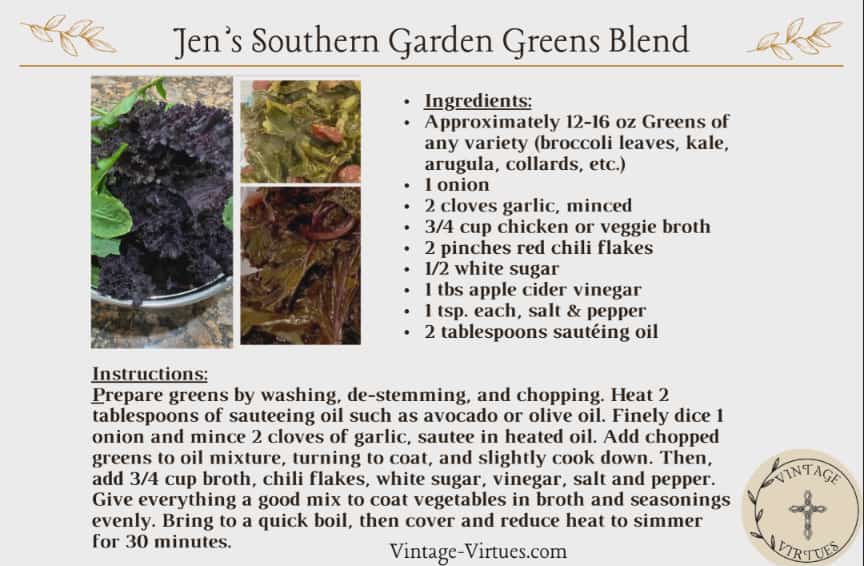
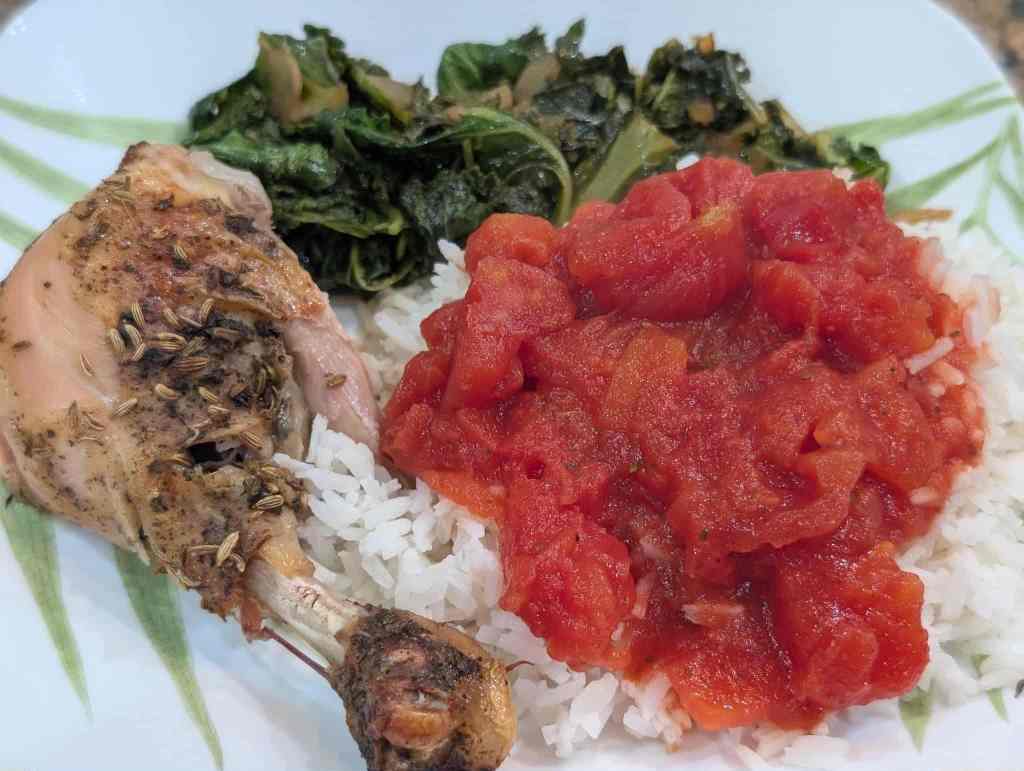
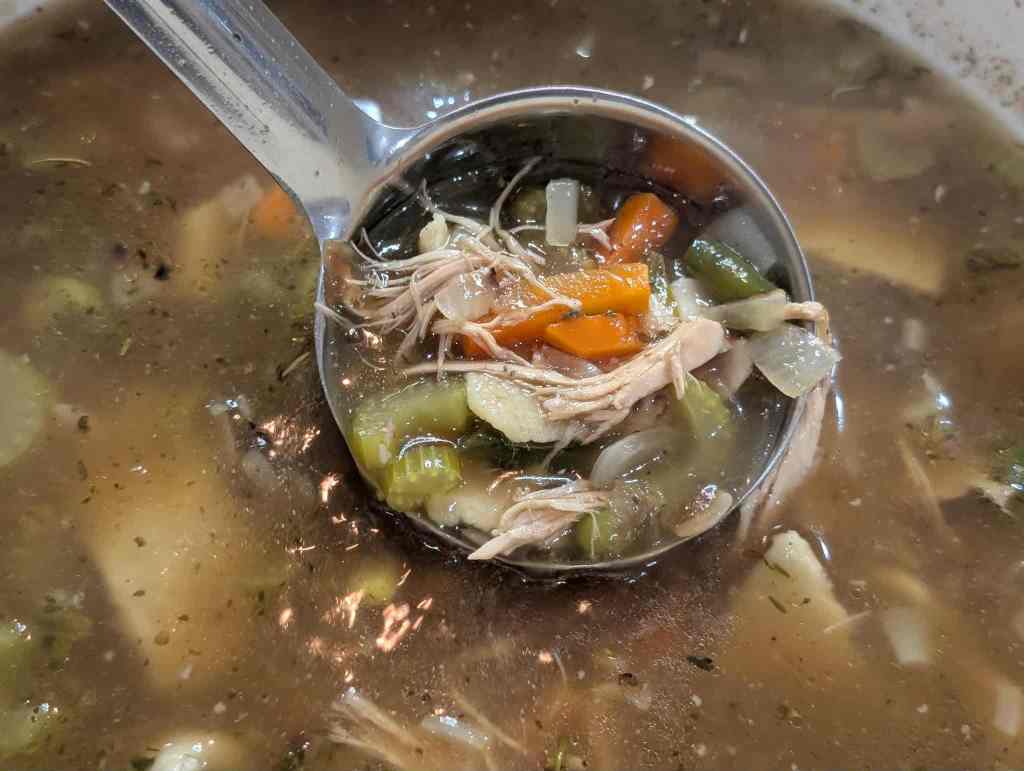
2. Old-Fashioned Chicken Soup with Hand-Rolled Egg Noodles
This simple chicken soup is one of the best ways to stretch a roasted chicken into another full meal. Start by simmering the leftover chicken frame to make a rich homemade broth, then add a few basic vegetables and tender hand-rolled noodles for a comforting, old-fashioned supper. This soup is a perfect example of how one chicken can be stretched into multiple meals.
Ingredients:
For the broth:
- 1 chicken frame
- 12 cups water
- Salt, to taste
- Black pepper, to taste
- 2 pinches red pepper flakes
- 1 generous splash apple cider vinegar
For the soup:
- 1 tablespoon oil or butter
- 1 onion, diced
- 2 celery ribs, diced
- 8 cups homemade chicken broth
- 1 cup leftover shredded chicken, to taste
- 1 cup assorted diced vegetables
(I used a frozen vegetable blend.) - Salt and black pepper, to taste
For the hand-rolled noodles:
- 100 grams plain gluten-free flour blend, plus extra for dusting
(or plain all-purpose flour if not gluten-free) - 2 large eggs
- 1/2 tablespoon olive oil
Instructions
- Make the broth: Place the chicken frame, water, salt, pepper, red pepper flakes, and apple cider vinegar in a pressure cooker or large stockpot. Pressure cook according to your cooker’s instructions, or simmer gently on the stovetop until the broth is rich and flavorful. Strain well.
- Reserve broth: Measure out 8 cups broth for the soup and reserve the remaining 4 cups for the chicken and rice bake, or another meal.
- Start the soup: In a large pot, heat the oil or butter over medium heat. Sauté the diced onion and celery until softened, about 5 minutes.
- Build the soup: Add the 8 cups broth to the pot. Season with salt and black pepper to taste. Stir in 1 cup of shredded chicken and 1 cup of diced vegetables. Bring to a gentle boil.
- Make the noodles: In a bowl, mix the flour, eggs, and olive oil until a dough forms. Turn out onto a lightly floured surface and knead just until smooth. Roll out thinly and cut into small squares.
- Cook the noodles: Drop the hand-cut noodles into the boiling soup and cook for 3 to 5 minutes, or until tender.
- Serve: Ladle into bowls and serve warm.
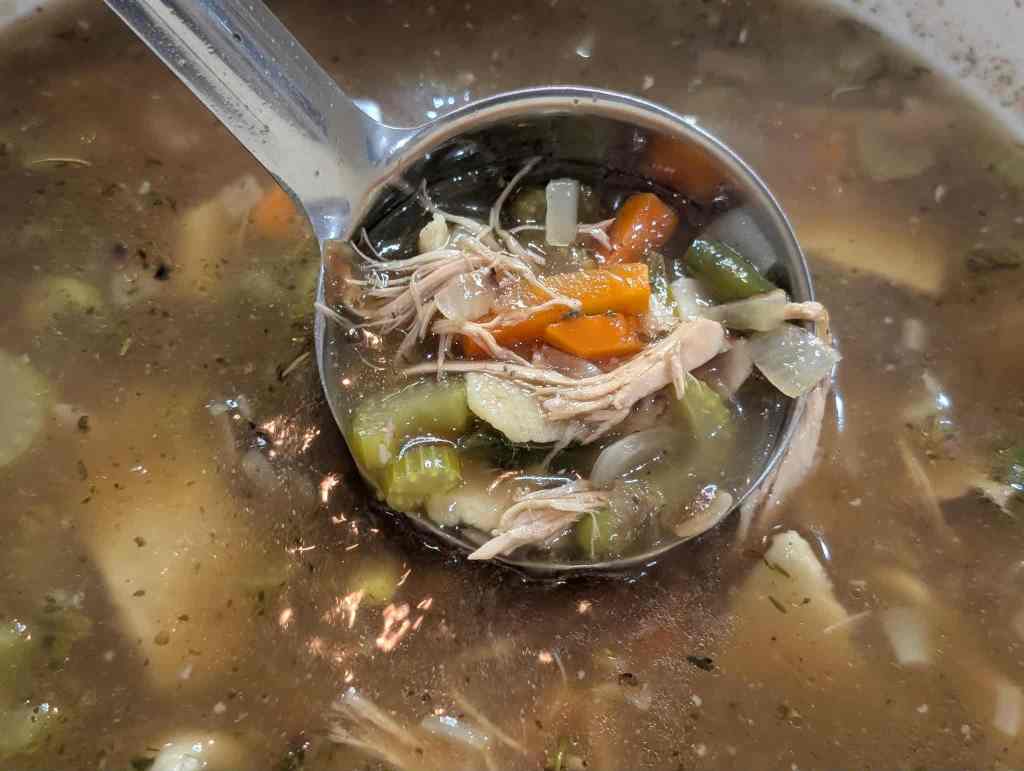
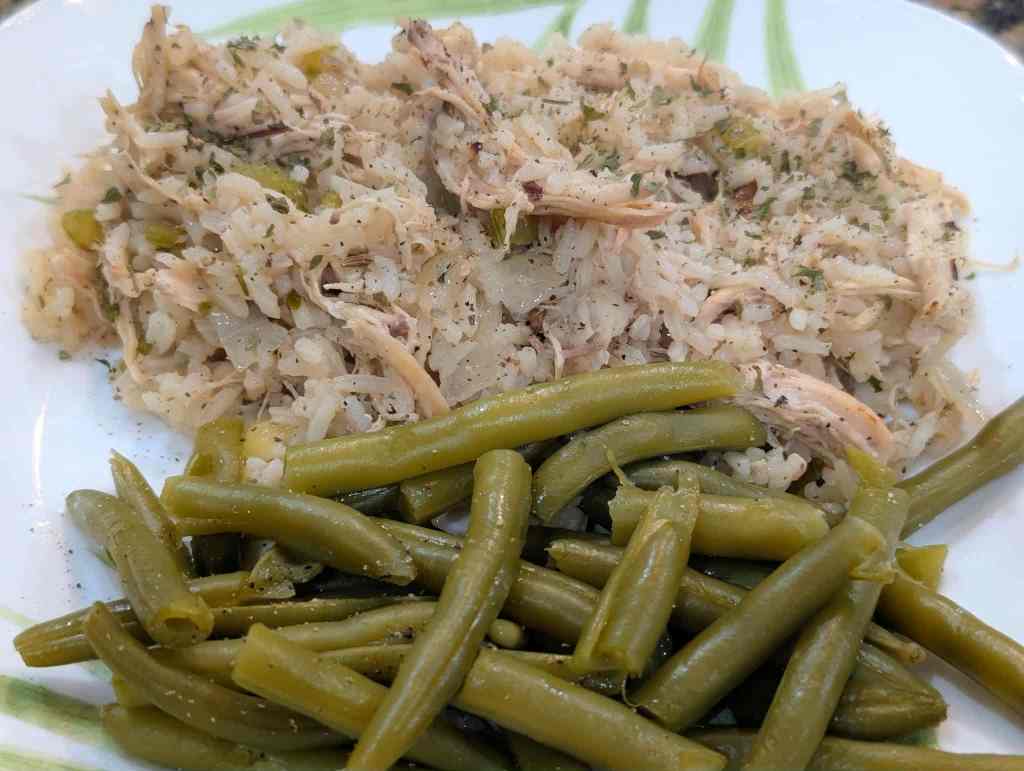
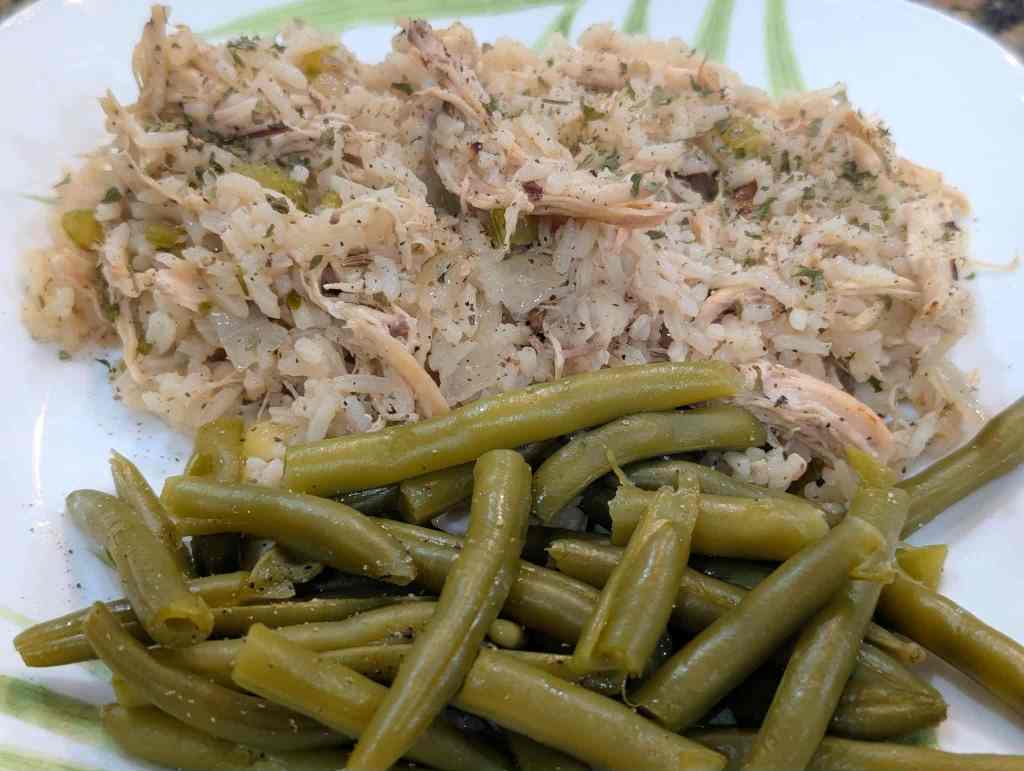
3. Vintage Chicken & Rice Supper
This is a simple, old-fashioned way to turn leftover chicken into another full meal. Depression-era cooks were careful not to waste a thing, picking every bit of meat from the bones and stretching it with rice, broth, and a few basic pantry staples. The result is a comforting, flavorful, and filling supper that comes together with very little fuss.
Ingredients
- 1 to 2 cups shredded chicken
- 4 cups chicken stock
- 1 onion, diced
- 2 celery stalks, diced
- 4 tablespoons butter (I used dairy-free butter), or oil
- 1 1/2 cups rice
- Salt and black pepper, to taste
Instructions
- Melt the butter, or heat the oil, in a large pot or deep skillet over medium heat.
- Add the diced onion and celery and sauté until softened and the onion is translucent, about 5 to 7 minutes.
- Stir in the shredded chicken, rice, chicken stock, and salt and pepper to taste.
- Bring the mixture to a boil, then reduce the heat to low.
- Cover and simmer for about 30 minutes, or until the rice is tender and most of the liquid has been absorbed.
- Fluff gently with a fork and serve warm.
Frugal Mainstays:
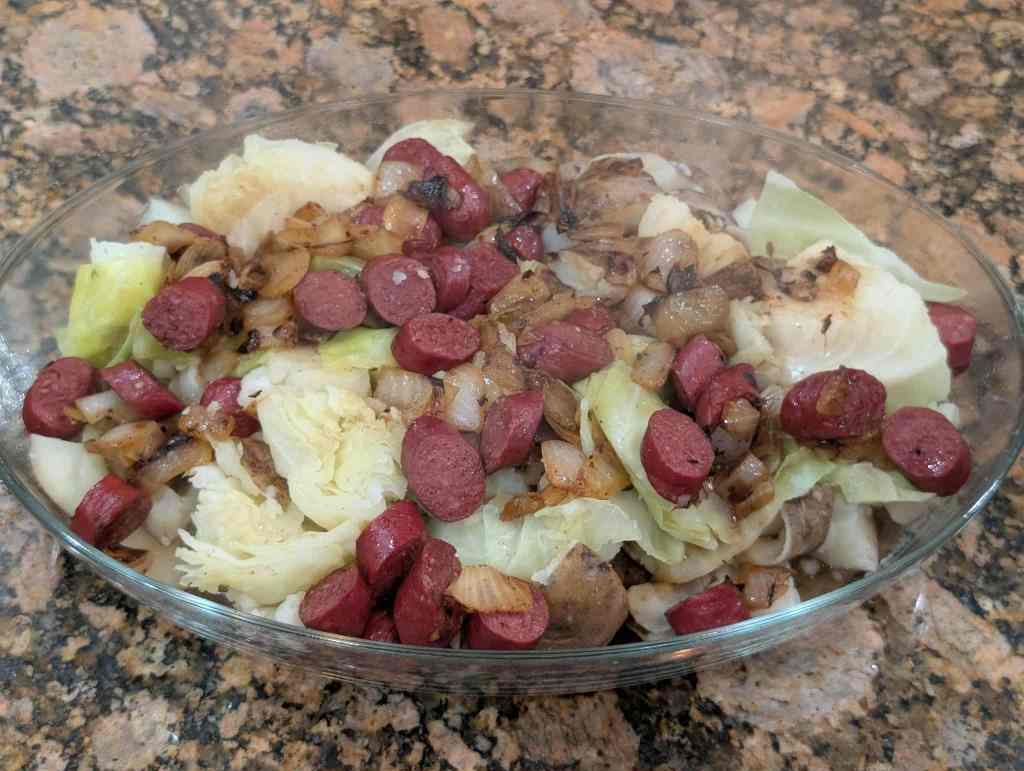
4. Rustic Cabbage and Potatoes with Beef Sausage
Cabbage was a reliable and inexpensive staple during the Great Depression, and it still earns its place in a frugal kitchen today. Paired with tender potatoes and savory beef sausage, it turns into a simple skillet supper that is hearty, flavorful, and deeply satisfying. It’s proof that humble ingredients, cooked with care, can make a meal worth gathering around.
This is an easy dish to make and comes together quickly, making it a practical choice for busy weeknights or leaner times.
Instructions
- In a large skillet over medium heat, sauté the beef sausage and diced onion, adding a little oil if needed. Cook until the sausage is browned and cooked through, about 5 to 7 minutes.
- Add the broth or water, season with salt, black pepper, and a light sprinkling of Italian seasoning, and let it simmer briefly while the vegetables finish cooking.
- Meanwhile, bring a large pot of water to a boil. Add the quartered potatoes and cabbage and cook for 15 to 20 minutes, or until the potatoes are tender but still firm enough to hold their shape.
- Drain the cabbage and potatoes well, then transfer them to a serving dish or platter.
- Spoon the sausage and onion mixture over the top and serve warm.
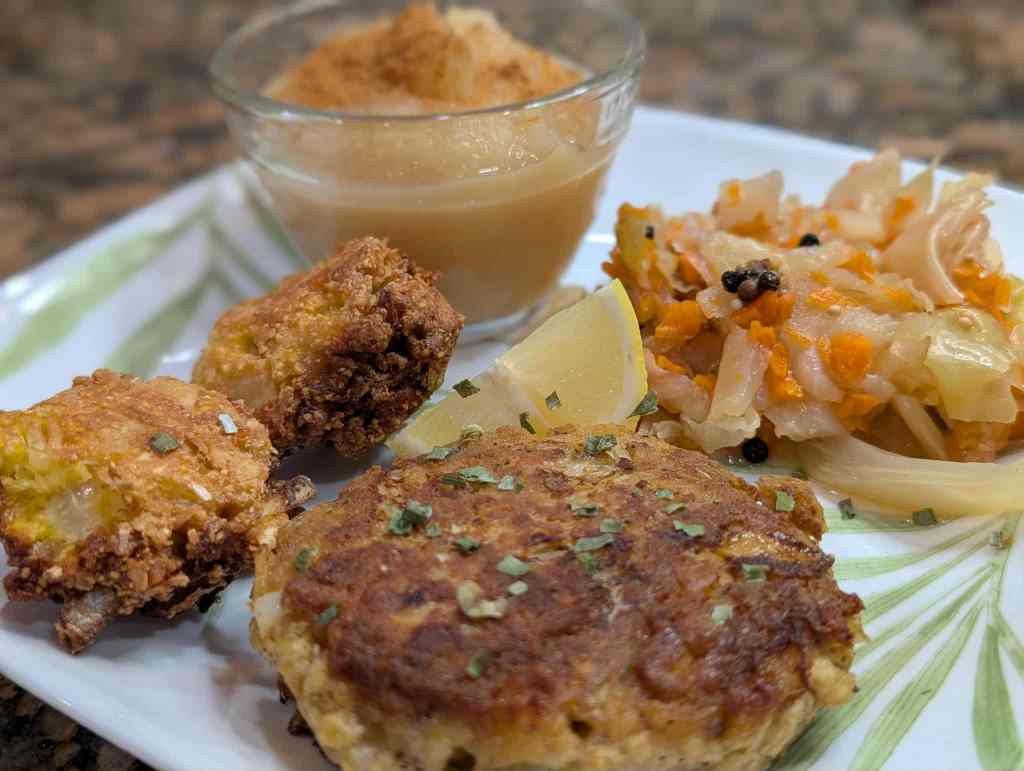
5. Crispy Salmon Patties with Old-Fashioned Sides
Canned salmon was affordable, shelf-stable, and widely available during the Great Depression, making it a practical way to put protein on the table without the cost of fresh meat. Salmon patties became a popular choice because they were simple, filling, and easy to make from pantry staples.
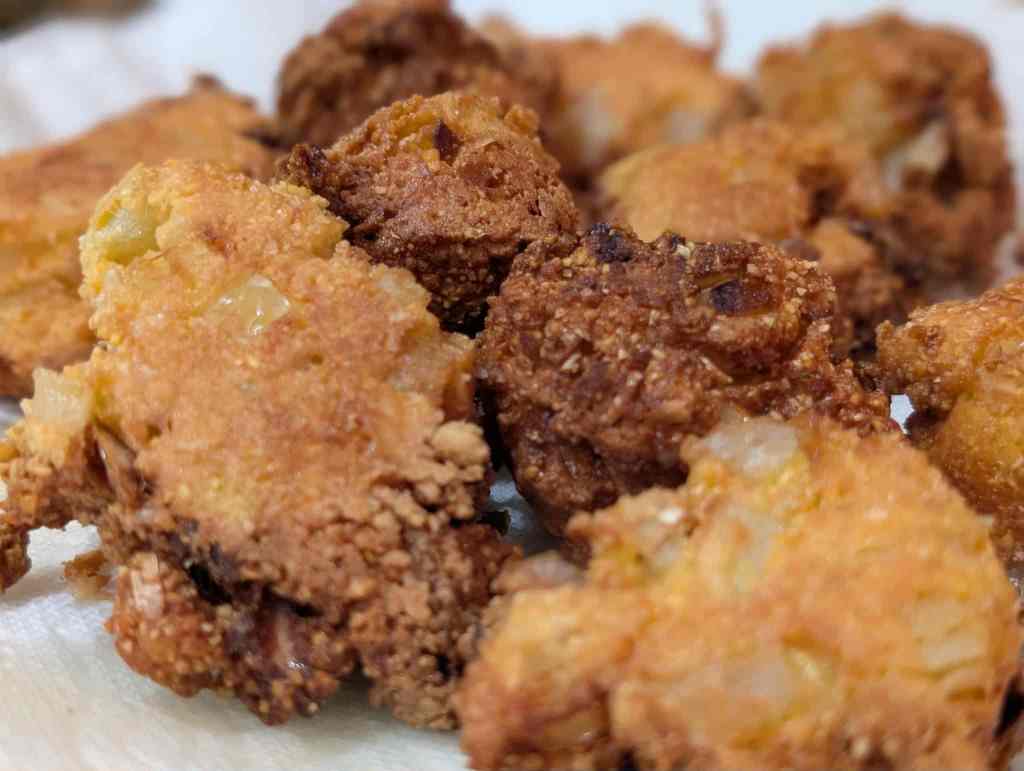
Hushpuppies, sometimes called red horse bread, have their own long Southern history and make a fitting companion to salmon patties. If you enjoy the stories behind these dishes, you may also like reading more about the history of hushpuppies, salmon patties, and how canned Alaska salmon became a Southern pantry staple.
I served my salmon patties with hushpuppies, home-canned cabbage relish, and applesauce, but they would also pair well with boiled cabbage, skillet potatoes, or coleslaw.
Inspired by the salmon patty recipe in How Canned Alaska Salmon Became a Southern Pantry Staple, here’s how I made mine:
For the salmon patties:
- 3 (6-ounce) cans salmon, drained well (18 ounces total)
- 1/2 onion, finely diced
- 1 cup crushed gluten-free matza crackers
- Salt and black pepper, to taste
- 4 eggs
- Oil, for frying
Drain the canned salmon well, squeezing out any excess moisture. Place it in a large bowl and mix with the diced onion, crushed matza crackers, salt, pepper, and eggs until the mixture holds together.
Form into patties. Heat oil in a skillet over medium heat and fry for 5 to 7 minutes per side, until golden brown and heated through.
For the gluten-free hushpuppies:
- 2 eggs
- 2 tablespoons raw cane sugar
- 1/2 onion, finely diced
- 1/2 cup coarse cornmeal
- 1/2 cup fine corn flour
- Oil, for frying
Mix all ingredients together until a thick batter forms. If desired, add a small splash of milk to loosen the batter slightly. Scoop small portions into hot oil and fry until golden brown, turning as needed so they cook evenly.
Serve warm with cabbage relish and applesauce, or other traditional sides such as a vinegar-based slaw and skillet potatoes.
6. Smoky Hoppin’ John with Beef Sausage and Greens
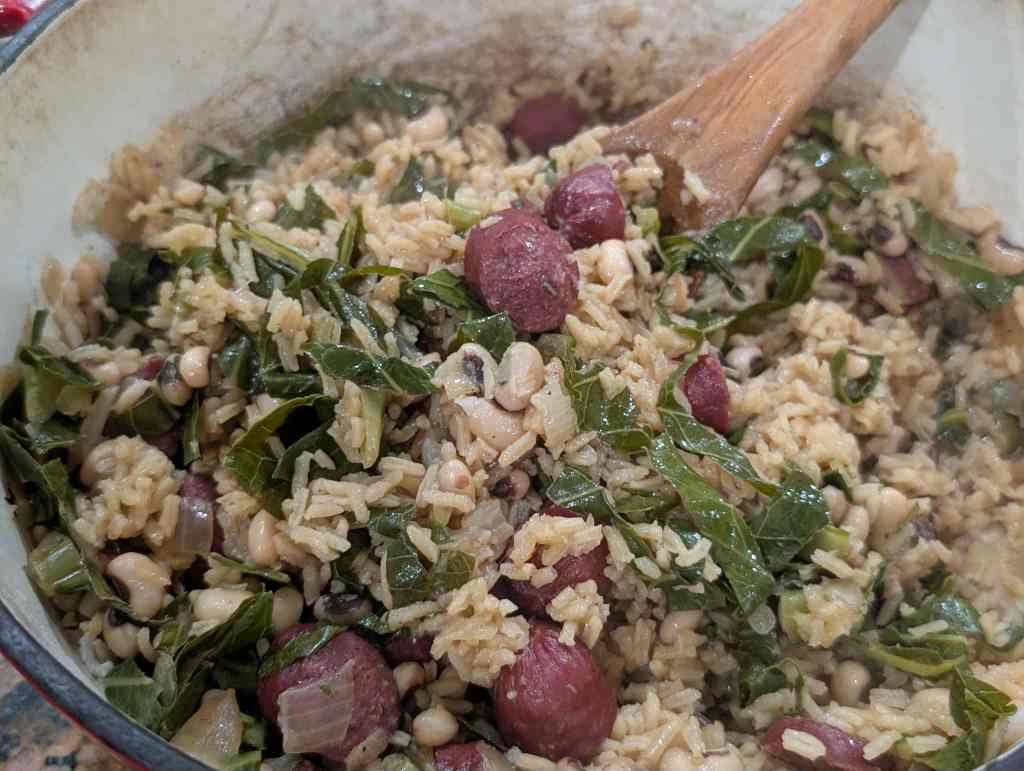
This Southern classic was a practical staple during the Great Depression. Dried beans and rice were inexpensive, shelf-stable, and filling, and Hoppin’ John made the most of all three. Built around black-eyed peas, rice, a little meat for flavor, and sometimes greens, it’s a good example of how Great Depression-era cooks stretched simple ingredients into a hearty meal that could feed a family well. If you enjoy food history, you might also like reading The Historic Problem With Hoppin’ John.
There are many variations and traditions surrounding this dish. For mine, I went back to a simple, economical base recipe and doubled it, using ingredients I already had on hand: black-eyed peas, rice, beef sausage, onion, a handful of greens, and enough broth and water to turn it into a one-pot supper with leftovers for lunch the next day.
Ingredients
- 2 cups black-eyed peas (I used frozen.)
- 2 cups rice
- 1 pound of beef sausage
- 1 onion, diced
- 1 handful of greens
- 4 cups broth or water (I used a combination of both.)
- Salt and black pepper, to taste
Instructions
Sauté the beef sausage and diced onion in a large pot until the sausage is browned and the onion is softened. Add the black-eyed peas, rice, greens, broth or water, and salt and pepper to taste.
Bring to a boil, then cover and reduce the heat to low. Simmer for about 30 minutes, or until the rice and black-eyed peas are tender and the liquid is absorbed. Serve warm.
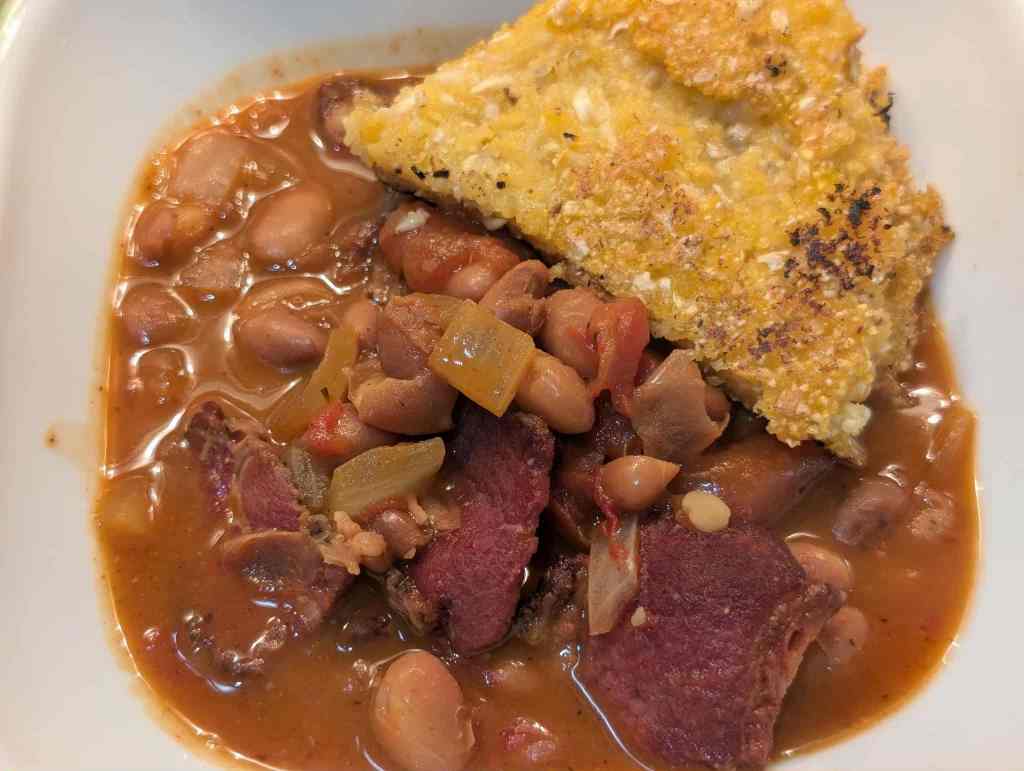
7. Spiced Pinto Beans with Hot Water Cornbread
Beans were a cornerstone of Great Depression-era cooking: filling, nutritious, inexpensive, and easy to stretch into a family meal. This spiced version adds a little extra flavor while still relying on humble ingredients. Beans, onion, bacon, tomatoes, and pantry spices that fit naturally into the frugal cooking traditions of the time and still make good sense today.
This simple pot of beans and bacon reminds me of Grandma’s cooking. Now that I’m a grandma myself, I find it just as comforting. For this meal, I cooked a full bag of pinto beans and used some here, saving the rest for the Vintage Pinto Bean Pie below.
To make the beans, I started with 1 pound of cooked pinto beans. In a cast-iron skillet, I sautéed 1 pound of bacon until cooked through. I then transferred the bacon to a Dutch oven, leaving the drippings behind in the skillet to fry the cornbread.
Next, I added 1 diced onion to the Dutch oven with the bacon and sautéed it for a few minutes over medium heat. Then I added the cooked beans, about 6 ounces of leftover tomatoes with their juice, 1 tablespoon of chili powder, 2 teaspoons of paprika, 2 teaspoons of cumin, 6 cups of broth, and salt and black pepper to taste.
Bring the beans to a boil, then reduce the heat and simmer for about 30 minutes, while you prepare the cornbread.
For the cornbread, mix together the ingredients from this Old-Fashioned Hot Water Cornbread recipe, then fry the batter in the reserved bacon drippings in the cast-iron skillet. Serve the hot water cornbread alongside the pinto bean stew.

Dessert
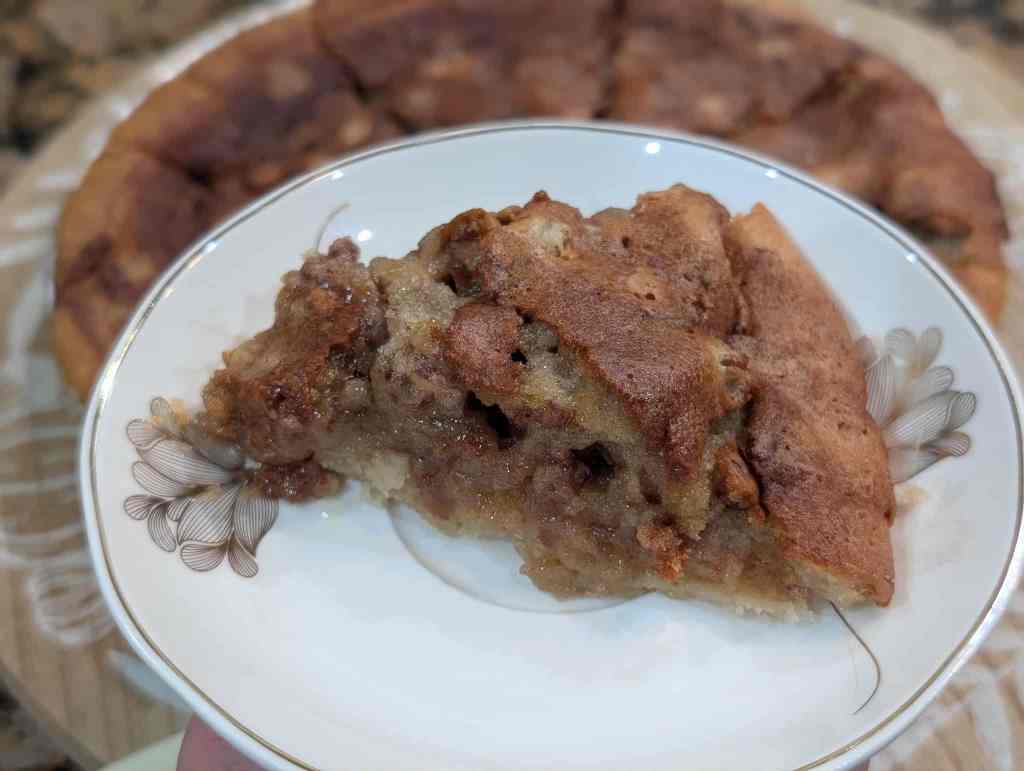
Vintage Pinto Bean Pie
When I told my husband I had made pinto bean pie, he assumed it would be something savory, more like a tamale pie. But no, this is an old-fashioned sweet pie with a flavor and texture surprisingly similar to pecan pie.
Using my Bosch Universal Plus Mixer was a nice, modern convenience when recreating this bean pie, with versions dating back to the 1800s. Thrifty pies like this became especially practical in Southern kitchens during leaner times, including the Great Depression. It was a clever way to turn a humble, inexpensive pantry staple into a dessert that still felt special.
We finished off the whole pie, which tells you everything you need to know. This is the recipe I used, with very good results: Vintage Pinto Bean Pie
Save $20 off Bosch Universal Mixer with code VINATGEVIRTUES
Old-Fashioned Baked Apples
When sugar was in short supply, expensive treats were often out of reach. Baked apples satisfied the sweet tooth without breaking the budget. This simple dessert uses ingredients that were often on hand and transforms them into something special. This was a common way to end a meal during the Depression era. It proves that delicious meals don’t require fancy ingredients or techniques. I used Great Depression Cooking with Clara’s Baked Apple Recipe.

More Depression-Era Recipes Worth Exploring
While the meals above cover a full week, there are many other Great Depression recipes worth knowing. Our ancestors were incredibly resourceful, using creative ways to stretch food and make it taste good despite the circumstances.
Additional Classic Depression-Era Dishes:
Potato Soup: Made with just potatoes, onions, and water or milk, this was a go-to hearty lunch when food supplies were running low.
Potato Pancakes: Grated potatoes mixed with a little flour and egg, then fried in bacon grease. These were the filling and used ingredients most families had.
Bread Pudding: Stale bread was never thrown away. Instead, it was transformed into a sweet treat with eggs, milk, and a little sugar.
Depression Cake (Wacky Cake): This chocolate cake needs no eggs, butter, or milk. You can bake it when those items are unavailable or unaffordable. It’s also called war cake because it was popular during the Depression and World War II, when food rations were in effect.
Vinegar Pie: When lemons were too expensive, vinegar provided the tangy flavor this surprisingly tasty pie needed.
Mock Apple Pie: Made with crackers instead of apples, this creative recipe fooled many people during times when fresh produce was scarce.
Peanut Butter Bread: A simple, quick bread that uses peanut butter as the main ingredient, providing protein and flavor.
Dandelion Salad: Foraging for dandelion greens was free, and they made a fine side dish when tossed with a splash of vinegar.
Mulligan Stew (Hoover Stew): Named after President Herbert Hoover, this stew used whatever vegetables and scraps were available. It was often served in soup kitchens or shanty towns.
Rice Pudding: Leftover rice was sweetened and baked with milk and eggs to create a comforting dessert.
Pea Soup: Dried split peas made a thick, filling soup that could feed a whole family for very little money.
Hot Water Pie: Made with hot water, sugar, butter, and flour, this pie shows just how creative people got with limited ingredients.
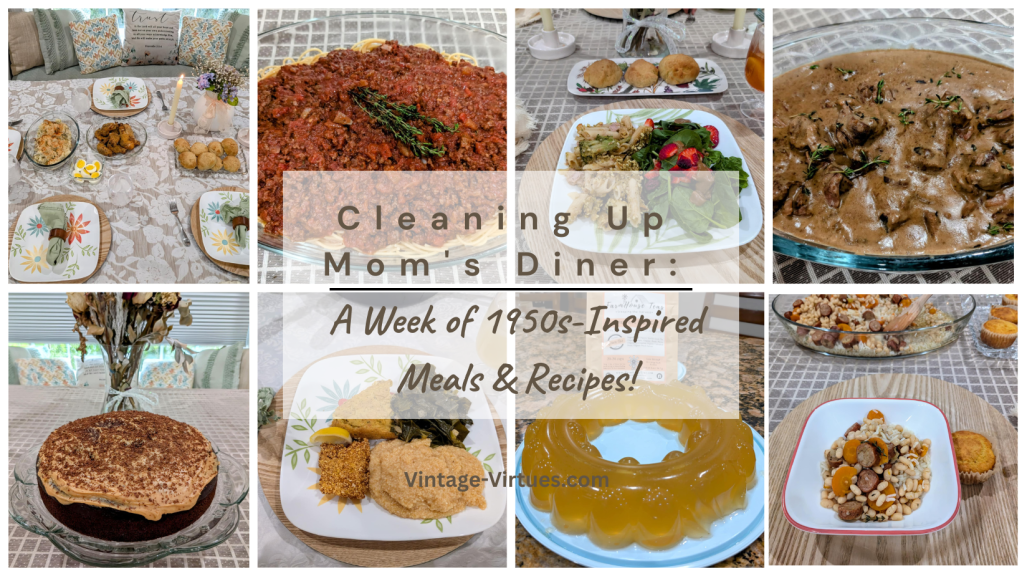
If you enjoyed this article + recipes, you might also enjoy my other era-inspired meals featured in Mom’s Diner: Great Depression (1930’s & 40s) Inspired Dinners and Cleaning Up Mom’s Diner: 1950s Meals & Recipes Made GF & DF.
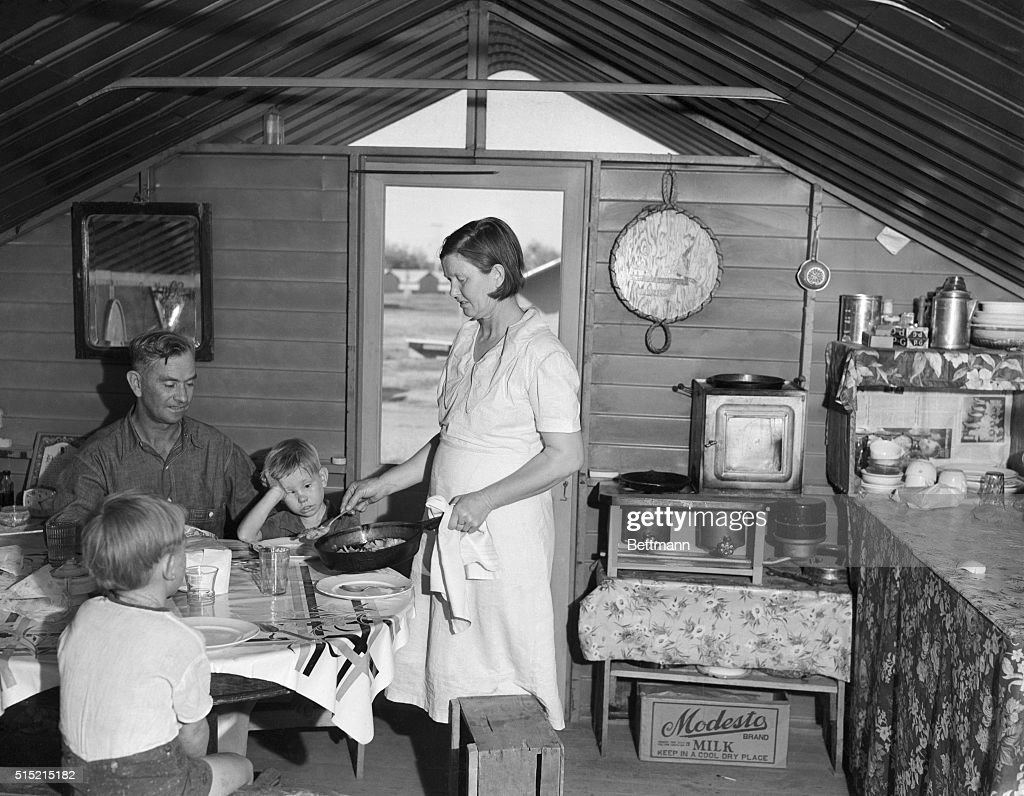
Lessons from the Depression Era Kitchen
What made our ancestors successful during the worst economic downturn in history wasn’t just the recipes. It was their mindset and approach to food.
Nothing Was Wasted: Animal fats were saved for cooking. Vegetable scraps made broth. Stale bread became bread pudding. Organ meats, which were cheaper than other cuts, were prepared to make them palatable.
Seasonal and Local: People ate what was in season and what grew locally. Italian immigrants and other ethnic groups brought their own food traditions, adapting them to use whatever ingredients were available.
Grow Your Own Food: Victory gardens and personal gardens meant families could grow their own food, supplementing what little they could afford to buy.
Community Sharing: Neighbors helped neighbors. Recipes were shared. When one family had extra, they shared with those who had less.
Creativity Was Key: When you couldn’t get the main ingredient for a recipe, you found a substitute. The result might be different, but it could still be delicious.
Make It Special: Even a simple piece of toast or a basic side dish was presented with care. Meals were an opportunity to gather the whole family and maintain some normalcy.
Adapting Depression-Era Wisdom for Today
While we hope never to face economic hardship like the Dust Bowl or the Depression, learning from those periods makes sense. These vintage recipes and the principles behind them can help us navigate our own uncertain times.
You don’t have to give up modern conveniences or fresh produce when it’s available. But knowing how to make delicious meals from inexpensive ingredients gives you options when money is tight. Understanding how to stretch protein, use every part of an ingredient, and create comfort foods from basic ingredients is valuable knowledge in any economic climate.
These Depression-era recipes aren’t just historical curiosities. They’re practical, tested solutions that helped entire families survive and even thrive during incredibly difficult circumstances. The same strategies that worked in shantytowns and on rural farms during the 1930s can work in our kitchens today.
Whether you’re facing a tight budget, preparing for hard times, or simply want to tap into the resourcefulness of previous generations, these meals offer both sustenance and inspiration. They remind us that good food doesn’t have to be expensive or complicated. Sometimes the most delicious recipes come from the simplest ingredients and the most challenging times.
Try making one or all of these meals this week. You might be surprised at how satisfying they are and how much your family enjoys them. And in learning these old recipes, you’re preserving important knowledge and honoring the resilience of those who came before us.
In tough times or good times, there’s value in knowing how to feed your family well without spending much money. These Great Depression-era-inspired meals are a great way to start.
Affiliate Disclosure:
This post contains affiliate links. That means I may earn a small commission, at no extra cost to you, if you make a purchase through one of these links. You can read the full disclosure [here]. Your support helps cover the cost of running Vintage Virtues and means so much.
 Vintage Virtues
Leave a comment