
This recipe has moved!
You can now find the updated and fully formatted version of this recipe on my new site, Gluten-Free Heritage — where I’m sharing all my favorite recipes made with fresh-milled, gluten-free grains.
👉 Click here to view the full recipe: Fresh Milled Gluten-Free Cup4Cup Flour Blend Recipe – Gluten Free Heritage
There’s nothing quite like the taste of fresh, homemade baked goods. But if you’ve ever baked gluten-free, you know the challenge: finding a reliable cup-for-cup gluten-free flour substitute that’s both affordable and truly fresh. Store-bought blends can work in a pinch, but they’re often expensive and made with “dead flour.”
Dead flour is the kind that’s been sitting for months in warehouses and on store shelves, slowly losing nutrients and flavor. Many blends are also refined, bleached, and then fortified with artificial vitamins. Then some blends just aren’t enjoyable (garbanzo-based blends are not my favorite).
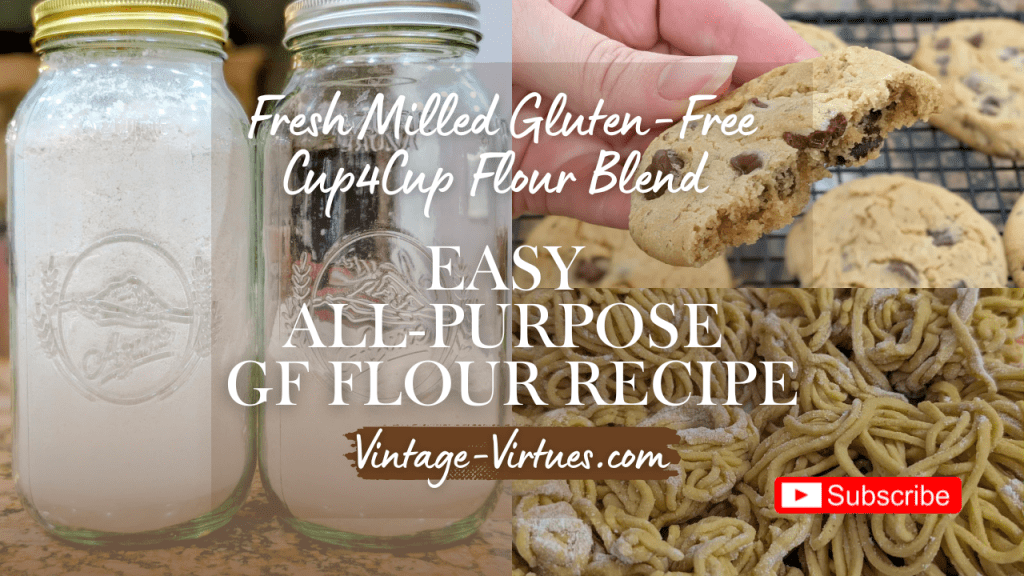
That’s why I blend my own all-purpose, fresh-milled gluten-free flour blend. After conducting research and testing, I discovered a simple recipe that has been successful in everything from pasta to these Soft Flaxseed Chocolate Chip Cookies (Vegan, GF, DF, FMF). Best of all, it’s made with whole grains you can mill yourself for maximum flavor and nutrition!
I created this blend using my NutriMill Classic grain mill and a simple mix of gluten-free flours and starches. Milling the grains at home produces a fine powder that tastes fresher and retains more of the natural nutrients. According to FoodStruct, Brown rice and sorghum both offer a range of vitamins, but they differ in their specific content. Brown rice is a good source of vitamin B6, vitamin B1, thiamine, niacin, and selenium, while sorghum is richer in vitamin B6, copper, vitamin B1, selenium, zinc, iron, magnesium, manganese, phosphorus, and vitamin B12. If you’ve been thinking about making your own flour blend, it’s easier than you might expect.



The Recipe: Fresh Milled Gluten-Free All-purpose Cup4cup Flour Blend
Ingredients (by weight)
- 300 g brown rice flour (fresh milled)
- 240 g white rice flour (fresh milled)
- 240 g sorghum flour (fresh milled)
- 180 g tapioca starch (sometimes labeled tapioca flour)
- 120 g arrowroot powder
- 12 g xanthan gum
This recipe filled up one 32-ounce jar and half of another. For best results, I recommend using a kitchen scale to measure your ingredients. Measuring by grams is more accurate than scooping cups of flour.
Why This Simple Blend Works
- Brown rice flour + white rice flour provides a balance of whole grain flour and neutral flavor. Milling it to a superfine texture makes a considerable difference in terms of texture.
- Sorghum flour adds a mild, wheat-like taste similar to soft white wheat or hard white wheat.
- Tapioca starch & arrowroot provide lightness, chew, and elasticity in breads and crusts.
- Xanthan gum replaces gluten’s binding power for structure. You only need a small amount, but it makes all the difference.
This gluten-free blend can be used as a cup-for-cup substitute for regular flour in most baked goods and gluten-free recipes. It has worked beautifully for me in both homemade pasta and chocolate chip cookies.
Tips for Success in Gluten-Free Baking
- Bring ingredients to room temperature, especially eggs and milk.
- If the recipe calls for bread flour, try adding psyllium husk for more elasticity.
- There may be a learning curve if you’re coming from baking with whole wheat flour, soft wheat flour, or all-purpose wheat flour. But the health benefits of whole grains and fresh flour are worth it.
Why Make Your Own Flour Blend?
Fresh flour is nutritionally superior to store-bought blends that may sit on the grocery store shelf for a long time. Milling whole grains yourself means no extra cost for organic flours. You buy the grains and mill only what you need. Grains can be stored long-term. You control the ingredients. No potato flour, cassava flour, or almond flour unless you want them. It works in most baked goods like cookies, quick breads, muffins, pasta, and yeast bread recipes.
Resources for Home Milling
If you’d like to try this blend, I’ve linked my favorite grain mill (NutriMIll Classic). You can save $20 with code VINTAGEVIRTUES. I also purchase my grains from Azure Standard. Purchases through these links don’t add any extra cost to you but help support new recipes and gluten-free cooking resources here on the blog.
Final Thoughts
Although store-bought blends like King Arthur, Better Batter, or Bob’s Red Mill are convenient and have their place, nothing compares to the quality of fresh-milled flour. Using my own blend has made a big difference in my gluten-free baking. This simple, multipurpose flour has become my go-to.
It’s rewarding to know precisely what’s in my blend and even better, to serve my family flour that’s fresh, wholesome, and full of nutrients. If you’ve been searching for a way to make your favorite recipes gluten-free without sacrificing flavor or texture, this blend is a great place to start.
Don’t miss my quick 2-minute video tutorial that walks you through milling, mixing, and storing this gluten-free flour blend. Then try it in your own chocolate chip cookies, bread, or other baked goods; you’ll taste the difference fresh flour makes.


 Vintage Virtues
Leave a reply to Jennifer Trimble Cancel reply