
The Call to Modesty in the Modern World
The 30 Days of Dresses challenge is a personal journey to explore the practicality, joy, and deeper meaning of dressing modestly in today’s world. This project is not about imposing a standard of modesty on others but about embracing it as an intentional, personal choice—one that reflects values of faith, tradition, and self-respect. Let me emphasize that this is not a piece meant to judge, condemn, or dictate standards for anyone else.
At its core, this challenge is simple: 30 dresses over 30 days. The goal was to test whether modest attire can be practical for everyday life while balancing the demands of homesteading, homemaking, and homeschooling. It also serves as a quiet statement in a world that often disregards the modest, traditional values once widely cherished. Interestingly, during the project, I discovered another 30 Days of Dresses challenge aimed at raising awareness about human trafficking. If this project contributes to that important conversation, all the better. However, my primary aim is not to set expectations for others’ modesty but to share my personal experience of wearing traditional attire and what it might mean for those curious about dressing modestly in a modern context.
Choosing modest clothing can be a joyful and meaningful expression for women of all ages—not just for older women, Christians, or niche enthusiasts. It isn’t about conforming to a role or playing a part. It’s about presenting oneself in a way that reflects faith and is inspired by good works.
“Likewise, I want women to adorn themselves with proper clothing, modestly and discreetly, not with braided hair and gold or pearls or costly garments, but rather by means of good works, as is proper for women making a claim to godliness.” 1 Timothy 2:9-10




30 Days, 30 Dresses: What to Expect
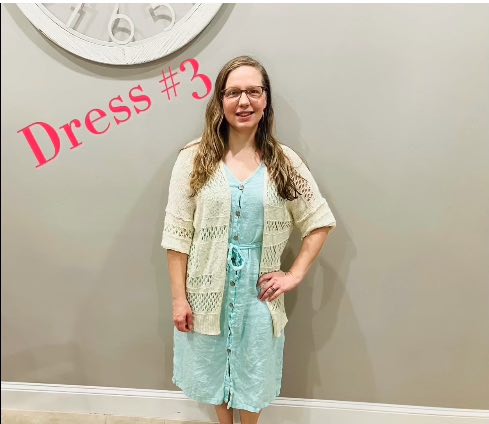
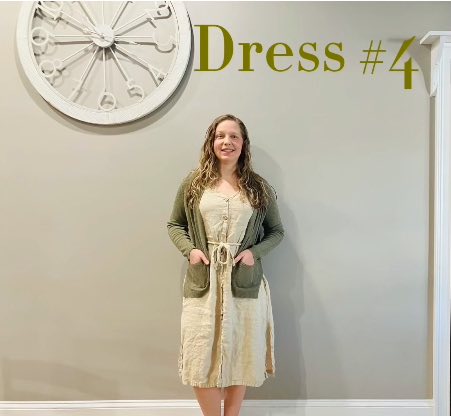
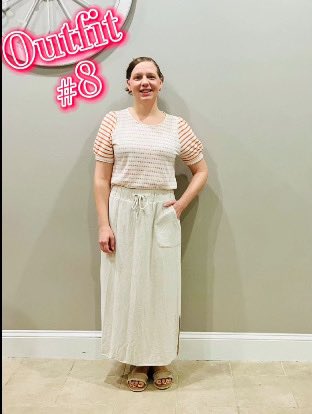
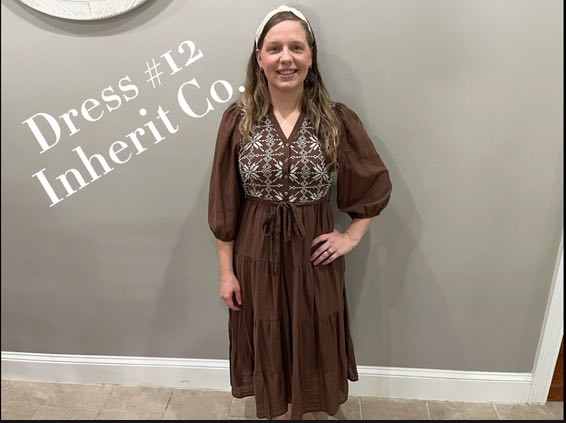
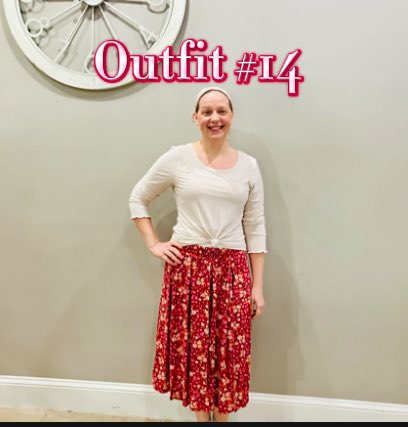
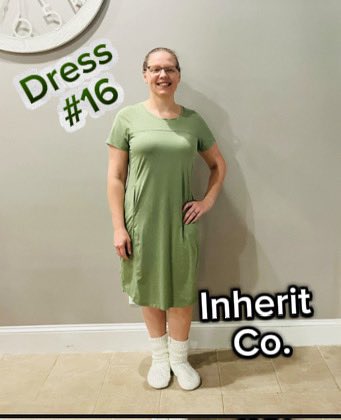
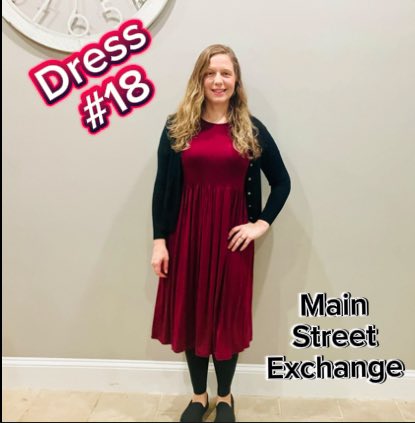
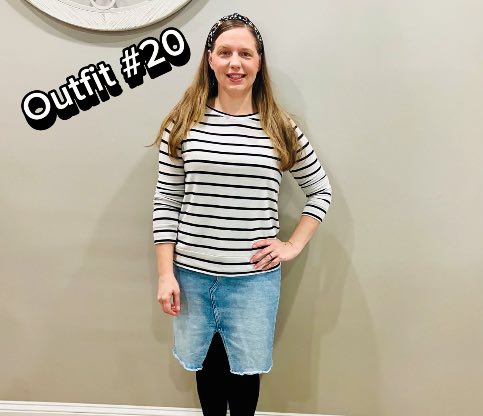
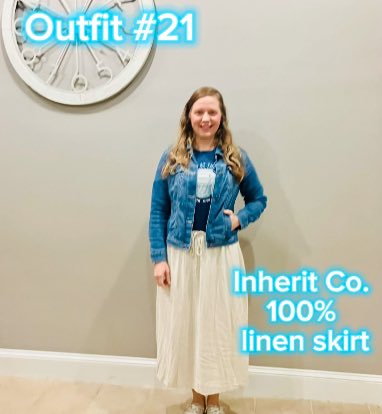
The journey began with a commitment to wearing modest, practical outfits for 30 days. Each day, I chose dresses or similar ensembles, such as knee-length or longer skirts paired with blouses or tees. Whenever possible, I prioritized natural fibers like cotton or linen, valuing comfort and functionality. My wardrobe included a mix of modest knee-length skirts, long skirts, and dresses, featuring both shoulder-width and long sleeves.
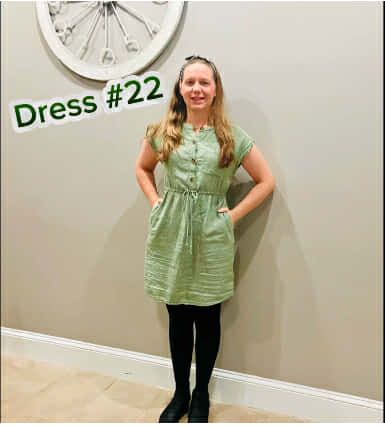
One of my favorite outfits was a green day dress from Amazon, which I styled with a JOY sweater—a beautiful reminder to prioritize Jesus first, others second, and yourself last. Another essential during this challenge was a pair of buttery-soft leggings from Amazon, which I found myself reaching for time and again to layer under dresses and skirts for added warmth and comfort.
This collection of versatile, modest pieces made the 30-day challenge both enjoyable and practical, proving that modesty and style can go hand in hand.
To showcase the challenge, I’ll present daily outfits in galleries of six dresses each, displayed in five groups, dispalyed throughout the article, to cover the full 30 days. There is also a full video, so don’t forget to watch it! Modesty means different things to different people, and I respect that. While I don’t cover my entire body, I respect those who feel convicted to do so. Currently, I do not wear a head covering, though I’m intrigued by the topic and plan to read A Cover for Glory: A Biblical Defense for Headcoverings to explore it further.
For my personal modesty standards, I chose outfits with shoulder-width sleeves, avoided exposing the midriff or cleavage, and ensured skirts and dresses were at least knee-length. These standards closely align with what I grew up with in public school, but modesty extends beyond specific measurements. It’s about propriety, how you carry yourself, and avoiding extravagance or displays of wealth. It’s entirely possible to dress modestly without compromising personal style or expression.
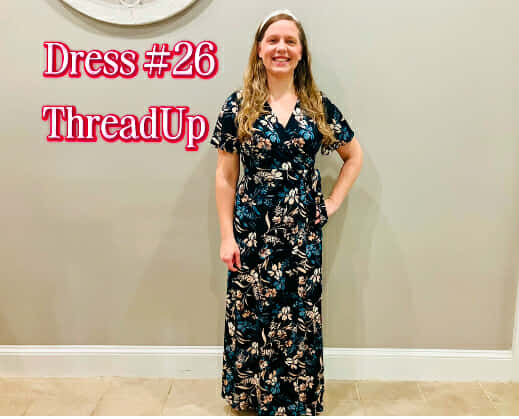
Dressing modestly also doesn’t have to be expensive. There are countless options available through vintage fashion, secondhand finds, and sales. For this project, I started with what I already had in my closet—a three-week wardrobe of dresses and skirts. To round out my collection, I visited my local Goodwill and explored ThreadUp, the world’s largest online thrift store. I also love supporting Christian-owned businesses like our affiliate partners, Inherit Co. and MainStreet Exchange, and already had a few great pieces from them in my wardrobe. Finally, I decided to try something new by ordering a personalized box from Stitch Fix, which added an extra touch of variety to the challenge.



The Importance of Modesty for Young and Older Women
I find myself in an interesting stage of life—caught between roles. I still have children at home whom I homeschool, which allows me to participate in my homeschool co-op as a mentee, learning from more seasoned women. At the same time, I recently became a first-time grandmother, as my oldest daughter and son-in-law welcomed their first baby. This dual role makes me keenly aware of the biblical directive in Titus 2, which emphasizes the importance of older women mentoring younger women:
“Older women likewise are to be reverent in their behavior, not malicious gossips nor enslaved to much wine, teaching what is good, so that they may encourage the young women to love their husbands, to love their children, to be sensible, pure, workers at home, kind, being subject to their own husbands, so that the word of God will not be dishonored.” – Titus 2:3–5
I am striving to balance these roles—seeking to love my family well, to be a sensible, pure homemaker, homesteader, and homeschooling mom, while also teaching and modeling these same principles to the younger women around me.
Through this project, I hope to demonstrate that there are good, wholesome reasons for choosing modest apparel. I also want to challenge common misconceptions—that modesty is only for prudes, oppressed women, or “goody two shoes” (a term I’ve been called in a derogatory way). Modesty is so much more than a dress code or a social construct. It reflects cultural traditions, faith, and a deep respect for oneself and others.
Modesty is for all women, regardless of age, and it serves as a sign of respect—not just for ourselves but also for men and the wider community. By embracing modesty, we can honor biblical teachings and present a beautiful testimony of faith to the world.



Modesty in Modern Fashion: Navigating Trends and Staying True to Faith
Understanding Modesty and Vintage Virtues
In the article A Journey into Modest Fashion: Exploring Its History, Evolution, and Resurgence, we examined modesty standards across different cultures and traditional dress norms. We compared these to modern fashion trends and reflected on the “vintage virtues” of female modesty, including the now rarely worn head coverings like the chapel veil.
Modesty isn’t reserved for the so-called “good girl.” It is, in fact, gaining traction—even in secular culture. Cultural critics such as Wendy Shalit have written extensively on the value of modesty. Shalit, who authored A Return to Modesty: Discovering the Lost Virtue during her time as a philosophy student at Williams College, argues for modesty as a meaningful, countercultural response to the immodesty prevalent in today’s fashion industry.
Modern Fashion Meets Vintage Virtues
The fashion industry has been one of the most significant drivers of immodest clothing trends. For much of the past 2,000 years, clothing styles remained relatively modest, and head coverings were a norm for women. However, the 20th century, heavily influenced by the fashion industry, brought about sweeping changes. Paris fashion shows marked the beginning of the end for head coverings. By the 1980s and 1990s, with the rise of Victoria’s Secret “Angels,” pop music icons, and provocative television imagery, trends like strapless dresses and tank tops became mainstream—particularly marketed toward young girls.
Fortunately, there are brands today that uphold stylish yet modest clothing for younger women while staying true to traditional values. My top three recommendations include SuperCute Dresses, Inherit Co., and Main Street Exchange. I’ve also discovered great modest pieces through Stitch Fix and ThredUp.
For the Christian woman, modesty is a way to stand apart, as we are called to do. In a world increasingly conforming to fleeting trends, modesty serves as a powerful witness.



A Reflection on Modesty and Social Context
I recognize that modesty standards differ depending on social norms and cultural context. For example, ultra-orthodox religions often adhere to stricter dress codes, while contemporary churches may have more relaxed standards. When I traveled to Europe this summer, I observed how expectations for women varied dramatically—from the more conservative dress norms in Istanbul to the relaxed attire of the Greek islands.
However, as Christians, our guide is not society or denominational views but the word of the LORD. Scripture calls us not to cause others to stumble, which is a reminder that modesty is also about respecting others. Cultural differences influence perceptions, but the standard we are called to uphold is timeless.
Modesty as a Good Rule for All Ages
During the “30 Days, 30 Dresses” project, I committed to wearing modest dresses or skirt combinations regardless of the setting. I was initially unsure how practical this would be for daily life. Could I comfortably perform everyday tasks in these outfits? To my surprise, I found it not only manageable but also practical.
From running errands to homeschooling, homesteading, homemaking, and even getting a chiropractic adjustment, my modest wardrobe proved versatile and suitable for all activities. I invite you to view the gallery of photos and watch the video documenting this journey to see how modest fashion can work in real life.
Overcoming Challenges and Finding Joy in Modesty
Let’s talk about some real challenges: adapting modest clothing to fit modern fashion trends or navigating social norms that might feel restrictive. For example, at our weekly co-op, my go-to outfit has always been a pair of jeans, our co-op logo tee, and tennis shoes—practical and comfortable. I wondered if I could transition to wearing dresses or skirts for these activities without sacrificing comfort or functionality.
As fall turned into winter and freezing temperatures arrived, I faced another hurdle: could I stay warm while sticking to modest outfits? And then there were the practicalities of daily life—feeding chickens, gardening, and even visiting the chiropractor. Could skirts or dresses really replace my leggings-and-jeans uniform?
And let’s not forget the social aspect. Would people think I was being “extra” by wearing a dress to activities where most moms stick to the usual “mom uniform”?
Rethinking the “Mom Uniform”
This project pushed me to rethink my wardrobe. Historically, the “mom uniform” wasn’t jeans and leggings—it was day dresses or skirts for much of society. Once I reminded myself of this, it gave me confidence that I could pull this off. I learned that dressing modestly doesn’t have to feel restrictive—it can actually be fun! With a little creativity, there are many ways to style a white shirt, long skirts, and even incorporate head coverings, if that’s your thing.
By the end of the challenge, however, I ran into an unexpected issue: razor burn and ingrown hairs from shaving my legs more frequently to accommodate wearing dresses. That’s when I discovered the true miracle of leggings and maxi dresses. They offered a way to stay modest and stylish without the added stress of frequent shaving—practical and comfortable all at once!



Tips for Embracing Traditional Modesty with Ease
- Layer for Weather: Embrace tights, thermal leggings, or warm undergarments beneath skirts and dresses to stay cozy in cold weather.
- Prioritize Versatility: Choose pieces that can transition between chores, errands, and social events. A sturdy, casual maxi skirt, for example, can work for gardening and grocery shopping alike.
- Accessorize for Personality: Use scarves, hats, and headbands to add flair without sacrificing modesty.
- Solve Practical Challenges: Pair maxi dresses with leggings for ease and comfort, especially on busy days or when shaving becomes a hassle.
- Don’t Overthink It: Remember, modesty is about honoring your values—not about perfection or meeting others’ expectations.
Through this journey, I discovered that modesty isn’t a burden—it’s an opportunity for creativity, self-expression, and even fun. Whether I was feeding chickens, gardening, or heading to the chiropractor, I found that I could stay true to my values while feeling both comfortable and confident. And the best part? I received nothing but compliments!
To show you exactly how I pulled this off, I documented the whole experiment in a 17-minute video. From wardrobe choices to the challenges I experienced, I share the highs and lows of making modest fashion work in everyday life. You can watch the full video below!
Be sure to explore the companies highlighted in the video, all linked at the end of the article, along with any applicable discount codes or links.
Take the Challenge: 30 Days, 30 Dresses
Are you ready to rediscover modesty in your wardrobe? Join the 30 Days, 30 Dresses Modesty Challenge starting January 1st!
🌸 What is it?
For 30 days, commit to wearing dresses or skirts that reflect your values, creativity, and femininity. Not a fan of dresses? No problem! Share your unique modest fashion looks with us—it’s all about embracing modesty in your own way.
✨ Why take the challenge?
- Experiment with modest fashion while staying true to your values.
- Embrace your femininity in a meaningful and visible way.
- Inspire others by sharing your journey and showing the beauty of modesty.
Let’s take this journey together!
Final Thoughts: Rediscovering Modesty in a Changing World
The 30-day modesty challenge was more than an experiment in fashion—it was a journey of rediscovering my love for femininity and aligning my appearance with my values. While I faced challenges like braving the cold in skirts and managing daily chores in dresses, I found creative solutions like layering and choosing functional outfits.
This challenge taught me that modesty is about liberation, not restriction. It’s a way to honor faith, embrace femininity, and live out our values. Dressing modestly allows us to stay grounded, express creativity, and stand firm in a culture of conflicting values.
I encourage you to try the modesty challenge for yourself—whether for 30 days or a week—and see how it transforms your wardrobe and perspective. Share your experience in the comments or on social media—I’d love to hear your story! Let’s rediscover the beauty of modesty together and shine as a light in the world.
Support Vintage Virtues
Your support helps keep the Vintage Virtues blog thriving, and we’re grateful to partner with some wonderful brands that align with our values. Check out these options that offer style and quality:
🛍️ Amazon
As an Amazon Associate, I earn a small commission from qualifying purchases, which helps support the blog. Thank you for being part of this journey!
👗 Inherit Co.
Explore modest, feminine, and trendy clothing for women. They show that dressing modestly doesn’t mean sacrificing style.
Use code VINTAGEVIRTUES for 5% off your purchase!
👚 Main Street Exchange
A Christian-owned business offering modest, Christian-inspired women’s clothing that’s both beautiful and purposeful.
✂️ Stitch Fix
Get personalized outfits delivered to your door, and enjoy a $25 credit towards your first fix!
🦙 ThredUp
The world’s largest online thrift store. Grab 45% off + Free Shipping on your favorite thrifted finds!
Thank you for supporting the blog, and for embracing a lifestyle of faith, creativity, and modesty!

 Vintage Virtues
Leave a reply to Modest Summer Wardrobe Guide: Natural Fabrics on a Budget – Vintage Virtues Cancel reply