

I want to begin by saying this article isn’t about convincing you whether or not to celebrate Christmas, or to put up a Christmas tree. My convictions aren’t a condemnation of others. Instead, it’s an exploration of the origin of the Christmas tree and its connections to Christian traditions and historical contexts. After being challenged about its pagan roots, I decided to research its historical and biblical significance, particularly regarding the Christmas tree tradition. I invite you to join me in exploring the origins of this tradition and its historical and biblical context.
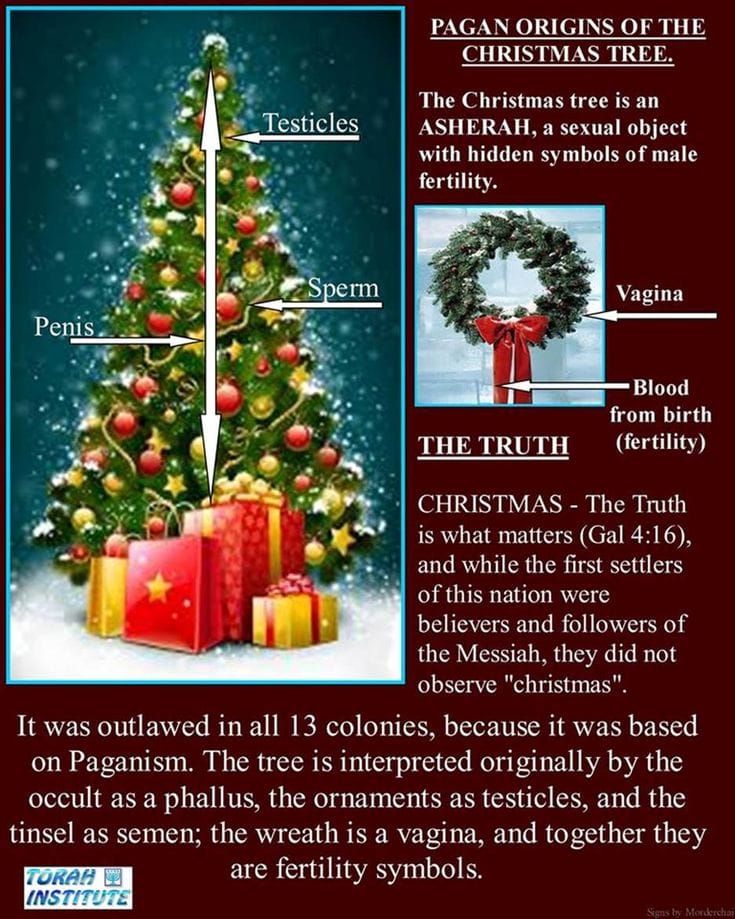
If you’ve spent any time online or in conversation, you’ve likely encountered claims that Christmas and its decorations are rooted in pagan tradition. Some argue that Christmas trees are phallic symbols or objects of fertility worship and that putting up a tree equates to honoring false gods. For me, the Christmas tree has always been a joyful, family-centered tradition, far removed from pagan worship. Still, I wanted to examine these claims and uncover the truth.
Claims of Pagan Origins
Many argue that Christmas and its symbols, like the decorated Christmas tree, stem from pagan traditions. Critics often reference ancient cultures such as the Egyptians, early Romans, and northern European tribes; who used evergreen plants to symbolize the triumph of life over death, to ward off evil spirits, and to encourage a fruitful year during the winter solstice. Some also link the use of evergreen trees in decorations to pagan holidays like Saturnalia, suggesting these celebrations influenced modern traditions.
However, historical evidence exclusively tying the earliest use of trees to pagan practices remains largely unsubstantiated. Additionally, the biblical narrative often portrays trees as sacred markers of divine encounters and covenantal promises. More recent history highlights a rich Christian tradition surrounding the Christmas tree, setting it apart from pagan elements of ancient times.
One popular claim is that Christmas trees symbolize male fertility, while wreaths represent female fertility. Others argue that retrieving presents from beneath the tree mimics bowing before it, interpreting the act as a form of idolatry.
Researching the Historical Basis
I researched multiple sources, including First Fruits of Zion, Michael Heiser’s commentary in the FaithLife Study Bible and his podcast, statements by Pastor Vlad Savchuk and Mike Winger. I also explored secular sources like the History Channel and History Guy, and, of course, the Bible. These sources often cited their own scholarly references.
Many claims of pagan origins lack credible evidence. Applying the same logic to all traditions would mean nearly every aspect of modern life could be deemed pagan. This includes celebrating holidays like Halloween, Easter, or birthdays; getting married in June; wearing makeup; keeping pets; covering your mouth when yawning; saying “Bless you” after sneezes; and even using the names of days and months, many of which derive from pagan gods. Eliminating all such practices would leave little untouched.
Having explored the claims of pagan origins, let’s now examine how the historical evolution of Christmas and its traditions aligns with or diverges from these accusations.
The Historical Timeline of Christmas
The Date of Jesus’ Birth
The Bible does not specify the exact date of Jesus’ birth. Scholars like Michael Heiser and Tara-Leigh Cobble suggest early September based on historical and biblical evidence. However, December 25th was chosen as the day of recognizing Jesus’ birth date at least a century before pagan celebrations like Saturnalia or Sol Invictus.
Other traditions observe January 6th (Orthodox Christians) or align the birth with the Feast of Sukkot in September or October (celebrated by some Torah-observant believers). While the precise date remains unknown, the emphasis lies on celebrating Jesus’ birth—the pivotal event leading to His death, resurrection, and ascension. Yet, others believe the celebration of Jesus’ birth is a pagan practice and therefore abstain altogether.
Early Pagan Traditions
- Norse Mythology: Odin was associated with trees, and the Yule log (not directly linked to Odin) was a tradition tied to the winter solstice, December 20-21.
- Roman Saturnalia: Celebrated from December 17–23, this festival involved greenery but did not feature the decorated trees seen in modern Christmas traditions.
- Roman Sol Invictus: Celebrated on December 25th, this festival honored the “Unconquered Sun.” Established by Emperor Aurelian in 274 AD, it marked the sun’s rebirth after the winter solstice.
I was unable to find recorded documentation, but I read that Pope Julius I of the Roman Catholic Church decided to redeem the pagan festival Sol Invictus in 336 AD and institute December 25th as the celebration of Jesus’ birth, in an attempt to turn pagans toward Christianity.
St. Boniface and Tree Symbolism (723)
In 723, St. Boniface, an eighth-century Christian missionary, significantly redefined tree symbolism. Witnessing pagans preparing a sacrifice at an oak tree, he intervened and attempted to cut it down. When the tree withstood his efforts, he declared it sacred, redirecting its symbolism toward Christian worship.
Modern Christmas and Its Decorative Elements
16th–17th Century
- Christmas trees originated in Germany, adorned with apples to symbolize the Garden of Eden.
- Liturgical plays featured trees decorated with apples and wafers to celebrate Adam and Eve.
- Martin Luther introduced candles on trees, symbolizing the stars shining through the forest and highlighting Jesus as the Light of the World.
The Christmas tree tradition likely emerged as a Protestant practice in Germany, incorporating decorated trees and nativity scenes into holiday celebrations.
The Paradise Tree and German Traditions
In the 17th century, Germans adopted the paradise tree in plays on Christmas Eve to represent the Tree of Life from Eden. By the early 19th century, German immigrants introduced the decorated tree to the United States, where it became a cherished element of Christmas.
19th Century
- German immigrants brought Christmas trees to America in 1777, though they were initially viewed as foreign and not widely accepted.
- Popularity grew after Prince Albert and Queen Victoria showcased a decorated tree in magazines in 1848.
- Cultural milestones, including The Night Before Christmas and Harper’s Weekly illustrations, established Santa Claus as a central figure in U.S. Christmas traditions.
- Coca-Cola later popularized Santa’s red-suited image, intertwining the holiday with American consumerism.
Reflecting on Christmas Traditions
While modern Christmas often emphasizes consumerism—endless toys, gift lists, and Santa as an omniscient figure—the origins of many traditions, such as the Christmas tree, are rooted in Christian symbolism rather than pagan worship.
For many devout Christians, the Christmas season is an opportunity to focus on the birth of Jesus and His role in bringing eternal life. The decorated Christmas tree, with its balsam fir or pine branches, symbolizes not pagan worship but the hope and joy of Christ’s birth, with its bright lights representing Jesus as the Light of the World. The nativity scene and the Christmas lights adorning trees serve as religious symbols, pointing to the story of the wise men, the birth of Christ, and the Christian faith. From a biblical perspective, it also serves as a reminder of the sacred trees in Israelite history and their symbolism.
Trees in Biblical Context
Sacred Trees in Israelite History
Trees in the Bible hold profound significance, often marking divine encounters and covenantal moments. The FaithLife Study Bible Commentary notes:
“Sites marked with trees often became associated with appearances of Yahweh that involved divine revelation. For example, the oak tree at Shechem commemorated Yahweh’s appearance to Abram with the promises of the covenant (Genesis 12:6–7).”
Isaiah 60:13 highlights the reverence of trees in worship, prophesying their adornment of the temple. Like the rainbow, sacred symbols such as trees have often been counterfeited in ways that distort their divine purpose.
Notable Trees in Scripture
The Oak Tree of Shechem
- Genesis 12:6–7: God appeared to Abram here, promising the covenant.
- Genesis 35:4: Jacob buried idols here, fulfilling a vow to Yahweh.
- Joshua 24:25–27: Joshua erected a stone at the oak as a sacred marker of God’s word.
- Judges 6–7: An angel appeared to Gideon under an oak, calling him to lead Israel. Gideon destroyed pagan altars, using the wood to offer a burnt sacrifice to the LORD, marking a turning point in Israel’s deliverance.
- Judges 9:5–6: Abimelech was declared king at the oak, further solidifying its historical significance.
Michael Heiser emphasizes its sacred role, stating:
“The oak at Shechem was chosen for its significance as a holy place for the God of Israel and remains associated with divine revelation.”
The Oak Tree of Mamre
Under this oak tree, Abraham encountered three heavenly visitors who prophesied Sarah’s son (Genesis 18:1–18). This encounter marked the Abrahamic covenant and Abraham’s iconic act of hospitality and faith.
The Palm Tree of Deborah
The prophetess Deborah conducted her ministry under a palm tree, exemplifying the role of trees in divine leadership and interaction (Judges 4:5).
The Oak Tree and other sacred trees in Israel were not meant for worship, but to mark significant encounters with the LORD. In contrast, pagan traditions like those of ancient Egyptians, Romans, and the Norse often profaned trees by associating them with false deities and fertility rituals.
Profaned Trees in Pagan Worship
Over time, pagan practices attempted to corrupt the sacred symbolism of trees, introducing “high places” and Asherah poles—wooden structures carved to represent false deities. God denounced such idolatry in Ezekiel 6:13, condemning the worship of lifeless idols, which stands in stark contrast to the reverence trees held in biblical symbolism. However, these poles were not natural trees, and Scripture consistently portrays trees as reflections of God’s interaction with His people, not fertility symbols.
Jeremiah 10 warns against adopting pagan customs, describing idols crafted from trees, carved into human-like forms, overlaid with gold or silver, and worshiped. These lifeless idols are a stark contrast to the sacred trees in Scripture, which symbolize divine encounters and covenantal promises. While some misinterpret this passage as condemning Christmas trees, it specifically addresses carved idols, not modern evergreen traditions.
Idolatry is unequivocally condemned throughout Scripture, but intent determines whether a practice honors or dishonors God. Modern Christmas trees, as symbols of celebration and remembrance, are entirely different from the idols Jeremiah describes. They are not attempts to represent God, like the golden calf or Asherah poles, but rather serve as symbolic or decorative elements, not objects of worship.
The Golden Calf and the Danger of Syncretism
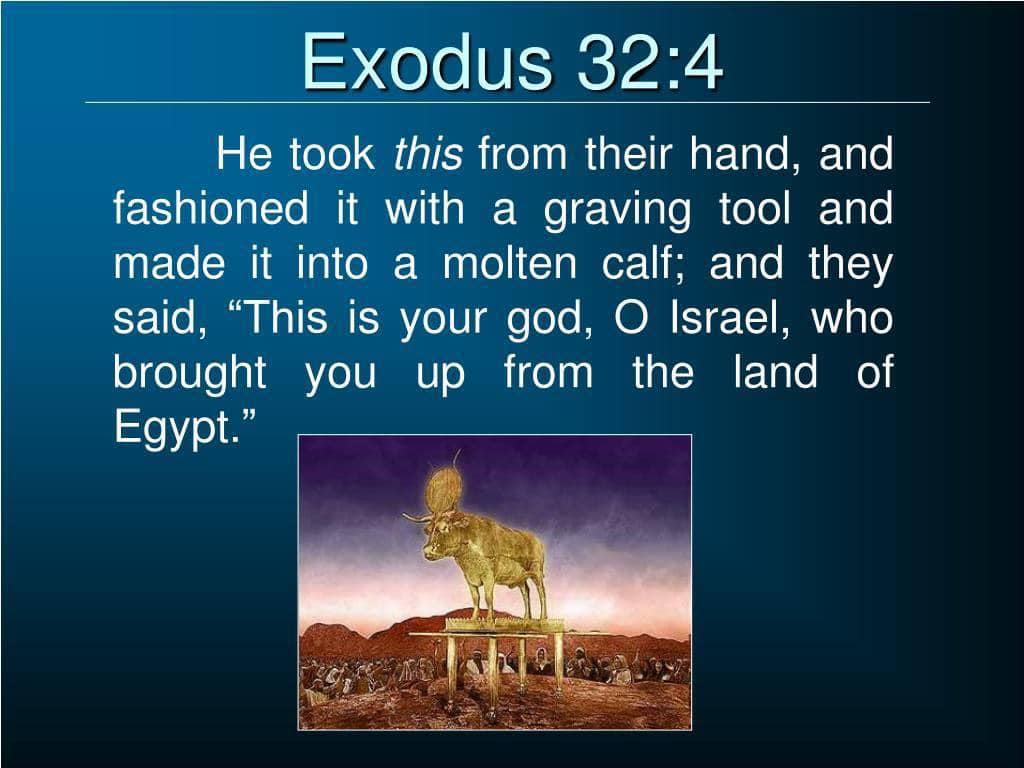
When the Israelites created the golden calf, they violated the second commandment by trying to worship an image while still honoring the LORD with a feast. This is an example of syncretism—mixing idol worship with worship of God. The problem wasn’t the image itself, but the improper worship of it as if it represented God.
Exodus 20:3-6 clearly forbids the worship of other gods or images, emphasizing that creation is not to be worshiped, but the Creator. While the Israelites misrepresented God with an idol, the Christmas tree is not an attempt to represent God. It serves only as a symbolic or decorative element, not an object of worship. This is similar to how God commanded the Israelites to craft cherubim for the ark of the covenant—not for worship, but for beauty and adornment.
The Christmas tree, like the cherubim, is not intended for worship or to represent God in any way. Its purpose is purely symbolic or decorative, not idolatrous.
Worship That Pleases God
Decorating Christmas trees has become a Christian tradition, symbolizing new life, eternal life, and the birth of Jesus—not pagan worship. The key is the intent behind it. A Christmas tree, when used in a religious context, serves as a reminder of Christ, the light of the world, rather than as a pagan relic.
This is why early Christians, like St. Boniface in the eighth century, cut down the sacred oak of the pagans to show Christ’s triumph. The tree, once a pagan symbol, became a Christian one representing eternal life and hope. In the Middle Ages, the paradise tree was used in Nativity plays to reflect the tree of life and Christ’s birth.
In reading Joshua 22-24, I see that proper worship of the LORD is the closing theme of the book. Joshua’s farewell speech echoes Moses’ instructions, calling the Israelites to love the LORD, reject false gods, and remain faithful to His commandments. The tribes of Reuben, Gad, and Manasseh built an altar, which initially caused concern among the other tribes, fearing it was an act of rebellion. However, they clarified that the altar was not for sacrifices, but as a witness that the LORD is God.
This passage underscores that worship is a choice—whom we worship and how we worship. Joshua urges the Israelites to avoid idol worship, stand firm in God’s law, and serve Him in sincerity and truth. The people must choose whom they will serve—false gods or the LORD. Joshua declares, “As for me and my house, we will serve the LORD.”
Intent matters. If a Christmas tree is used to honor God and symbolize the everlasting life offered through Christ, it can be a meaningful and biblically sound tradition. However, if it distracts from true worship or becomes an idol, it should be reconsidered. Now the date of December 25th – that is a whole other topic of discussion!
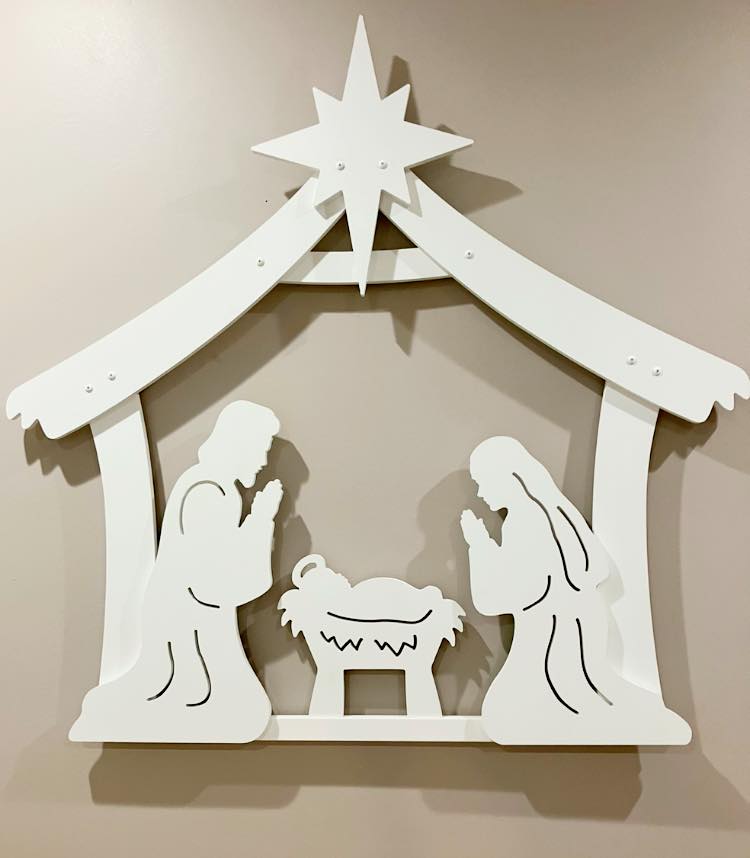
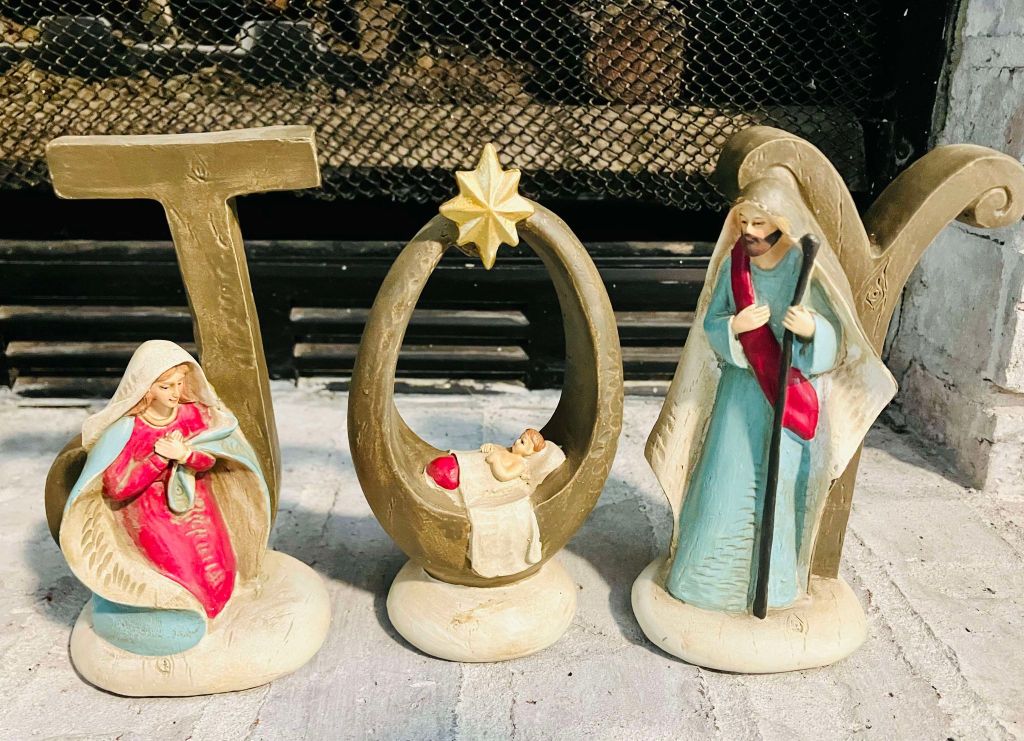
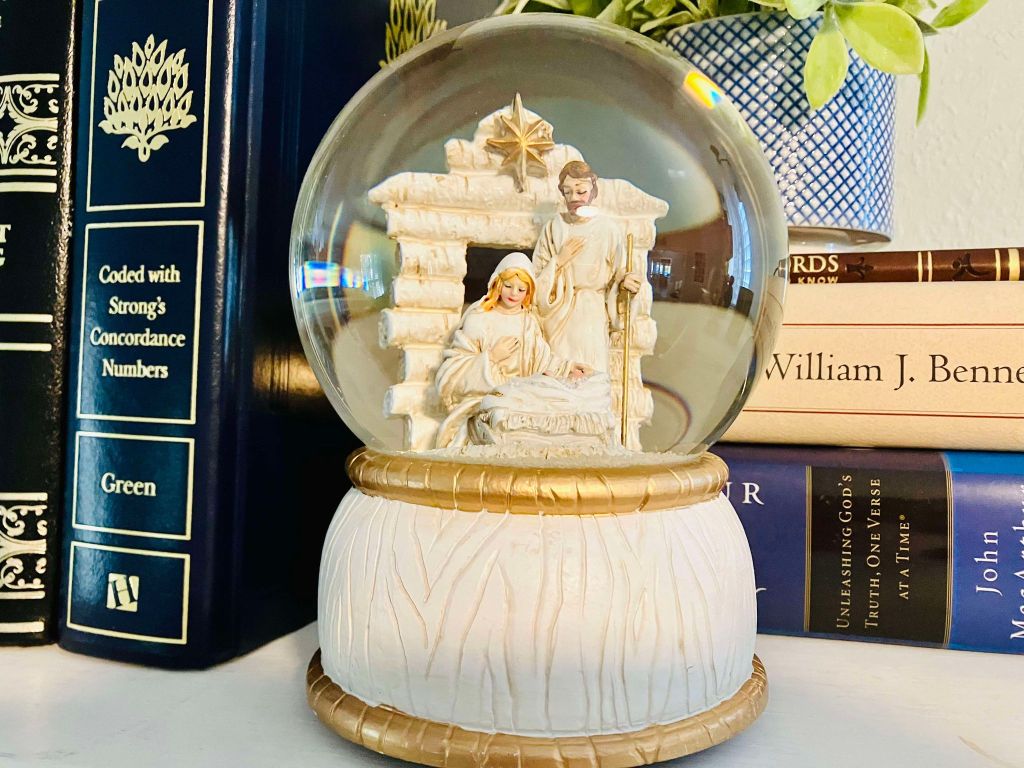
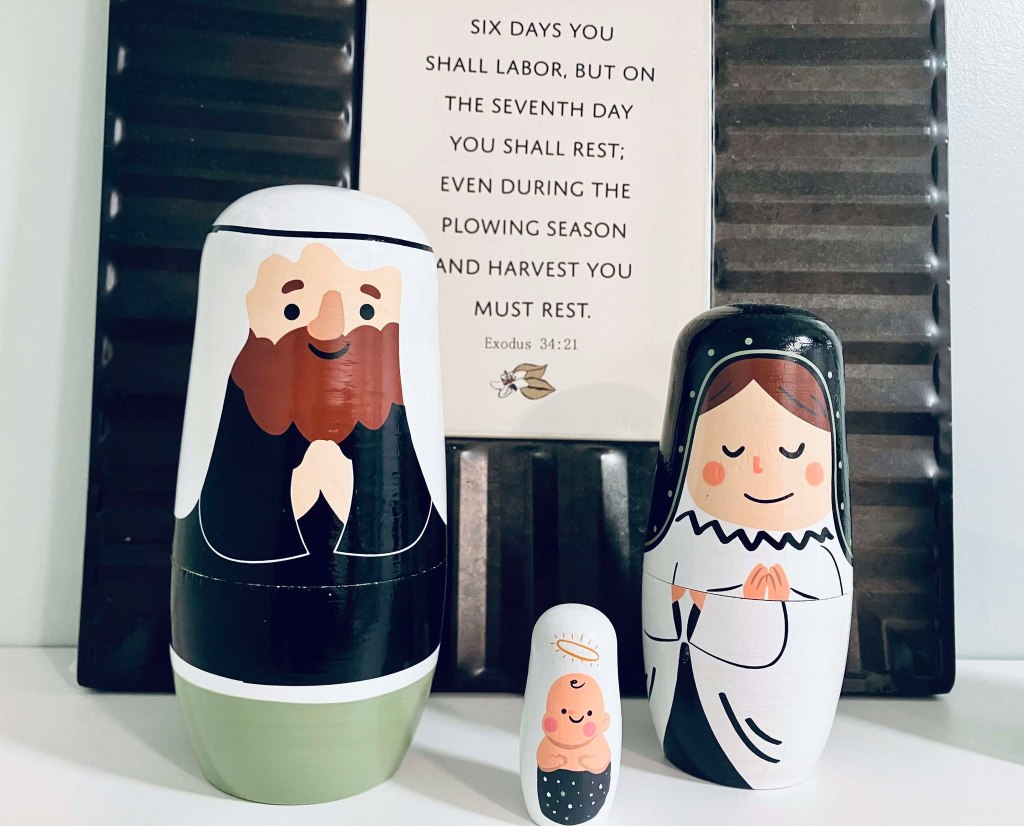
As I unpack my Christmas decorations, I reflect on their purpose. After a house fire, many items were lost, but those that remained hold memories—handmade ornaments, gifts from loved ones—things to cherish, but not idolize. Among them are ornaments with the word “JOY,” reminding me of the biblical priority: Jesus, Others, You. There are also manger scenes that focus on the birth of Christ. No Santa Claus, just a tree—a simple, modest one, this year—a reminder that Christ is the center of our celebration. It’s a decoration to keep our hearts focused on Him.



Final Thoughts
Christian freedom in traditions should always be evaluated through the lens of biblical values. While traditions like the Christmas tree may have diverse origins, the key lies in the intention behind them. For some, Christmas may have once been tied to materialism, self-centeredness, or even secular idols, obscuring the worship of Christ. In such cases, it’s essential to approach these traditions with sensitivity, especially for those who may still struggle with worldly distractions. As Paul reminds us in 1 Corinthians 8:9, we must be mindful not to cause others to stumble in their walk with the Lord.
Ultimately, our goal should be to honor Christ in all things, ensuring that He remains the focus of our celebrations. Whether it’s a Christmas tree or any other tradition, we must ask ourselves: does this practice glorify God and point to His truth? If so, it can be a meaningful part of our Christian freedom; if not, we should reconsider our approach. Let our traditions always reflect our love for Christ and His gospel, keeping Him at the center of all we do.
What are your thoughts? I would love to continue the discussion with relevant research and insights in the comments.


 Vintage Virtues
Leave a reply to Jennifer Trimble Cancel reply