

A group of friends and I embarked on a journey through the New Testament at the beginning of the year, and we successfully completed it! This article marks the beginning of a brief series that covers the New Testament. For those interested in exploring even further back, I’ll provide a link to the Old Testament series at the end of this article.
In this short series of articles, each book of the New Testament is summarized. While I prioritize brevity, I also take moments to explore deeper insights. I wrap it all up with key concepts and takeaways.
As you read through my summaries, explore other sources, and seek diverse perspectives, I want to emphasize that we are all fallible, and mistakes may have been made. Feel free to bring any errors to light as we continue learning together.
I wholeheartedly encourage you to engage with the Word on your own, seek wisdom from the Holy Spirit through prayer, attend a church that upholds sound doctrine, and consult your Pastor for further guidance.
Overview of the New Testament
The New Testament is comprised of 27 books written over about 40 years and is arranged into five categories: Gospels, Acts, Letters from the Apostles, General Letters, and Revelation.
Gospels (4 books)
- Matthew
- Mark
- Luke
- John
Acts (1 book)
- Acts
Letters from the Apostles (13 books)
Primarily written by the Apostle Paul and those writing on his behalf:
- Romans
- 1 Corinthians
- 2 Corinthians
- Galatians
- Ephesians
- Philippians
- Colossians
- 1 Thessalonians
- 2 Thessalonians
- 1 Timothy
- 2 Timothy
- Titus
- Philemon
General Letters (8 books)
- Hebrews
- James
- 1 Peter
- 2 Peter
- 1 John
- 2 John
- 3 John
- Jude
Revelation (1 book)
- Revelation
The New Testament makes up about 25% of the Bible and tells the “Good News” of Jesus Christ. To truly understand the New Testament, it’s important to read and comprehend the Old Testament, which comprises 75% of the Bible. The Book of Matthew begins with the Old Testament lineage, connecting Jesus to the Abrahamic covenant. Jesus Christ’s birth fulfills Old Testament prophecies; he is called Immanuel, “God with us,” and is the high priest who will atone for the sins of humanity. Jesus is also referred to as our Passover Lamb. The New Testament not only shows the fulfillment of Old Testament prophecies but also contains future prophecies about Jesus’ second coming, the millennial kingdom, and the promise of new heavens and a new earth. The New Testament offers a profound message centered around the life, teachings, and significance of Jesus Christ. It presents the fulfillment of ancient prophecies and provides hope for the future, emphasizing the importance of understanding its connection to the Old Testament. As I approached reading the New Testament, specifically the gospels, I tried to intentionally read through the cultural lens of the people witnessing these events unfold, along with these 10 Key Takeaways from the Old Testament in mind.
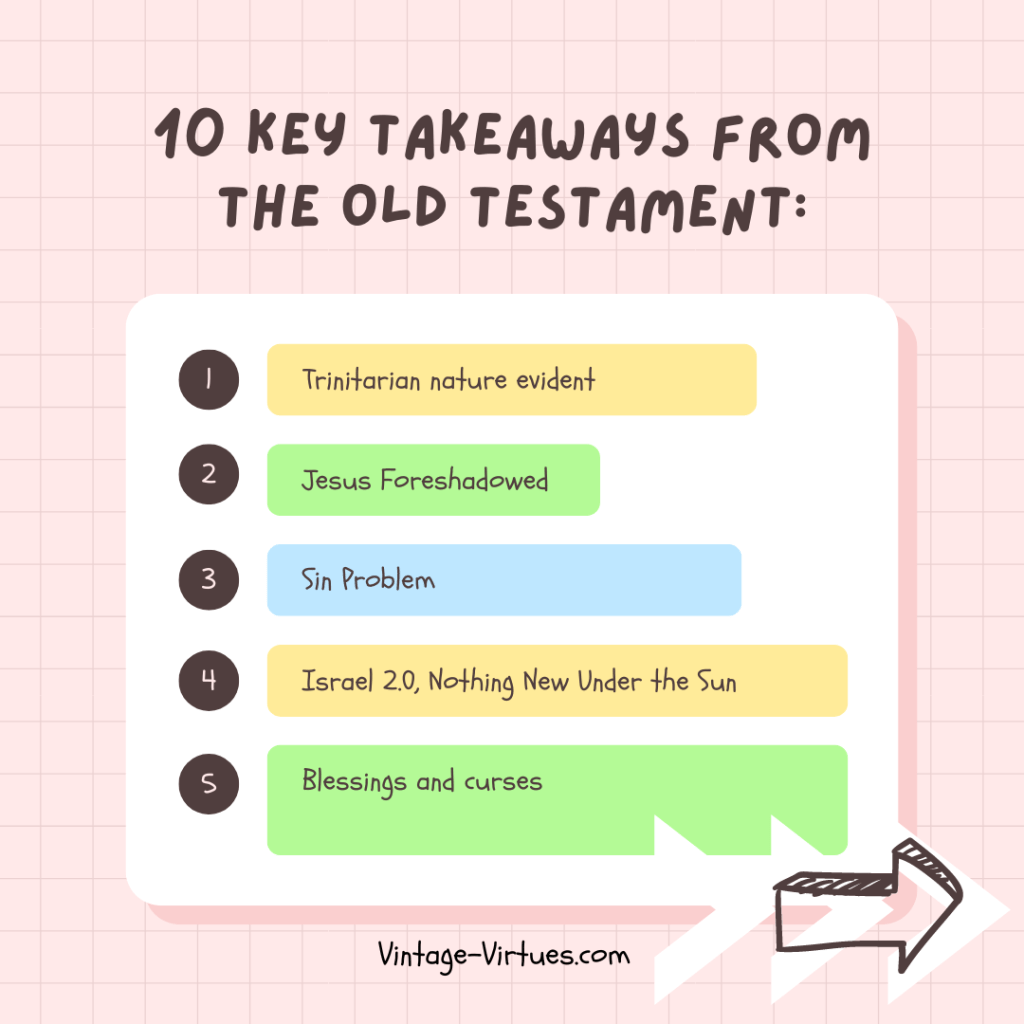
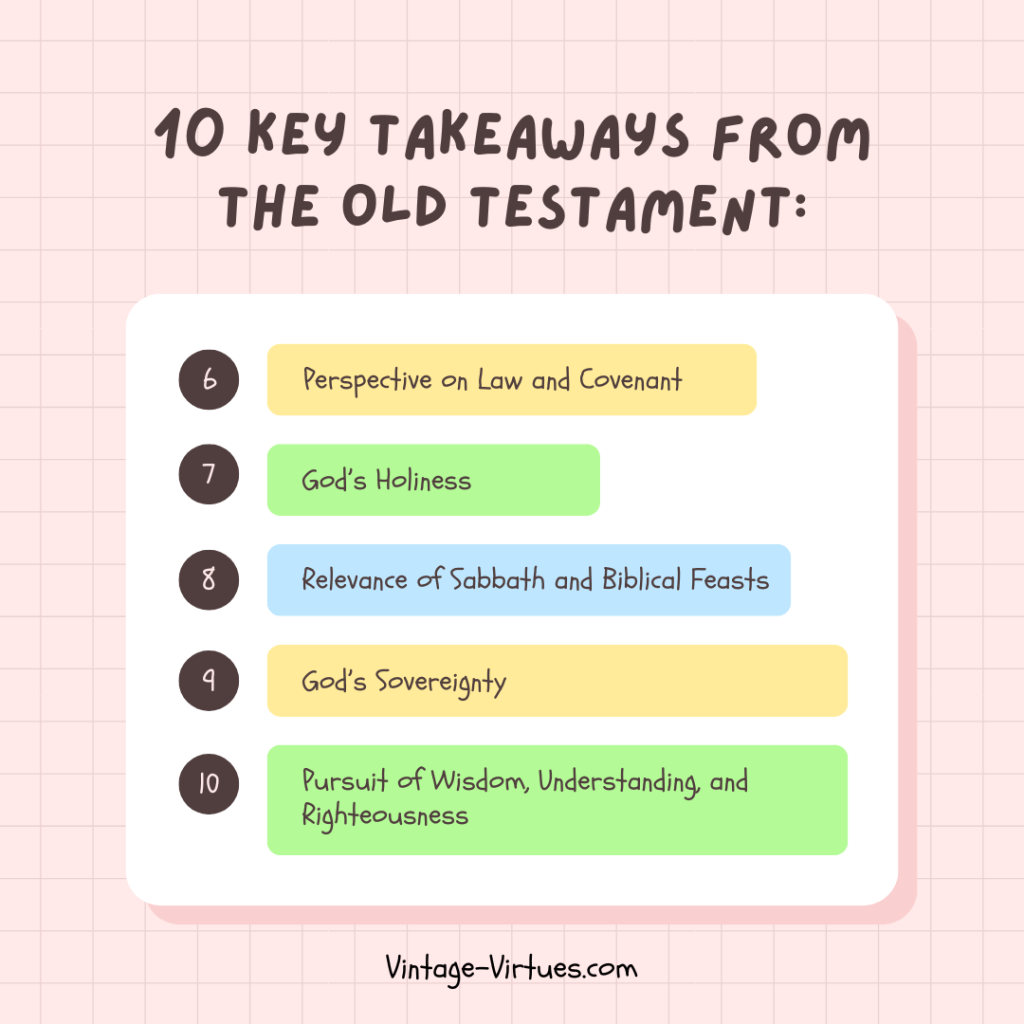
The Synoptic Gospels
The Gospels consist of the first four New Testament Books: Matthew, Mark, Luke, and John. These four books give differing perspectives from each of the four authors’ vantage points on Jesus’ life, ministry, death, resurrection, and ascension. Each of the gospels is also written with different audiences in mind yet are applicable to mankind. That is how the living and active word of God works!
Matthew
The book of Matthew, written by a Tax Collector focuses on the life, teachings, death, and resurrection of Jesus Christ, portraying him as the Messiah and the fulfillment of Old Testament prophecies. Written primarily for a Jewish audience and new believers, Matthew emphasizes Jesus’ teachings on compassion, righteousness, and the kingdom of heaven. The book highlights Jesus as the King of the Jews, from the line of David, and includes 29 direct quotations from the Old Testament.
The gospel of Matthew shows Jesus as the new Moses and “God with us” (Immanuel), presenting him as greater than Moses. Jesus is the deliverer of people from slavery, the teacher of his Father’s Law, the preacher of repentance and salvation, and the initiator of a new or renewed covenant.
Significant events such as Jesus’ birth and the visit of the wise men, fulfilling Old Testament prophecies, are included. The book also portrays Jesus’ temptation by Satan, where scripture is depicted as Jesus’ weapon of choice.
Jesus begins his ministry by expounding on teachings about the Kingdom of Heaven, righteousness, and law in the Sermon on the Mount. A notable moment in this sermon is when Jesus states in Matthew 5:17, “Do not think that I came to abolish the Law or the Prophets; I did not come to abolish but to fulfill.” At this point, Jesus refers to the Old Testament writings, emphasizing that he did not come to nullify those teachings. Rather, he elaborates on the spirit or intentions of those laws, dismantling the Pharisaical, man-made additions to the law. Furthermore, he declares that until heaven and earth pass away, whoever breaks one of the least commandments and teaches others to do so will be called the least in the kingdom. Jesus actually elevates the law, teaching that anger equals murder in the heart, and that lust equals adultery. Jesus also begins to perform many signs, wonders, and healings, fulfilling prophecies contained within the writings of the prophets’ words related to the Messiah’s identity. Despite mounting evidence, however, many groups, such as the Pharisees and Sadducees, still refuse to believe he is the Messiah; worse yet, they accuse him of having power from Satan.
In Matthew 12, we learn of the one unpardonable sin, blasphemy of the Holy Spirit. An example of this sin is given, in that the Pharisees are accusing Jesus of receiving his powers from Beelzebul, Satan. The Faith Life Study Bible commentary elaborates that blasphemy is “speaking with degradation against God’s truth” and that in denying the source of Jesus’s power (the Holy Spirit), they essentially deny Jesus.
The narrative also features crucial moments such as Jesus’ transfiguration, his foretelling of his death, his interactions with the Pharisees, and his warnings about false prophets and the signs of his return.
The plot to end Jesus’s life, his betrayal by Judas, the events leading to his crucifixion, and ultimately his resurrection are also unfolded. A woman anoints Jesus with expensive oil, prophetically preparing his body for burial. Jesus shares the last Passover supper with his disciples and goes to pray in the garden of Gethsemane. He asks the disciples to pray with him, but they keep falling asleep. In these final moments, we witness Jesus’s care and humanity. He prays as a human, Jesus the Son to God the Father, asking for the trial and death sentence to be taken away, yet he humbly submits to the LORD’s Will being done. Following his resurrection, the dead rise with Jesus and appear to many.
Mark
Mark’s gospel account shows Jesus’ actions and miracles, His role as the suffering Servant and the Son of God. It highlights the deity of Jesus and is written for a primarily Roman audience.
The passage in Mark 7 caused a thought-provoking discussion concerning the significance of food and cleanliness. Jesus shifts the focus from external rituals to matters of the heart. The Pharisees’ preoccupation with outward cleanliness leads Jesus to confront their hypocrisy and their tendency to prioritize manmade doctrines over the word of God.
In His address to the Pharisees, Jesus emphasizes that true defilement comes from within, from the intentions and attitudes of the heart, rather than from external factors like unwashed hands or specific foods. Mark 7:19 also records Jesus indicating that all foods are declared clean, sparking considerable debate among scholars and theologians.
This verse carries significant implications for dietary laws, particularly in light of Peter’s vision in Acts 10 and its relevance to the concept of clean and unclean foods. Peter’s vision may have pertained not to the food itself, but to the people God was calling Peter to witness to, emphasizing the unity of believers.
The challenge of reconciling these teachings with Old Testament scriptures and future prophetic statements, such as Isaiah 66:17, is thought-provoking, particularly concerning the applicability of dietary restrictions across different historical periods. The verse in Isaiah warns that those who consume swine’s (pork’s) flesh, detestable things, and mice will come to an end altogether. This presents a thought-provoking challenge, especially regarding the applicability of dietary restrictions across different historical periods, and its relevance for Christians today.
While it may be argued that ceremonially unclean foods have been scientifically proven to be unsanitary, it is important to note that not everything beneficial is permissible. Though consuming unclean foods may be considered permissible, it may not be beneficial from a health perspective.
Furthermore, the issue of tribalism, exemplified by Peter’s struggle, reminds us of the call for unity within the body of believers. This unity raises questions about the consistency of dietary regulations and observance of biblical feasts and Sabbaths across different cultural and historical contexts.
Mark 10-15 reiterate Jesus’s teachings on divorce and recount the stories of the rich young ruler and Bartimaeus, the blind beggar, whose sight is restored by Jesus. These chapters also detail Jesus’ triumphal entry, his predictions about his death, the cleansing of the temple, and his interactions with the Pharisees, Sadducees, and Scribes. The account culminates with Jesus’ arrest, trial, crucifixion, and resurrection as foretold. As I was reading through a commentary over Mark, I read: “Hosanna” is transliteration of the Hebrew phrase hoshi’ah na, which means “save us!” Compare Psa 118:25. (Mark 11:9 (FSB)). I love that the people were crying out Hosanna during Jesus’s triumphal entry. They literally recognized him as the Savior.
It is debated whether the “longer ending of Mark,” chapter 16:15-20 is an inerrant part of scripture, as it is not present in the oldest original manuscripts. It details Jesus’ resurrection, the commissioning of the disciples, and the signs and wonders to accompany believers.
Luke
Luke’s gospel, written by a physician, is written to a predominantly Greek audience, emphasizing that the gospel is for all people. This account presents Jesus’s humanity as the Son of Man, tracing his lineage back to Adam. Luke portrays Jesus as a compassionate Savior, highlighting his concern for the marginalized and his mission to seek and save the lost. Throughout the narrative, Jesus reaches out to specific groups: lepers, gentiles, outcasts, women, the poor, and sinners. Interestingly, Luke, who was not an apostle, compiled the eyewitness accounts of others to record the books of Luke and Acts. The Gospel of Luke contains the largest number of parables, with 24 of them, 18 of which are unique to this book. Additionally, it depicts Jesus commissioning the 12 disciples.
The book of Luke is divided into 24 chapters and focuses on the life, teachings, death, and resurrection of Jesus Christ. Notably, the Gospel of Luke is known for its detailed narrative, including the birth of Jesus, parables such as the Good Samaritan and the Prodigal Son, and Jesus’ interactions with various individuals.
Luke accounts for John the Baptist’s birth, his life as a prophetic fulfillment of Isaiah 40, and eventually his imprisonment by Herod. The narrative also provides a glimpse into the early life of Jesus, depicting an event when Jesus, at the age of 12, was separated from his family during the feast of Passover. Jesus stayed in the temple for 3 days, listening and discussing. Luke also includes Jesus asking the thought-provoking question in chapter 6:46, “Why do you call Me, ‘Lord, Lord,’ and do not do what I say?” This question contrasts the one who hears and obeys with the one who doesn’t, emphasizing the consequences of disobedience.
Throughout chapters 7-9, Jesus performs many miracles, demonstrating compassion for the distressed and dispirited. He provides insight into the abundant harvest and the need for more workers, illustrating the great commission. The later chapters of Luke parallel the account of Jesus’s last days in Matthew, with additional details about his 40 days on earth after his resurrection, including his appearances and his ascension.
John
John’s gospel account is probably one of my favorite books, next to Matthew’s, because there’s so much there. Its rich content is worthy of a stand-alone article. John explores the divinity of Jesus, depicting Him as the Word made flesh, the Son of God, and the source of eternal life. John emphasizes the deity of Christ and Jesus as the Son of God. The Holy Spirit is also prominent in the gospel of John. John’s genealogy takes Jesus back to the eternity past, showing Jesus as fully man and fully God.
Jesus’s divinity is a core doctrine; John is written to both believers and unbelievers, Jews, and Greeks (gentiles). It traces Jesus’s lineage to eternity past; Jesus became flesh and dwelt among us. John identifies himself as the disciple whom Jesus loved. These chapters contain pivotal moments in the life of Jesus and hold significant importance in Christian theology.
John Chapters 1-4
I love how the beginning books of the Old Testament confirm what was known from the start (Genesis 1:2 and 1:26 parallel with John 1:1 and John 1:14), illuminating Jesus as the Word from the beginning, who became flesh, and the light of the world.
An angel appears to Zachariah regarding John the Baptist, and also to Mary regarding Jesus. John the Baptist will clear the path in the wilderness for Jesus. The baby John leaps in Elizabeth’s womb when he encounters the presence of Jesus in Mary’s womb, and Elizabeth acknowledges Him as her Lord.
Jesus’s first miracle is performed in Cana of Galilee, marking the beginning of signs and leading the disciples to believe in Him. What I found interesting is that Mary believed Jesus could perform the miracle even before He agreed, prompting me to reflect on how we can ask and expect to receive, according to God’s will.
Jesus then drove crooked people out of the temple. After the temple scene, the disciples believed the scripture and the word that Jesus had said. At Passover, many believed in Jesus because of the signs He did. The next statement is intriguing, “but Jesus did not commit himself to them because he knew all men (omniscience) and had no need that anyone should testify of man, for he knew what was in man.”
Nicodemus acknowledges that no one can do these signs that Jesus did unless God is with him. Jesus replied that no one could see the kingdom of God unless they are born again. Verse 3:5 states that unless one is born of water and spirit, they cannot enter the kingdom of God. Baptism is clearly being shown as the sign of a believer. It is also a purification sign; a dispute broke out between John and the Jews over Baptism. The language used in verse 3:11 is trinitarian sounding in nature again, “We speak what We know and testify what We’ve seen, and you do not receive Our witness. Verse 20 really demonstrates to me that the Christian lifestyle should pursue righteousness. “For everyone practicing evil hates the light, lest their deed should be exposed”. The willful practice of sin is contradictory for the believer. I absolutely love John 3:30, “He must increase, but I must decrease.” We only have the gifts, talents, and resources given to us from heaven; there is no reason to boast. He gives, according to His will, that we may serve his purposes. As John, we should always point back to Christ.
Chapter 3 MUSTS:
- For the Sinner, we “MUST be born again” (3:7)
- For the Savior, as “Moses lifted up the serpent in the wilderness (all that looked to it were saved); so the Son of Man (Jesus), MUST be lifted up (we look to Him for salvation) (3:14)
- For the Saint, He MUST increase, I MUST decrease” (3:30)
The last observation I took away is from John 3:32, where the statement “No one receives His testimony” at first seems absolute, but in verse 33 we see that some do receive His testimony and certify that God is true. This raises the question of whether the statement “none is righteous” is also a non-absolute term that refers to the majority rather than the whole, given that He did declare some righteous.
Furthermore, Jesus’s omniscience is displayed again as He knows the sins of the woman at the well. Despite her and the Jews worshiping what they did not know (religion), Jesus foretold a new way of worship based on relationship, emphasizing that God must be worshiped in spirit and in truth due to His nature as spirit. Even though Jesus was right in front of the woman, as the Messiah she had heard of, she didn’t recognize him until He revealed himself as the one she had spoken of. This led her to give her testimony, resulting in many in the city believing because of her testimony.
Jesus demonstrated knowledge of the sins, thoughts, and hearts of the crowds and individuals. While intentionally self-limited in terms of the fullness of His Godly knowledge (such as the hour of His return), He certainly wasn’t limited in His knowledge about people. This highlights the Trinitarian concepts and His Deity (Fully God – Fully Man) from the beginning of time and throughout scripture, although acknowledging the challenges in fully explaining these concepts, even for scholars.
In His full divinity, Jesus voluntarily limited Himself for the sake of humanity, allowing Him to experience life as a man, confronting the same forces, trials, and temptations that we do. Despite being sinless, He bore our sins as part of His redemptive plan (Philippians 2:5-7). This perspective reinforces the belief in Jesus’s Divinity and the Triune nature of God (Father, Son, and Holy Spirit) — distinct in their roles yet forming the same Godhead. While this concept may be challenging to fully comprehend, it does not impact salvation, which has always been attained through faith. Even in the Old Testament, salvation is granted by grace through faith.
For further insights, you can check out this source and this video.
John Chapters 5-8
I found it interesting that verses 3 & 4 are not in the oldest manuscripts of John 5. Some say the scribes wrote those in to provide a little cultural background. There are 14 verses in the KJV not contained in the oldest manuscripts or other versions of the Bible. However, I take comfort in knowing that none of those verses affect the overall narrative of the Bible; it is still 99% accurate to the oldest manuscripts (Dead Sea Scrolls).
Jesus healed the paralyzed man without him ever stepping foot into the water. Jesus healing the man on the Sabbath and commanding him to take up his mat revealed the legalistic nature that had taken root in their culture. I also love that Jesus found the man in the temple after he had received healing. The next thing he told him to do was repent. Jesus’s call to sinners is never without the directive to repent (turn away from our sins and toward righteousness).
In verse 18, the Jews persecuted Jesus all the more. Not only was he accused of breaking the Sabbath, a sin punishable by death, but He was also calling God His own Father, making Himself equal with God. I love that the scripture itself testifies to Jesus. The Jews tried to use the scripture to accuse Jesus, but He told them that those very scriptures testify about Him. Yet they were unwilling to come to him so that they may have life. If they didn’t believe in Moses (or even the other prophets’ words), how could they believe in Jesus?
John 6 reminds me that we’re not supposed to look like a “Christian”; we’re supposed to look like Jesus. The world tells us what a cultural Christian looks like. The world is even accepting of the progressive variety of Christians. I’m reminded of the words in Romans 12:2, “Do not conform to the pattern of this world but be transformed by the renewing of your mind. Then you will be able to test and approve what God’s will is—his good, pleasing, and perfect will.”
The one thing that God requires is belief (defined as committing your trust and placing your confidence in). This isn’t the simple belief that even the demons have. It also doesn’t mean there won’t be evidence of our salvation, the fruits. We have the tendency to throw the Trinity into a spiritual blender, but there is an authority structure within the Trinity.
John 7 and 8: One thing that came up in discussion is Jesus did not want to go with his brothers to the feast, presumably because he did not want to invite the attacks of the Jews. However, it was said in scripture multiple times after that that the Jews did not lay hands on him, nor did they even stone him, because it was not yet his time. It made me wonder why he wouldn’t boldly walk with his brothers. But also, it was pointed out that his brothers did not believe in him yet, and so I wonder if that had more to do with why he didn’t go with them. A great point that was made was that Jesus didn’t go with his brothers because they wanted him to “make himself famous.” He always wanted only to glorify God, not Himself.
In John 8:12, Jesus attended the Feast of Dedication (or Festival of Lights), also known as Hanukkah. Although it is not one of the appointed biblical feasts of the Mosaic law, it was a Jewish celebration and the place where Jesus revealed Himself as the Light of the World. As a Jew, he would have participated in this particular holiday. It had me thinking about holidays more in general. I understand some are opposed to holidays outside of the biblical feasts. This feast wasn’t one of the prescribed biblical feasts, but He attended. Surely He would have denounced it if it were actually wrong to participate. I don’t say this to condemn anyone’s convictions; it just seems that extra-biblical celebrations are condonable by Jesus.
For the first time, I think I finally have a more concrete understanding of why the Jews thought the way they did. I’ve always understood that they had a heart issue, covered in religious works. I’ve thought, “How could they not get it with Jesus right there in front of them, performing miracles, speaking truth, etc…” But today it clicked that when they were looking for Elijah, instead John the Baptist came “in the spirit of Elijah.” He cleared the way for Jesus, his cousin. As for the Messiah, the Jews were looking for an earthly King, one they didn’t know. Instead, they had Jesus claiming to be the I AM, sent from His Father. Jesus is someone they did know; even Jesus’s brothers didn’t believe Him at first. To them, it sounded like two crazy cousins. They even thought Jesus might even be of Satan, all of which Jesus addressed adequately. People today are really no different. They may believe that Christians are brainwashed, uneducated, or even crazy for believing in Jesus.
John Chapters 11-17
In John 11, the simple yet powerful verse “Jesus wept” stands out. Jesus, who existed before the world was formed and knew that Lazarus would die and be brought back to life, was moved to compassion and tears. His prayer to the Father, thanking Him for hearing Him, served as an example for the people around Him, so that they may believe. The response of the chief priests and Pharisees, driven by fear, was to plot to kill Jesus due to their attachment to worldly pursuits, a warning that Jesus had been emphasizing. This serves as a reminder of the importance of acknowledging and thanking God and providing a testimony to others, while also highlighting the significance of Jesus’s own death and resurrection, ultimately showcasing God’s power.
Moving on to John 12:25, it added depth to the conversation we had in Bible Study. The Faith Life Study Bible Commentary (FSB) states: “Whoever loves his life loses it. If people decide that their lives are more important than God’s will, then they will forfeit the type of life God wants to give them—a life of relationship with Him now and in eternity.” Jesus is not speaking about people who are already part of the faith (though He commands them to fully love Him and others); instead, He is speaking about people who are presented with an opportunity to believe but choose not to because they value their lives, possessions, or desires more than they value a relationship with the living God. Jesus asks people to forfeit their usual wants and desires for the sake of God’s will.
In John 13, at this point in the gospels, is the first time Jesus speaks of the blood of the “New Covenant,” which reminds me of Isaiah’s prophecy of the new thing. The disciples were disputing over who was the greatest, yet none could stay awake with Jesus when he needed them the most. Then, two of them betrayed Jesus (Simon Peter and Judas), indicating the spiritual battles within individuals. This situation serves as a reminder that we deal with spirits and principalities that inhabit people—either as vessels for the Lord or open to being used by Satan. Jesus intervened for Simon, pointing out that Satan had demanded permission to sift him like wheat, but He had prayed for him and encouraged him to strengthen his brothers (Luke 22:31–32). Jesus’ response was to intercede in prayer, serve (wash feet), and address the issues head-on in truth and love, setting an example for our own responses, with the assurance that God causes all things to work together for good for those who love Him and are called according to His purpose (Romans 8:28).
These chapters in John touch on questions that today’s Christian denominations continue to discuss or even disagree on, one being the Trinity. The concept of Jesus (the Son) and The Father being one, yet distinct, can be confusing. “He who has seen me has seen the Father” (John 14:9), but in John 14:28 Jesus says the Father is greater than I. Tara Leigh Cobble of the Bible Recap says we have the tendency to throw the Trinity into a blender when there are actually distinct roles of the Father, Son, and Holy Spirit.
In John 14, Jesus repeatedly emphasizes the connection between love for Him and keeping His commands. He says, “If you love me, you’ll keep My commands.” In John 15:10-11, He further reiterates this by stating, “If you keep My commandments, you will abide in My love; just as I have kept My Father’s commandments and abide in His love.” Additionally, Jesus presents a crucial commandment in John 15:12, saying, “This is My commandment, that you love one another, just as I have loved you.”
This prompts a question for Christians: should they walk as Jesus walked, obeying the Father’s commandments from Torah, or do we fall under grace because of Jesus’ commandment to love God and love others? This perspective makes all commandments more subjective and open to interpretation.
The mention of predestination in John 15:16 brings to mind Calvinist theology. It’s important to be united in the essentials, with liberty and charity in the rest. Keeping focused on the fact that we are saved by grace, through faith, is crucial, but it seems to be the bare minimum.
John Chapters 18-21
In John 18-21, the focus is on the events leading up to and including Jesus Christ’s crucifixion, death, and resurrection. This section includes his betrayal by Judas Iscariot, his trial before Pontius Pilate, the crucifixion, and ultimately, Jesus’s resurrection. It also encompasses the interactions between Jesus and his disciples during the Last Supper of the Passover and his teachings.
John 18 and 19 account Jesus’ last days during the biblical feasting week of Passover and unleavened bread, leading to his crucifixion as our Passover Lamb and his resurrection and ascension. According to some resources, the Day of Preparation was to prepare for the Sabbath, not the Passover. The timeline presented suggests that after the Passover (Thursday) came the Day of Preparation (Friday) on which Jesus was crucified, followed by the Sabbath (Saturday), and then the first day of the week (Sunday) – the day of Jesus’s resurrection.
The Feast (or Festival) of Unleavened Bread (Chag HaMatzot) lasted for a full week, from Nissan 15 to Nissan 22, and coincided with the day of Passover. Because of the close relationship between Passover and the Feast of Unleavened Bread, the whole week was sometimes referred to as “Passover,” considering them a single celebration. This helps explain John 18:28. Following his death and resurrection, Jesus appeared to many.
In John 20-21, it is notable that the disciples didn’t recognize Jesus until he revealed himself, raising questions about whether he physically looked different. Despite this, his message remained the same, one of repentance, forgiveness, and salvation.
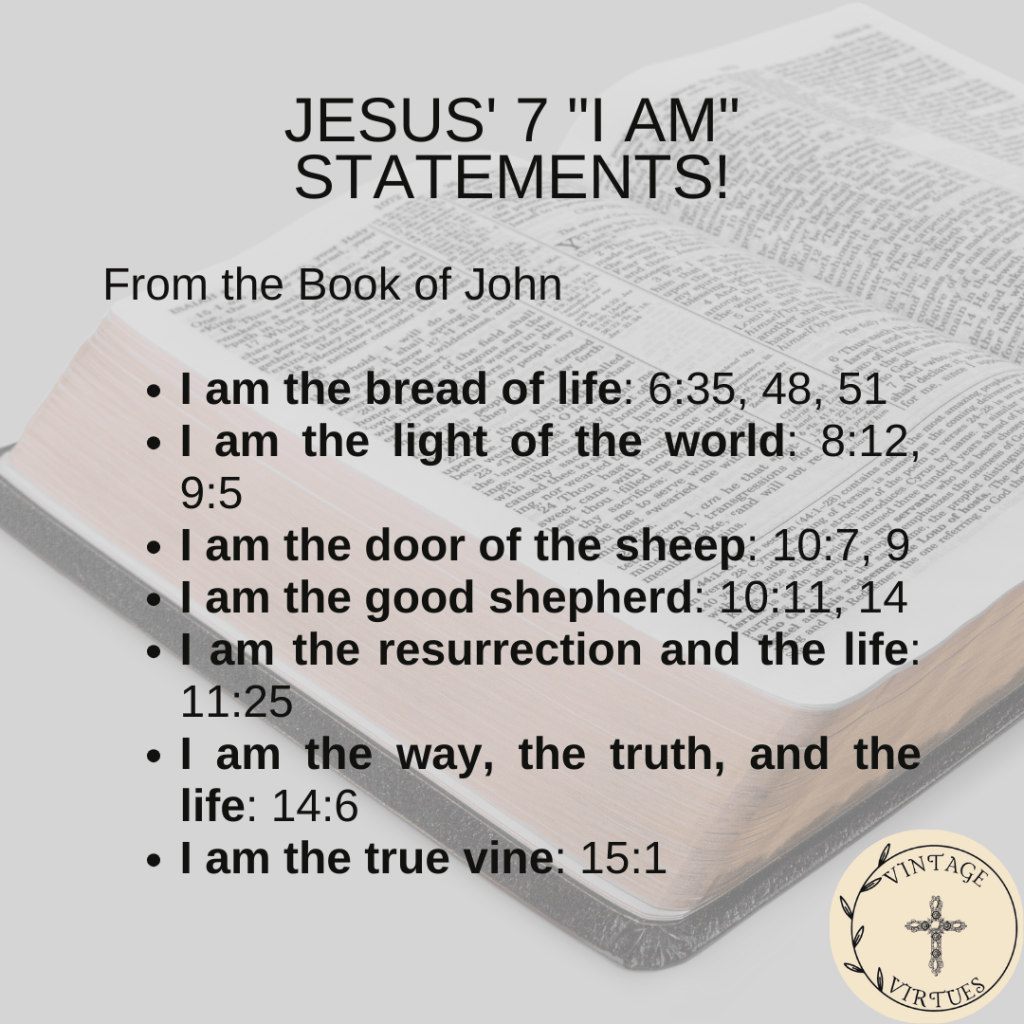
Additionally, the Book of John records Jesus’s 7 “I AM” statements, a powerful testament to his identity and purpose.
10 Key Takeaways from the Four Gospels
If one were to read the New Testament alone, without considering the context of the Old Testament, a different set of key takeaways may come to mind. However, it’s important to recognize the continuity between the Old and New Testaments, as the Bible is essentially one cohesive book that tells a complete story. Taking the fuller context into account, here is a list of 10 key takeaways:
1. Trinitarian Nature Revealed: The Gospels affirm the Trinitarian nature of God, echoing Genesis 1:2 and 1:26. Jesus’ declaration of his divinity in John 10:30 (“I and the Father are one”) and the presence of the Holy Spirit at Jesus’ baptism (Matthew 3:16-17) further illuminate this concept, revealing the Word made flesh, dwelling among humanity. The Word became flesh and dwelt among us, and we beheld His glory, the glory as of the only begotten of the Father, full of grace and truth (John 1:1, 14).
2. Jesus Christ, Fulfillment of Foreshadows and Messianic Prophecies:
Matthew’s Gospel highlights Jesus as the fulfillment of Old Testament prophecies, such as Isaiah 7:14 (Matthew 1:22-23), Isaiah 53 (the forbidden chapter) and Micah 5:2 (Matthew 2:5-6). From his birth in Bethlehem to his crucifixion and resurrection, Jesus fulfills the Messianic expectations foretold in ancient scriptures. This is evident in the events surrounding his life, death, and resurrection.
3. Sin Problem: Jesus addresses humanity’s sinful nature, echoing the warnings of prophets like Isaiah and Jeremiah. He even expands on what it means to violate the law, down to our thoughts, in the Sermon on the Mount (Matthew 5). His teachings on repentance (Matthew 4:17) and forgiveness (Matthew 26:28) offer redemption for all who acknowledge their sinfulness, repent, and turn to him in faith.
4. Israel 2.0 and the Continuity of Israel’s Historical Patterns: In the New Testament, the narrative of Israel’s historical struggles with sin and disobedience is acknowledged, reflecting the unchanging nature of God (Hebrews 13:8; Matthew 23:37-39). Jesus initially addressed primarily the Jewish Israelites, and the ministry was later spread to the Gentiles. It is emphasized that He came not for the righteous, but to call sinners to repentance. However, there is also a warning of the impending final judgment that will come with wrath on unrepentant sinners.
The idea of “Israel 2.0” serves as a reminder that there is nothing new under the sun. Therefore, it is prudent to observe and learn from historical patterns, to avoid repeating them. Despite the shift in covenant, the fundamental themes of obedience and consequence persist, echoing the experiences of ancient Israel.
5. Blessings and Curses: Jesus’ teachings echo the blessings for obedience (John 14:21) and consequences for sin (Matthew 7:21), reaffirming the principles outlined in Deuteronomy and the Psalms. Just as God promised blessings to the obedient, Jesus offers spiritual blessings to those who follow him faithfully.
6. Perspective on Law and Covenant: Israel had broken the terms of the Mosaic covenant. When Jesus came, he lived a sinless life and gave his life as the atoning sacrifice. He perfectly fulfilled the law and with his blood and body, established the terms of a new or renewed covenant (see Matthew 5:17, Luke 22:20). His teaching emphasized that to love God and love others are the greatest commands, on these two commandments the entire Law and the Prophets hang (Matthew 22:37-40).
7. God’s Holiness Displayed through Jesus’ Ministry: In his life and teachings, Jesus exemplifies reverence for God’s holiness (John 4:24), calling believers to worship in spirit and truth. Just as the Old Testament emphasized the holiness of God (Leviticus 11:44), Jesus reveals God’s holiness in his person and ministry. Jesus’s reverence for God’s Holiness was demonstrated in his example of driving out money changers from the temple (Matthew 21:12-13), and through His life of submission to the Father’s Will. God is Holy and worthy of our worship, pursuit of righteousness, and humble submission to His Will.
8. Relevance of Sabbath and Biblical Feasts: The gospel accounts demonstrate that Jesus and his disciples participated in Sabbaths, Unleavened Bread, Passover, and other Biblical Feasts. Jesus never condemns these practices for believers but addresses the legalistic nature in which the Pharisees and others were observing them. Jesus confirms the relevance of practices such as Sabbath observance (Mark 2:27) and the Passover Feast (Luke 22:15-16), revealing their deeper significance within the context of his ministry. Even after his death, the disciples continued these practices, which will be explored further in upcoming articles.
9. Display of God’s Sovereignty through Jesus’ Ministry: God’s sovereign plan for ultimate redemption, encompassing not only Israel but also the Gentiles, becomes more evident throughout Jesus’ ministry. Despite the Israelites breaking the covenantal terms, Jesus Christ, the sinless lamb, humbly submitted to God the Father’s sovereign, redemptive plan. We begin to see this through Jesus’ birth, life, death, resurrection, and ascension. Even in light of humanity’s “free will,” God’s sovereignty as revealed through Jesus’ ministry in the Gospels remains evident. For example, in Mark 4:35-41, Jesus calms a storm, asserting his power over the forces of nature as the Son of God.
10. Pursuit of Wisdom, Righteousness, and Understanding Through Christ’s Teachings: Jesus’ teachings in the Gospels embody the pursuit of wisdom and righteousness revealed throughout the Old Testament (Proverbs 9:10, Psalm 119:105). Just as the scriptures emphasized righteous living, Jesus calls believers to embody these values in their daily lives, reflecting the character of God.
- Wisdom
- In Matthew 7:24, Jesus illustrates that those who hear His words and put them into practice are like wise individuals who build their house on a rock.
- In Mark 6:2, the astonishment over Jesus’ wisdom and remarkable miracles demonstrates the recognition of His exceptional insight.
- Moreover, the disciples are encouraged to be “wise as serpents and innocent as doves” (Matthew 10:16), and Jesus highlights that true wisdom is a gift from God, revealed to those who receive the kingdom with humility, emphasizing the importance of childlike faith (Matthew 11:25, 18:3-4).
- Righteousness
- The pursuit of righteousness is exemplified in Matthew 13:44-46, where it emphasizes the unrelenting desire for justice and holiness.
- Additionally, in Matthew 5:1-11, the pursuit of righteousness is described as the choice to live a consistently righteous lifestyle before the Lord.
- Understanding
- In Luke 1:27, it is expressed that the opening of understanding enables individuals to comprehend the scriptures, highlighting the transformative nature of understanding by the Spirit.
Exploring the New Testament
We’ve delved into the first four books of the New Testament, and there are still 23 left to cover. Uupcoming articles will offer more condensed summaries compared to this one. The next installments will cover The Acts of the Apostles, Letters from the Apostles, and finally conclude the series with Revelation. Hyperlinks to each article will be included once they are available.

You might also be interested in the Old Testament series, starting with Navigating Theological Perspectives: Journey Through the Bible in a Year – Part 1 Introduction

 Vintage Virtues
Leave a reply to Navigating Theological Perspectives: Epistles General Letters – Vintage Virtues Cancel reply