
Understanding the Sabbath: A Journey Through Scripture
Updated October 2024
I must clarify that I am not an ordained preacher or theologian. However, I am a woman committed to better understanding the Lord through His word. In this article, I will delve into the concept of the Sabbath and its significance for us as believers. Drawing inspiration from the book of Isaiah, particularly chapter 56, I have become intrigued by the role of the Sabbath in our lives.
Through my studies, I have come to appreciate the symbolic nature and meaning of Sabbath observance in both the Old Testament and New Testament era, as well as the delicate balance it strikes between the old covenant and the new covenant. Join me as we explore the importance of finding rest in Jesus and the symbolism of keeping the Sabbath for God’s people today.
Let’s start with Defining the Terms.
No wonder people are so confused with the mixed messaging. Dictionary.com gives conflicting definitions of the Sabbath:
- The Sabbath: the seventh day of the week, Saturday, as the day of rest and religious observance among Jews and some Christians.
- The Sabbath: the first day of the week, Sunday, observed by most Christians as a day of public worship and often of rest.
- Any special day of prayer, worship, or rest.
This makes it necessary to define some terms:
- Sabbath: Most Jewish people and some Christians keep the Sabbath, as commanded throughout scripture, on the seventh day, Saturday. It is first described as being kept by the Israelites (and those who joined them) in Exodus 16:22-30.
- Lord’s Day: Many Christians commemorate the Resurrection of Christ on Sunday, also known as the Lord’s Day. In Acts 20:7, it is mentioned that the disciples gathered on the first day of the week (Sunday) for worship.
According to Got Questions, “Christians worship on Sundays in celebration of the resurrection of Jesus Christ. It is very important to remember, though, that Sunday worship is not commanded in the Bible, and Sunday has not replaced Saturday and become the Christian Sabbath. While the New Testament describes Christians gathering and worshiping on Sundays, it nowhere states that Sunday has replaced Saturday as the Sabbath.”
The Significance of the Sabbath
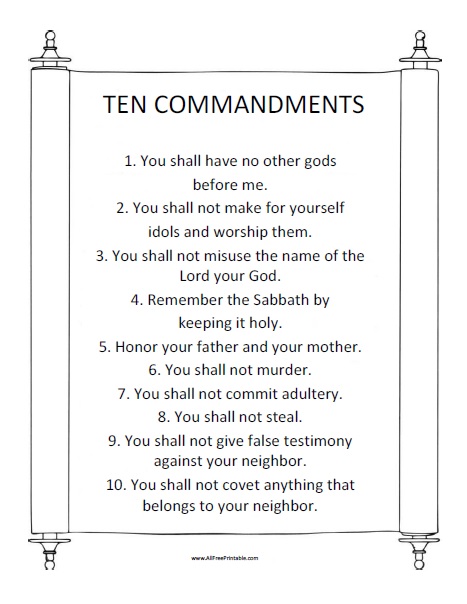
About a decade ago, I was reading the Ten Commandments in the Bible when the fourth commandment caught my attention: “Remember the Sabbath day, to keep it holy.” This commandment prompted me to reflect on my commitment to following the other commandments, which emphasize loving both God and others. However, I found myself uncertain about how to practically keep the Sabbath holy. What does it truly mean to observe this day of rest?
Seeking clarity, I consulted a pastor who explained that Jesus is our Sabbath rest. While this perspective resonated with me, I still struggled to implement a day of rest in my busy life as a mother, working professional, student, and church volunteer. I never felt fully rested and questioned why the fourth commandment seemed to be considered more optional in our culture, even among Christians.
I remember a time when Sundays were quiet. Restaurants and shops would close, mail was not delivered, and church attendance was the main event. Sunday dinners with loved ones were a cherished tradition—a day dedicated to rest and worship. Not long ago, we even had a law that prohibited the sale of alcohol on Sundays in our town. But times have changed. Businesses began opening on Sundays, mail delivery became routine, and some churches reduced their services. Employers started scheduling workers for weekends, including Sundays. Even my husband is now required to work every other weekend.
The cultural landscape has shifted, and Sundays no longer hold the same sanctity for rest and worship. In this regard, I found solace in the words of D.L. Moody, penned in 1898, founder of the Moody Bible Institute:
“The sabbath was binding in Eden, and it has been in force ever since. This fourth commandment begins with the word ‘remember,’ showing that the sabbath already existed when God wrote this law on the tables of stone at Sinai. How can men claim that this one commandment has been done away with when they will admit that the other nine are still binding?
I believe that the sabbath question today is a vital one for the whole country. It is the burning question of the present time. If you give up the sabbath, the church goes; if you give up the church, the home goes; and if the home goes, the nation goes. That is the direction in which we are traveling.”
– D.L. Moody, Weighed and Wanting: Chapter 6 – Fourth Commandment, http://articles.ochristian.com/article18044.shtml

The Significance of the Sabbath: A Reflection
Fast forward to the present year, I have been reading through the Bible chronologically, and one thing that has been on my mind is the concept of the Sabbath. I decided to delve deeper into this topic, as I find that real-life application is the best way to learn. On the Monday of the week that I originally wrote this article, I encountered a rather challenging day. I had been reading Isaiah, researching the Sabbath, and reflecting on it in my journal throughout the week. Then, on that particular Monday, I experienced a real-life lesson that truly made everything click.
It was one of those days when I intended to sit down to read, pray, and journal. However, my plans were interrupted when my husband and son came downstairs earlier than usual. My husband had jury duty, and my son was tired and uncooperative, causing our homeschooling day to run late until 3 PM. To add to the chaos, the dog managed to roll in chicken poop, requiring a bath during our already busy school day. In the midst of it all, birds of prey surrounded our homestead, frightening my chickens. Still, we had to make it to my daughter’s 4 PM orthodontist appointment, followed by a trip to Walmart for some necessary items. By the time I finally got to take a break, it was already evening, and I still had to prepare a late dinner. With a long list of additional tasks waiting for me, such as balancing the checkbook, paying the bills, and catching up on laundry, I fell into bed feeling completely drained. The recurring thought that resonated with me throughout the day was, “This is what it means to rest in Jesus.”
Insights from Isaiah 56:1-7
Isaiah 56:1-7 starts by foreshadowing Jesus and instructs the audience to “Keep justice and do righteousness” because “My salvation is about to come, and My righteousness to be revealed.” This prophetic word is directed to the Israelites of that time. Verse 2 states, “Blessed is the man who does this, and the son of man who lays hold on it; who keeps from defiling the Sabbath, and keeps his hand from doing any evil.” It is not surprising that the people are urged to keep justice, do righteousness, and avoid defiling the Sabbath or doing evil, as this aligns with the expectations of the Mosaic covenant. However, as we continue reading, we encounter verses 4 and 5, which state: “For thus says the Lord: ‘To the eunuchs who keep My Sabbaths and choose what pleases Me, and hold fast My covenant, even to them I will give in My house and within My walls a place and a name better than that of sons and daughters; I will give them an everlasting name that shall not be cut off.’” Here, eunuchs, who do not have offspring, are promised an everlasting name, highlighting a future inheritance. Verses 6 and 7 declare, “Also the sons of the foreigner who join themselves to the Lord, to serve Him, and to love the name of the Lord, to be His servants—everyone who keeps from defiling the Sabbath and holds fast My covenant, even them I will bring to My holy mountain, and make them joyful in My house of prayer. Their burnt offerings and their sacrifices will be accepted on My altar; for My house shall be called a house of prayer for all nations.” In this context, it appears to me that even future generations, in light of Jesus’ coming, are being directed to keep the Sabbath as part of their covenant.
Sabbath as a Symbol for All Believers
I fully comprehend that we are now under a new and better covenant through the blood of Christ. I acknowledge that faith in Jesus is the requirement for salvation by grace through faith, and that genuine salvation is what consequently inspires good works. Our works do not save us. No matter how diligently we observe the Sabbath or adhere to the law, we can never achieve, on our own merit, what was accomplished by the atoning blood of Christ on the cross. However, as believers saved by grace through faith, should we consider observing the Sabbath as a desire stemming from our faith, serving as a symbolic expression of our covenant relationship?
Sabbath predates the Mosaic law; it was established on the 7th day of creation by God. On the 7th day, He rested:
“And on the seventh day God finished his work that he had done, and he rested on the seventh day from all his work that he had done. So God blessed the seventh day and made it holy because on it God rested from all his work that he had done in creation” (Genesis 2:1-3).
According to Matthew Henry’s commentary, the Sabbath is not only for the Jews but for all mankind.
2. That we religiously observe the sabbath day, v. 2. We are not just if we rob God of his time. Sabbath-sanctification is here put for all the duties of the first table, the fruits of our love to God, as justice and judgment are put for all those of the second table, the fruits of our love to our neighbor. Observe, (1.) The duty required, which is to keep the sabbath, to keep it as a talent we are to trade with, as a treasure we are entrusted with. “Keep it holy; keep it safe; keep it with care and caution; keep it from polluting it. Allow neither yourselves nor others either to violate the holy rest or omit the holy work of that day.” If this be intended primarily for the Jews in Babylon, it was fit that they should be particularly put in mind of this, because when, by reason of their distance from the temple, they could not observe the other institutions of their law, yet they might distinguish themselves from the heathen by putting a difference between God’s day and other days. But it being required more generally of man, and the son of man, it intimates that sabbath-sanctification should be a duty in gospel times, when the bounds of the church should be enlarged and other rites and ceremonies abolished. Observe, Those that would keep the sabbath from polluting it must put on resolution, must not only do this, but lay hold on it, for sabbath time is precious, but is very apt to slip away if we take not great care; and therefore we must lay hold on it and keep our hold, must do it and persevere in it. (2.) The encouragement we have to do this duty: Blessed is he that doeth it. The way to have the blessing of God upon our employments all the week is to make conscience, and make a business, of sabbath-sanctification; and in doing so we shall be the better qualified to do judgment and justice. The more godliness the more honesty, 1 Tim. 2:2.Matthew Henry Commentary on Isaiah 56
Understanding the Sabbath: A Deeper Dive
The concept of the Sabbath holds significant importance for followers of Christ. To gain a deeper understanding, I referred to the ESV Study Bible, which includes valuable cross-references between the Old and New Testaments.
Jesus, The Gospels, and Sabbath-keeping
The ESV Study Bible sheds light on Sabbath observance within the Gospel. In Matthew 12:6, Jesus declares, “I tell you, something greater than the temple is here.” This statement emphasizes that Jesus Himself frees us from the impossible task of earning salvation through works. Matthew 12, subtitled “Jesus is Lord of the Sabbath,” does not abolish the Sabbath; rather, it reveals that the legalistic restrictions imposed on it are misguided. Jesus clarifies the true intent of the Sabbath.
In Mark 2:27-28, Jesus proclaims, “The Sabbath was made for man, not man for the Sabbath. So, the Son of Man is Lord even of the Sabbath.” He affirms His authority over the Sabbath and highlights its purpose as a benefit to humanity. In John 5:10, we witness Jesus healing a man on the Sabbath. The Pharisaical Jews chastise the man for carrying his bed, citing it as a violation of the Sabbath law. This incident prompts reflection on the fact that Jesus, as a carpenter by trade, was never accused of working on the Sabbath for personal gain. Rather, His actions on the Sabbath were focused on ministry, healing, and meeting the needs of others. Throughout the time of Jesus in the Gospels, we see he who was without sin, keeping the Sabbath along with His disciples. Even after His death, the apostles continued to observe the Sabbath and the feasts.
The ESV Study Bible also notes that Jesus’s frequent confrontations regarding Sabbath observance indicate His intentions to change the legalistic requirements surrounding it. Thus, we are encouraged to follow Jesus’s example of resting from our daily occupations on the Sabbath while being free to engage in the works assigned to us by the Lord.
Additional New Testament References
The ESV Study Bible provides several New Testament cross-references crucial for interpreting the Sabbath. According to the ESV, Romans 14:5 demonstrates that the significance of one particular day over another is a matter of personal conviction: “One person esteems one day as better than another, while another esteems all days alike. Each one should be fully convinced in his own mind.” Additionally, Galatians 4:10-11 reveals Paul’s concern over observing days, months, seasons, and years: “You observe days and months and seasons and years! I am afraid I may have labored over you in vain.”
However, the ESV Study Bible acknowledges the importance of resting from work regularly and having set times for worship. While some may consider the Sabbath commandment to be ceremonial and not binding on New Testament believers, others argue that the Sabbath predates the Mosaic laws and represents an eternal covenant symbol given by God during creation.
Further, some will point to Colossians 2:16-17, which states: “Therefore let no one pass judgment on you in questions of food and drink, or with regard to a festival or a new moon or a Sabbath. These are a shadow of the things to come, but the substance belongs to Christ.” This implies that we shouldn’t keep the Sabbath or festivals. However, it seems those enduring hardship and judgment in both this passage and our current culture are the ones who are observing the Sabbath (and feasts). No one seems to care if you don’t, but if you do, you may be labeled “legalistic” or accused of trying to be Jewish. This mirrors the situation described in the passage, in context.
Finally, Hebrews 4:8-10 asserts that there remains a Sabbath rest for the people of God: “For if Joshua had given them rest, God would not have spoken of another day later on. So then, there remains a Sabbath rest for the people of God; for whoever has entered God’s rest has also rested from his works as God did from his. Let us therefore strive to enter that rest, so that no one may fall by the same sort of disobedience.”
Closing Reflections
Our family has found a deeper connection to God’s Word in the Bible, through observing the Sabbath. Our weekly Sabbath observance is not legalism or bondage; it is, in fact, a true means of liberation. I look forward to Sabbath days. On Fridays, we begin to prepare for the evening, winding down into rest mode. We enjoy a special family meal and engage in prayers. We typically attend a Sabbath Fellowship on Saturdays, enjoying a potluck-style meal, reading through the Bible with other believers, engaging in conversations, and even playing games.
The Sabbath carries great significance for believers, from its establishment during creation to its inclusion in the Ten Commandments as part of the Mosaic Law. Jesus Christ, our high priest and blameless sacrificial lamb, brought forth the ultimate atonement through His selfless act.
Anchoring ourselves in Jesus, our Sabbath rest, brings us peace amidst life’s chaos, knowing that our salvation is not dependent on our works or achievements. Because of salvation, we are moved to good works prepared long ago for us. We have the power of the Holy Spirit dwelling within us because of what Jesus did. When He died and ascended, He left us the gift of the Comforter and helpmate.
The Sabbath remains a symbol of the everlasting covenant, a holy day to rest and worship the Lord. Let us embrace the grace that saves us while dedicating time to rest and honor the One who provides true rest in Him.

 Vintage Virtues
Leave a reply to Navigating Theological Perspectives: Journey Through the Bible in a Year – Part 5 Major and Minor Prophets – Vintage Virtues Cancel reply