
When I first realized I needed to take better care of my health, I jumped on the South Beach diet, where protein was king. Naturally, I started incorporating more nuts into my diet—mainly peanuts. Fast forward many years and through exposure to various nutritional advice, I’ve encountered conflicting views. Some say nuts are making you gain weight due to their calorie content, while others claim they are essential for brain health and energy production. Diet fads are ever-changing. After sorting through the noise, I’ve committed to following a biblically clean lifestyle, not a diet! If God said it’s good, it must be.
Nuts and seeds offer a powerhouse of nutrition, but which ones should you focus on? As it turns out, many people are asking the same question—‘Pumpkin Seeds vs. Almonds’ is a trending search! So, I’ve done some digging to bring you consolidated information, as well as biblical truths, about nuts and seeds. Since nuts can be pricey, I’ve learned to strategize by purchasing them during sales from companies that provide high-quality products. Azure Standard, for example, operates using biblical principles, including giving their rotating fields a Sabbath rest every seventh year. I also keep an eye on deals at Thrive Market.
In this article, I’ll cover the nutritional power of seeds and nuts, highlight the top five of each, provide source-cited nutritional comparison, and offer an overall biblically clean perspective.
The Nutritional Power of Seeds
Seeds are nutrient-dense, high in healthy fats, fiber, and crucial vitamins and minerals like magnesium and zinc. It was one of the first foods given to humanity. So God said, “Behold, I have given you every plant yielding seed that is on the surface of the entire earth, and every tree which has fruit yielding seed; it shall be food for you” (Genesis 1:29). Not only are seeds essential for growing new plants and trees, but many seeds are also nutritionally beneficial as food.
Let’s take a closer look at the Top 5 Seeds for Nutrition:
Top 5 Seeds for Nutrition
- Pumpkin Seeds
- Nutritional Facts: High in magnesium, zinc, omega-3 fatty acids, and protein, raw pumpkin seeds are a great source of vital nutrients for overall health.
1 ounce (28g) contains:- Magnesium: 37% of the RDI
- Zinc: 14% of the RDI
- Protein: 7 grams
Source: USDA Nutrient Database
- Benefits: Supports heart health, boosts energy production, and improves immune system function. The high magnesium content also helps regulate melatonin, promoting better sleep.
Source: Healthline - How to Incorporate: Roast them for a crunchy snack or add to salads and soups for extra texture. You can also try making pumpkin seed butter for a nutty taste spread that’s rich in healthy fatty acids.
- Nutritional Facts: High in magnesium, zinc, omega-3 fatty acids, and protein, raw pumpkin seeds are a great source of vital nutrients for overall health.
- Chia Seeds
- Nutritional Facts: High in omega-3 fatty acids, dietary fiber, and protein, chia seeds are a perfect addition to a healthy diet.
1 ounce (28g) contains:- Omega-3 fatty acids: 5 grams
- Fiber: 10 grams
- Protein: 4.7 grams
Source: USDA Nutrient Database
- Benefits: Promotes digestion, supports heart health, and sustains energy levels due to their rich fiber and healthy fat content.
Source: Harvard T.H. Chan School of Public Health - How to Incorporate: Make chia pudding, add to smoothies, or sprinkle over yogurt for added texture and nutrition. With their essential role in balancing macronutrient ratios, chia seeds are ideal for maintaining stable blood sugar levels.
- Nutritional Facts: High in omega-3 fatty acids, dietary fiber, and protein, chia seeds are a perfect addition to a healthy diet.
- Flax Seeds
- Nutritional Facts: Rich in omega-3s, lignans (antioxidants), and fiber, flax seeds are beneficial for both heart health and hormonal balance.
1 tablespoon (7g) contains:- Omega-3 fatty acids: 2.3 grams
- Fiber: 2 grams
- Protein: 1.3 grams
Source: USDA Nutrient Database
- Benefits: Supports heart health, aids in hormonal balance (especially important for women), and reduces inflammation. Flax is also linked to lower cholesterol levels.
Source: Mayo Clinic - How to Incorporate: Add to smoothies, oatmeal, or use as an egg replacer in baked goods (1 tablespoon flax meal + 3 tablespoons water = 1 egg).
- Nutritional Facts: Rich in omega-3s, lignans (antioxidants), and fiber, flax seeds are beneficial for both heart health and hormonal balance.
- Sunflower Seeds
- Nutritional Facts: High in vitamin E, magnesium, and healthy fats, sunflower seeds are a nutrient-dense food.
1 ounce (28g) contains:- Vitamin E: 37% of the RDI
- Magnesium: 26% of the RDI
- Protein: 5.5 grams
Source: USDA Nutrient Database
- Benefits: Excellent for supporting skin health due to vitamin E, promoting heart health, and reducing inflammation. Another top pick for women’s health!
Source: Cleveland Clinic - How to Incorporate: Enjoy raw or roasted as a snack, blend into sunflower seed butter, or add to smoothies and baked goods.
- Nutritional Facts: High in vitamin E, magnesium, and healthy fats, sunflower seeds are a nutrient-dense food.
- Hemp Seeds
- Nutritional Facts: A complete source of protein (contains all 9 essential amino acids), rich in omega-3 and omega-6 fatty acids.
3 tablespoons (30g) contain:- Protein: 10 grams
- Omega-3 fatty acids: 1 gram
- Omega-6 fatty acids: 2.7 grams
Source: USDA Nutrient Database
- Benefits: Supports brain function, muscle recovery, and provides a healthy balance of essential fats, making them great for athletes and vegans.
Source: WebMD - How to Incorporate: Blend into smoothies, sprinkle over salads, or add to homemade granola for a boost of protein and healthy fats.
- Nutritional Facts: A complete source of protein (contains all 9 essential amino acids), rich in omega-3 and omega-6 fatty acids.
By incorporating these seeds into your daily diet, you can reap a variety of health benefits that support everything from heart and brain function to skin health. Not only are these seeds biblically clean, but they are also a simple way to add nutrient density to your meals!
The Nutritional Power of Nuts
Nuts are a true nutritional powerhouse, offering a range of health benefits. Packed with healthy fats, protein, fiber, and essential vitamins and minerals, they play a key role in a balanced diet. In Genesis 43:11, pistachios and almonds are listed among the “choicest products of the land.” Let’s explore the Top 5 Nuts for Nutrition and how they can support your health.
Top 5 Nuts for Nutrition
- Almonds
- Nutritional Facts: Rich in vitamin E, magnesium, fiber, and healthy fats, almonds are a staple in a healthy diet.
1 ounce (28g) contains:- Vitamin E: 37% of the RDI
- Magnesium: 19% of the RDI
- Fiber: 3.5 grams
- Protein: 6 grams
Source: USDA Nutrient Database
- Benefits: Promotes heart health, controls blood sugar levels, and supports weight management. Almonds are particularly beneficial for cardiovascular health due to their rich profile of monounsaturated fats.
Source: Mayo Clinic - How to Incorporate: Snack on raw almonds, use almond butter as a peanut butter alternative, or bake with almond flour. Almonds’ nutty flavor also adds a delightful touch to various dishes.
- Nutritional Facts: Rich in vitamin E, magnesium, fiber, and healthy fats, almonds are a staple in a healthy diet.
- Walnuts
- Nutritional Facts: Highest in omega-3 among nuts, and rich in antioxidants due to polyphenols, walnuts are essential for a balanced diet.
1 ounce (28g) contains:- Omega-3 fatty acids: 2.5 grams
- Antioxidants: Significant levels due to polyphenols
Source: USDA Nutrient Database
- Benefits: Supports brain health, reduces inflammation, promotes heart health, and are linked to a significant drop in diabetes risk making them a great choice for overall health.
Source: Harvard T.H. Chan School of Public Health - How to Incorporate: Snack on walnuts, mix into trail mix, or grind them to use as a breading alternative for coating meat or fish. Walnuts’ nutty taste can enhance various dishes.
- Nutritional Facts: Highest in omega-3 among nuts, and rich in antioxidants due to polyphenols, walnuts are essential for a balanced diet.
- Cashews
- Nutritional Facts: Rich in copper, magnesium, and healthy fats, cashews are an excellent source of vital minerals.
1 ounce (28g) contains:- Copper: 67% of the RDI
- Magnesium: 20% of the RDI
- Protein: 5 grams
Source: USDA Nutrient Database
- Benefits: Promotes bone health, supports heart health, and helps regulate blood sugar levels. Cashews’ magnesium content is particularly beneficial for bone strength and maintaining a healthy metabolism.
Source: National Institutes of Health - How to Incorporate: Enjoy cashews as a snack, add them to stir-fries, or blend them into a creamy cashew nut butter. Cashews also offer a great balance of essential fatty acids.
- Nutritional Facts: Rich in copper, magnesium, and healthy fats, cashews are an excellent source of vital minerals.
- Pistachios
- Nutritional Facts: High in antioxidants, protein, and healthy fats, pistachios are a nutritious choice for snacks and meals.
1 ounce (28g) contains:- Protein: 6 grams
- Fiber: 3 grams
Source: USDA Nutrient Database
- Benefits: Supports eye health, aids in weight management, and promotes heart health. Pistachios are rich in lutein and zeaxanthin, antioxidants that support vision.
Source: American Heart Association - How to Incorporate: Enjoy them as a snack, add to salads, or mix into baked goods for extra crunch and nutrition. Their nutty flavor enhances both sweet and savory dishes.
- Nutritional Facts: High in antioxidants, protein, and healthy fats, pistachios are a nutritious choice for snacks and meals.
- Brazil Nuts
- Nutritional Facts: Extremely high in selenium, an essential mineral for thyroid function.
1 ounce (28g) contains:- Selenium: 774% of the RDI (1-2 nuts can meet daily selenium needs)
Source: USDA Nutrient Database
- Selenium: 774% of the RDI (1-2 nuts can meet daily selenium needs)
- Benefits: Supports immunity, thyroid health, and provides powerful antioxidant protection. Just 2 Brazil nuts a day can help manage thyroid function and improve overall immune response.
Source: WebMD - How to Incorporate: Add them to your morning smoothie, or simply snack on them whole. Their high mineral density and nutty flavor make them a nutritious addition to your diet.
- Nutritional Facts: Extremely high in selenium, an essential mineral for thyroid function.
Nuts are a fantastic addition to any diet, and each variety offers unique benefits for your health. By incorporating a range of nuts like almonds, walnuts, and Brazil nuts, you can support everything from heart health to cognitive function. Plus, these nuts are biblically clean and nutrient-dense, making them a perfect fit for a wholesome lifestyle!
Seeds vs Nuts: A Nutritional Comparison
Below is a simple table comparing key nutritional metrics (calories, fats, protein, fiber, vitamins, and minerals) for the top 5 seeds and top 5 nuts.
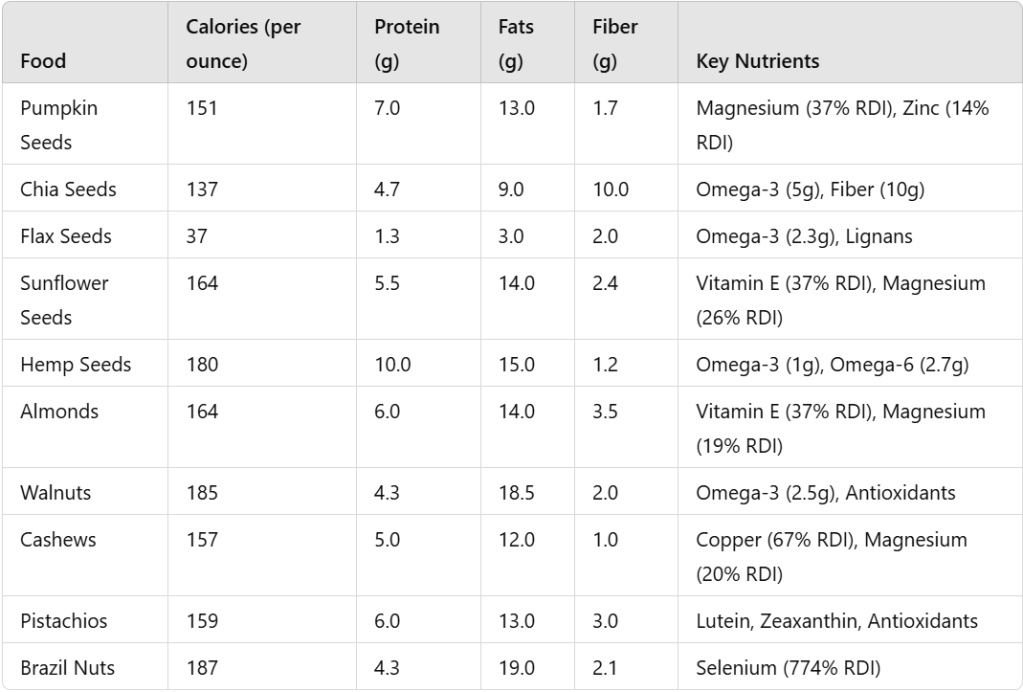
When choosing between seeds and nuts, both offer unique benefits, depending on your health goals and nutritional needs. Here’s a quick comparison:
Seeds:
- High in Fiber and Omega-3s: Seeds such as chia and flax are packed with dietary fiber and heart-healthy omega-3 fatty acids. These nutrients are crucial for digestion, maintaining energy levels, and supporting heart health. Raw pumpkin seeds are particularly notable for their fiber content and omega-3s.
- Complete Protein (Hemp Seeds): Hemp seeds are a great source of essential amino acids, providing all nine necessary for protein synthesis. This makes them a perfect option for vegans or those seeking plant-based protein.
- Rich in Magnesium and Zinc (Pumpkin Seeds): Pumpkin seeds are excellent for boosting magnesium and zinc intake, which supports immune system function, overall health, and heart health. They also offer significant amounts of vitamin B and are linked to positive effects on sleep and relaxation.
Source: National Institutes of Health - Lower in Calories and Fats: Compared to nuts, seeds tend to be lower in calories and fats. They are often used as toppings or in recipes rather than as standalone snacks.
Nuts:
- Higher in Protein and Healthy Fats: Nuts like almonds and walnuts offer more protein and healthy fatty acids compared to seeds, making them ideal for heart health, brain function, and reducing inflammation. They are a rich source of monounsaturated fats, which can help lower blood pressure and maintain macronutrient ratios.
- Rich in Essential Minerals (Brazil Nuts and Cashews): Brazil nuts are an exceptional source of selenium, which plays a crucial role in thyroid function. Cashews are high in magnesium, contributing to bone health and supporting overall vitamin density.
Source: USDA Nutrient Database - Calorie-Dense for Energy: Nuts are more calorie-dense, making them great for energy production. They should be consumed in moderation if weight management is a goal.
Incorporating Seeds and Nuts into Your Diet
Practical Tips for Daily Consumption:
- Nuts: Snack on them for a protein boost, enjoy nut butters like almond protein powder in smoothies, or use nut flours such as almond flour in baking. Nuts also have a delightful nutty flavor that enhances many dishes.
- Seeds: Add them as toppings to salads or yogurt, blend them into smoothies, or use flax seeds as an egg replacer in baking. Pumpkin seed butter is also a tasty and nutritious alternative.
- Bonus: Try this delicious Almond Flour Honey Cake (at the bottom of the linked article) for a nutritious dessert. This recipe incorporates almond flour and showcases a great way to enjoy nuts.
Where to Purchase For high-quality, organic seeds and nuts, I recommend two trusted sources:
- Azure Standard: Committed to biblically clean practices, perfect for stocking up on homesteading staples.
- Thrive Market: Get $40 off your first order using this link!
Conclusion Seeds and nuts are a powerful part of a healthy, balanced lifestyle, as highlighted throughout this article. Despite some concerns about their fat content, they offer nutritional value and are a nutrient-dense gift that should not be overlooked. Their unique benefits, such as supporting energy production and providing essential minerals, make them valuable additions to any diet.
Don’t forget to check out Azure Standard and Thrive Market for your seeds and nuts needs! Your support through affiliate links helps offset the cost of operating this blog and is greatly appreciated but never required.
Have your own creative ways to incorporate seeds and nuts? Share your ideas in the comments!
 Vintage Virtues
Leave a comment