
Updated: April 2024
I finished reading the Old Testament last year and wrote summaries of each of the types of books. If you’d like to read those summaries, start here: Navigating Theological Perspectives: Journey Through the Bible in a Year – Part 1 Introduction. In those articles, you’ll learn a little bit about my journey of navigating Christian theology through the lens of a few denominations as well as what I learned along the way. After all of that, I still felt like something was incomplete, call it the intertestamental silence. So, I thought I’d write a conclusion to wrap up my overall thoughts on the Old Testament, as a whole before moving into the New Testament. I’ve since completed the New Testament in the New Year, with a group of Vintage Virtues folks, I will link those summaries here, once they’re complete. It was refreshing to read through the New testament, with the Old Testament in mind. In the Old Testament, there were some major recurring themes, key takeaways, and the setting stage for the New Testament. A solid understanding of Old Testament theology serves as a strong foundation for the New. Below I’ll share my 10 Key Takeaways from the Old Testament.
In essentials, unity; in non-essentials, liberty; in all things, charity
Here is my disclaimer, well sort of. Globally, there are more than 45,000 Christian church denominations, with over 200 in the U.S. The five major branches of Protestant churches are Lutheranism, Anglicanism, the Reformed and Presbyterian (Calvinist) churches, Methodism, and the Baptist churches.
Intrigued by various Protestant Christian theologies — from Charismatic to Southern Baptist, Hebrew Roots / Messianic, Reformed Calvinist, and even Lutherans — I embarked on a Bible-in-a-Year journey to explore God’s Word over denominational preferences and Christian tradition. I focused on quality over quantity and successfully made it through the Old Testament.
The differences between denominations involve deeper theological nuances, including beliefs about spiritual gifts, the relevance of Sabbaths and Feasts, the debate between free will and predestination, who God’s chosen people are (elect vs people of Israel vs the church), the concept of double predestination, and varying perspectives on end-times eschatology. Much of the division can be seen within the early church, which we see more so in the New Testament. These differences contribute to the unique perspectives held by each group. I found myself aligning with some beliefs from each denomination. Although many Christians may hold a different perspective (on non-essential issues), I cling to the fact that we, of the Christian Faith, are saved by grace through faith in Christ Jesus: “For it is by grace you have been saved through faith, and this not from yourselves; it is the gift of God, God saved you by his grace when you believed” (Ephesians 2:8) and that unity among Christians is God’s Will “There is neither Jew nor Greek, there is neither slave nor free, there is neither male nor female; for you are all one in Christ Jesus. And if you are Christ’s, then you are Abraham’s offspring, heirs according to promise” (Galatians 3:28-29). Bearing that in mind, let us unite in the essentials, offer liberty in non-essentials, and charity in the rest.
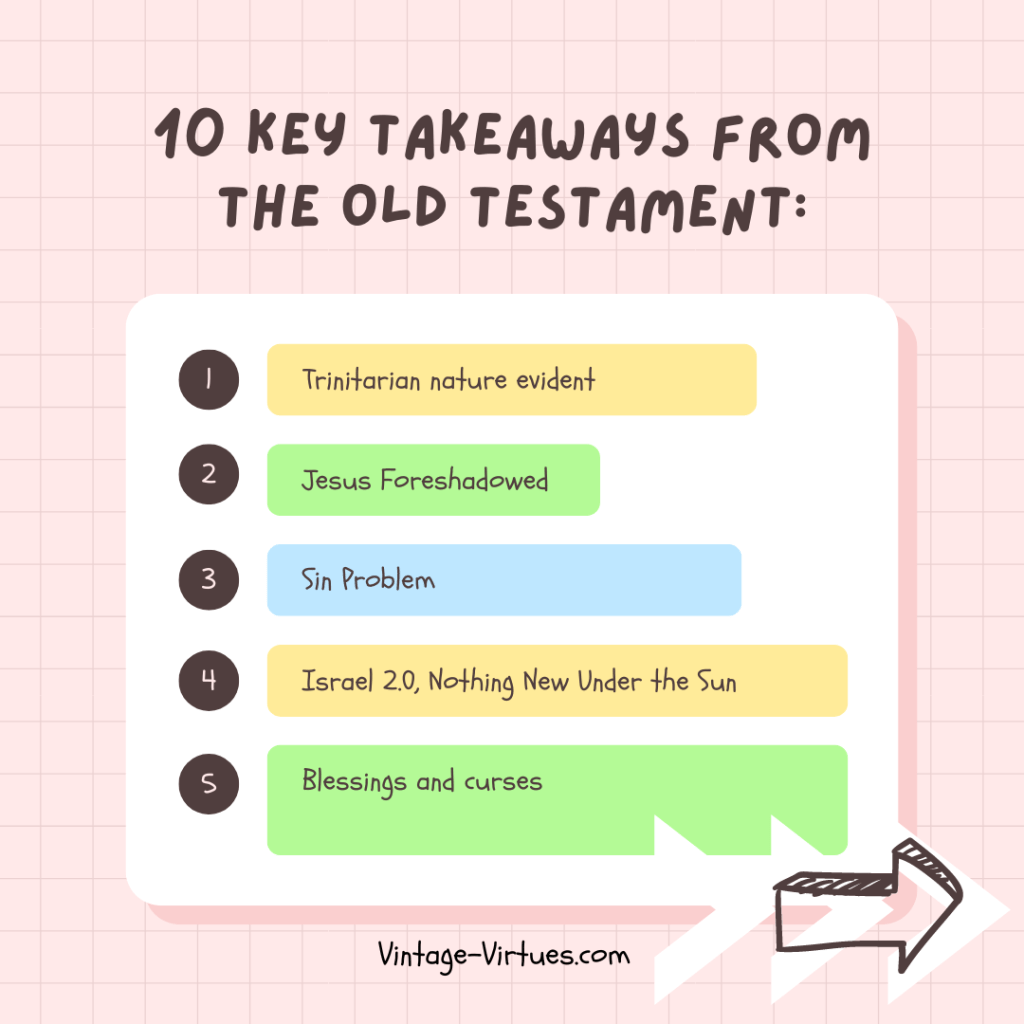
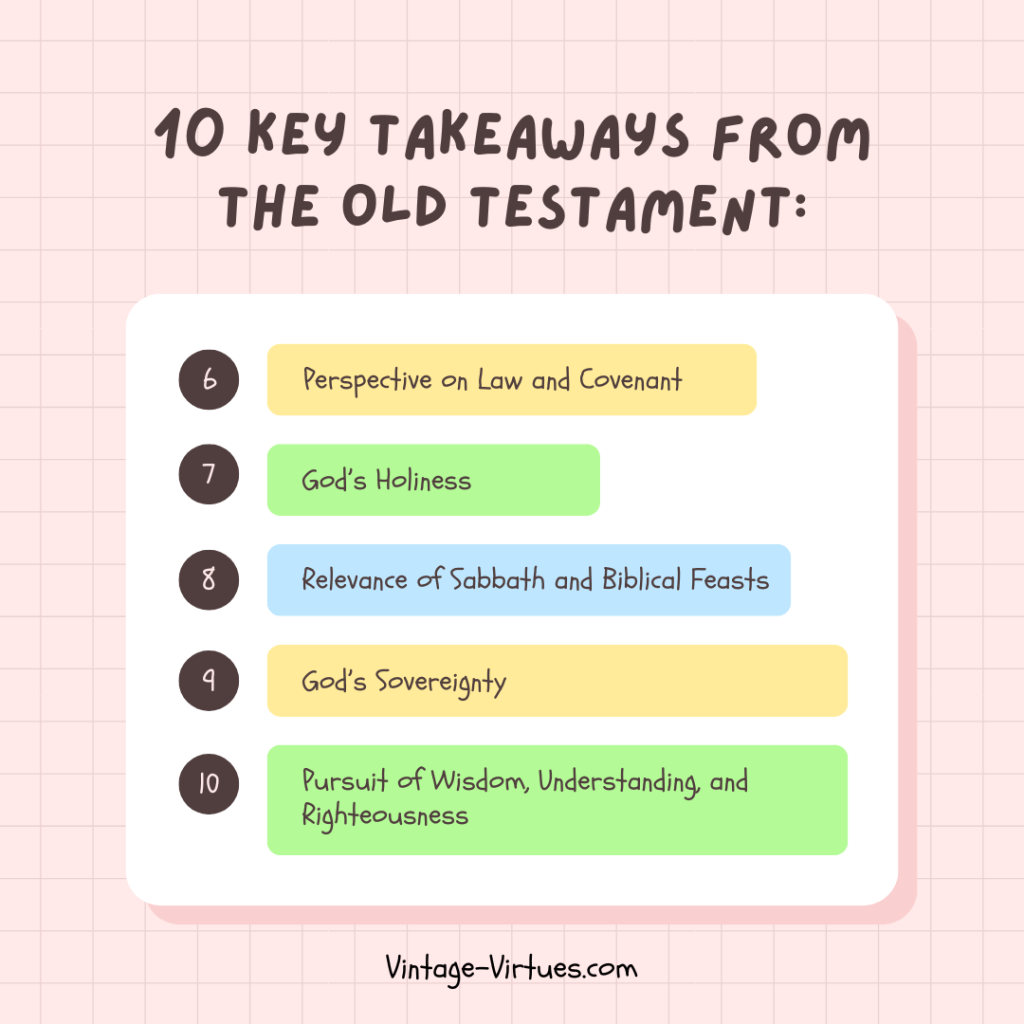
10 Key Takeaways from the Old Testament:
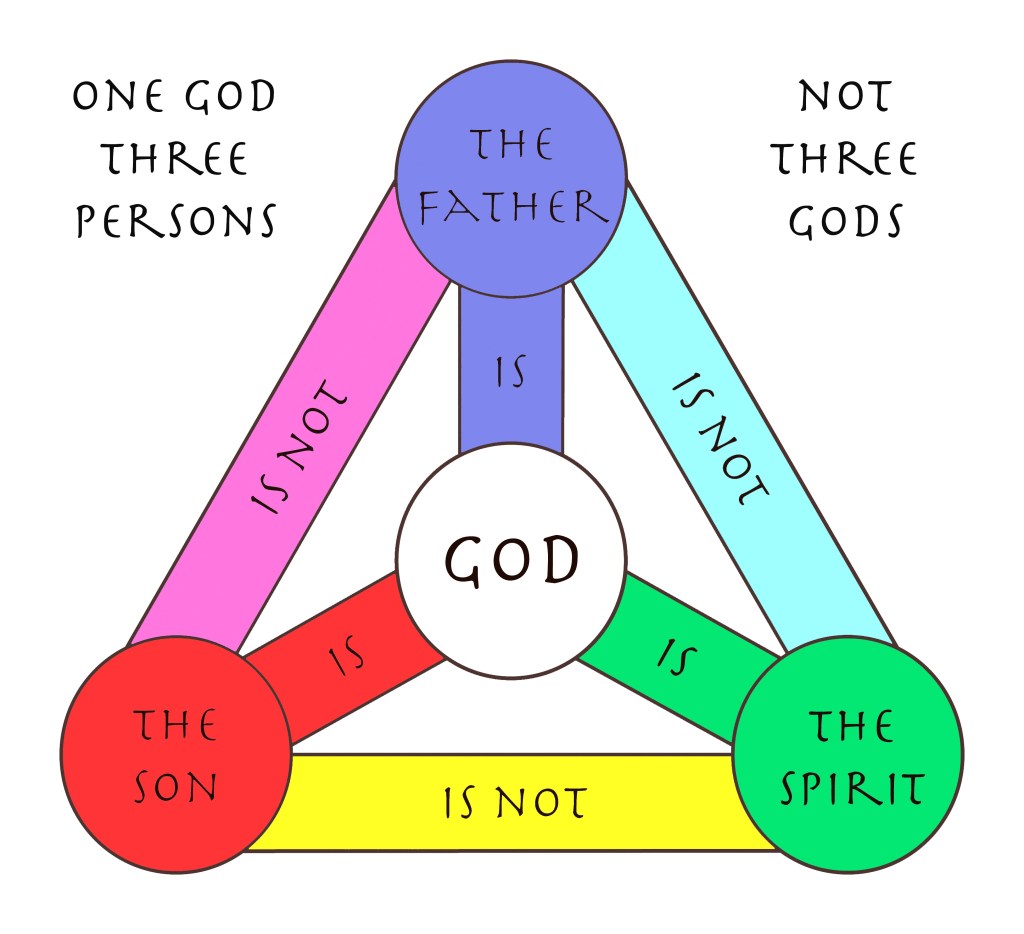
1. Trinitarian nature: With some knowledge of the New Testament in mind, I observed the following in the Old Testament: The Trinitarian nature of God is evident from the beginning creation account. In Genesis 1:2, where the Spirit of God was hovering over the waters. Then in Genesis 1:26, God said, “Let US make man in our image, after our likeness.” This plural language usage reveals the Trinitarian nature of God almost immediately, a concept later confirmed in the New Testament, specifically in the gospel of John. In the beginning was the Word, and the Word was with God, and the Word was God. And the Word became flesh and dwelt among us, and we beheld His glory, the glory as of the only begotten of the Father, full of grace and truth (John 1:1, 14). Jesus is the word of God. He is also the image of the invisible God (Colossian 1:15) and in Him the whole fullness of deity dwells bodily (Colossians 2:9). In God’s trinitarian nature, we see divine attributes in both the Son of God / Son of Man (Jesus Christ) and the Holy Spirit, throughout scripture. God is depicted as the source of light before the creation of the moon, sun, or stars, and Jesus later referred to as “the light of the world” (John 8:12), during the feast of dedication, also known as Hannukah. The image below helped me better understand how the concept of trinity operates.
2. Jesus Foreshadowed: The Old Testament continues to foreshadow and point to Jesus. Jesus is the heart of the gospel, is evident throughout the Old Testament, magnified in presence in the books of the Old Testament Prophets, especially Isaiah 53, considered the forbidden chapter because of how well it describes Him. From the story of Abraham and Isaac, to Moses, to the story of Ruth and her kinsmen redeemer, we can see a type of Christ foreshadowed, and God’s unfolding plan of redemption throughout the books of the Old Testament.
3. Sin Problem: Human beings have a sin problem. The Old Testament shows a cyclical, generational repetition of sin. The understanding of generational sin, the arrival of the law to reveal humanity’s sin nature, and the complexity of the sacrificial system for sin atonement and purification were all illuminated. The story of David especially illustrates the tension between right and wrong, and good and evil. 75% of the Bible is composed of the Old Testament, the majority of which addresses the repetitive cyclical nature of sin, and God’s warnings and calls to repentance through prophet after prophet.
4. Israel 2.0, Nothing New Under the Sun: Ancient Israel mirrors our sin-prone human condition, yet the Israelites never truly returned to the LORD, the same sin propensity is within our culture today. Malachi 3:6 tells us the God of Israel doesn’t change, “For, I, the Lord, do not change; therefore you, O sons of Jacob, are not consumed” and it’s echoed again in the New Testament with Jesus Christ, in Hebrews 13:8 “Jesus Christ is the same yesterday and today and forever”. Ecclesiastes is profound in its relatability, emphasizing that there is “nothing new under the sun”; we just sin in different ways. Despite considering the context, culture, and audience, some profound words in these texts transcend time and culture, resonating with the whole human experience. Just like the Israelites were offered a promised land, so too are we. Furthermore, we have been granted grace by the blood of Jesus Christ, let’s not abuse that grace by continuing on in sin.
5. Blessings and curses: The leadership of Moses amidst disobedience was astounding, and the importance of trusting God’s promises was exemplified by Joshua and Caleb, as well as the blessings for obedience and consequences for sin. In Deuteronomy 28:15-46, God outlines 40 curses for Israel’s disobedience, as well as blessings for obedience in the scripture examples below:
- Deuteronomy 28:1: “The Lord will send a blessing on your barns and on everything you put your hand to”.
- Psalm 33:18: “The Lord watches over those who obey him”.
- Psalm 37:18: “The Lord takes care of those who obey him”.
- Proverbs 28:14: “Always obey the Lord and you will be happy”.
- Psalms 128:1-2: “Blessed are all who fear the Lord, who walk in obedience to him. You will eat the fruit of your labor; blessings and prosperity will be yours”.
6. Perspective on Law and Covenant: The Old Testament emphasizes the requirement of strict adherence to the law to distinguish God’s people. Additionally, it highlights a sacrificial system for atonement of sins, complete with an earthly priesthood. It is surprising to learn that the Mosaic covenant was renewed at Moab and extended to all believers who were willing to uphold its terms, as outlined in Deuteronomy 29. This extension included not only the Israelites but also foreigners, captives, servants, and future generations.
Although believers are no longer “under the law”, complete with the sacrificial system, the spirit of the law continues to operate within us. The Pharisees and others imposed an excessive burden by emphasizing the letter of the law through over 600 regulations. Today, believers have the Holy Spirit and the teachings of Jesus, along with the work of our Lord Jesus, the sacrificial lamb and high priest, and mediator of a new (renewed) and better covenant (Hebrews 7-8, and 12).
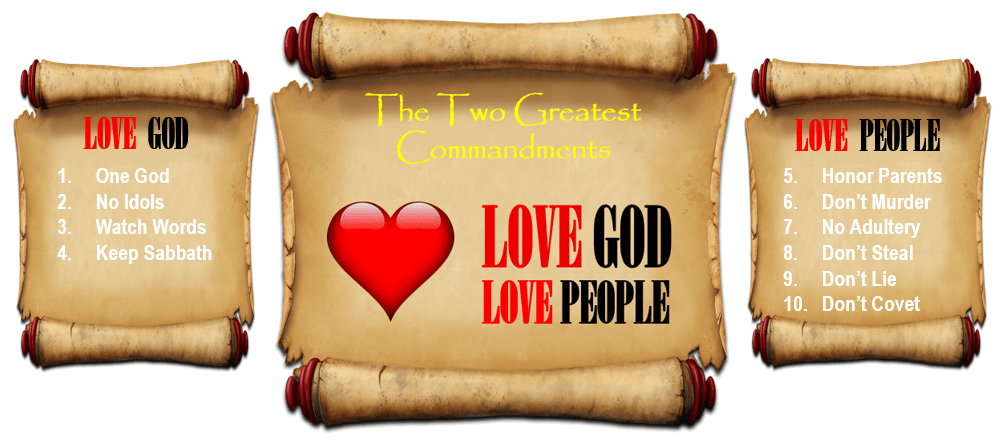
In Matthew 22:37-40, Jesus stated, “You shall love the Lord your God with all your heart, with all your soul, and with all your mind.’ This is the first and great commandment. And the second is like it: ‘You shall love your neighbor as yourself.’ On these two commandments hang all the Law and the Prophets.”
Below is a visual of the ten commandments, illustrating how each hang from the greatest commandments.
7. God’s Holiness. The Old Testament emphasizes reverent and obedient worship as the model for worship, aiding in understanding God’s holiness and our call to holiness. It mirrors our imperfection and unholiness apart from God, highlighting the need for the atoning blood of Jesus and salvation by grace through faith. God is Holy and worthy to be praised as He prescribes. He detests religious practices devoid of genuine faith, emphasizing the importance of genuine worship in relation to His holiness.
8. Relevance of Sabbath and Biblical Feasts: The observance of Sabbaths and Biblical feasts permeates the Old Testament. Some believe these have been fulfilled in the Old Testament, but the unfulfilled prophecies of Jesus’ second coming and millennial reign provide compelling evidence that both the Sabbath and Biblical feasts remain relevant for believers today. The Sabbath was established from the very beginning, as God rested on the 7th day upon completing His work. Prophetic bible verses, such as those found in the passages of Zechariah 14 and Isaiah 66, portray Sabbaths and Biblical feasts occurring in a future context. Over the past year, my family and I have actively participated in the biblical feasts, discovering a profound connection to God and His Word in a practical way. We certainly haven’t kept these in a legalistic sort of way; nevertheless, they have served to be beneficial in enriching our understanding of and connection to scripture. The latter scripture (Isaiah 66:17) also speaks of eating swine’s flesh (pork) as an abomination, right up there with consuming rats. But I digress. I believe Christian commitments should be made on the basis of faith and conviction. I now understand that the biblical interpretation of varying eschatological views will also affect how one believes these particular scriptures apply.
9. God’s Sovereignty. The theme of sovereignty is prevalent throughout the Old Testament. Despite the often-faithless nature of the people, God displays continuous faithfulness, forgiving and restoring them repeatedly. God often uses ordinary people, and even the “weaker” segments of society, such as women and underdogs, to rebuke the mighty and demonstrate His sovereignty. Though evil may prevail for a time, ultimately God’s Sovereign Will triumphs. He has the ability to repurpose sinful situations for good, in line with His sovereign plan. The sovereignty of God and the “free will” of people come into question when considering the actions of the pagan ruler Cyrus, who acts in accordance with God’s Will. The Books of Ezra-Nehemiah illustrate a fervent enthusiasm for the work that the LORD is doing among the Church, serving as a testament to the fact that God is always at work, even when His presence may not be evident. The book of Job emphasizes and reveals God’s sovereignty, showcasing how Job’s suffering is transformed for his good and God’s glory. God’s omniscience is apparent in His knowledge of our steps. Despite the prevalence of sin, God remains in control, ensuring that His plans and purposes will ultimately come to fruition.
10. Pursuit of Wisdom, Understanding, and Righteousness. As evidenced in Psalms, Proverbs, and throughout Old Testament stories such as that of Job and Solomon, we learn that wisdom and understanding are important attributes to pursue. The consistent message throughout the entire Bible is that God is holy, merciful, and abounding in love, contrary to the belief of a wrathful God in the Old Testament and a gracious God in the New Testament, He is the same. We are called to be doers, not just hearers of the word. Although righteous works do not save us, we are called to righteousness. We were not delivered to participate in abominations; we cannot willfully live in sin and serve God.
Join the Vintage Virtues Community
Thanks for taking the time to read. Your comments for further discussion are welcome. Reflecting on the Old Testament offers insights into ancient traditions, morals, and lessons that still resonate today. I also invite you to join me in Biblical Roots Homesteading & Homemaking Guide: A Vintage Virtues Community for deeper explorations of biblical living and periodic biblical studies.
If you enjoyed this article, you might also like New Testament: Gospel Journey with Matthew, Mark, Luke, John

 Vintage Virtues
Leave a comment