

This article is part 5 of a series covering the Old Testament, or Tanakh. If you haven’t read the first introductory article, click here, or here for Part 2 – Pentateuch. Click here for Part 3 – Historical Books and here for Part 4 – Poetry and Wisdom: Job, Psalms, Proverbs, Ecclesiastes, and Song of Solomon.
As you’re reading through my summaries, watching videos or viewing materials from other sources, and seeking different perspectives, I want to remind you that we are all fallible, and there may be mistakes. Feel free to correct any errors as we learn together.
I encourage you to delve into the Word for yourself, pray for wisdom from the Holy Spirit, attend a church that teaches sound doctrine, and consult with your Pastor for further clarification.
Major and Minor Prophets
The Old Testament contains a collection of books known as the Major and Minor Prophets, which are a compilation of writings from various prophets who delivered messages from God to the people of Israel. Throughout the Old Testament, especially in the prophets, God deals with nations as a whole rather than individuals. The prophets played crucial roles in delivering messages of warning, judgment, repentance, hope, and restoration to the people. The terms “major” and “minor” simply refer to the length of the writings from each prophet and not their status. While each book deserves its own article to cover its depth and complexity, brief summaries may be provided to highlight key moments for deeper insights, questions, and reflection. I hope this serves as a springboard for deeper conversations and further research.
Major Prophets
Isaiah
The book of Isaiah, the longest prophetic book in the Old Testament, is divided into two main sections: chapters 1-39 and chapters 40-66. The first section primarily focuses on God’s judgment upon the nation of Israel for their disobedience, while the second section brings hope and restoration. In Isaiah, we discover the redemption plan for Israel and mankind, including prophecies about both Jesus’ first and second comings, as well as end times prophecy. The dually prophetic nature of this book holds implications for us even today.
Chapters 1-39
God grew weary of the Israelites’ offerings, incense, sabbaths, and festivals. He viewed them as abominations and burdensome to Him. These practices had become mere rituals, lacking genuine devotion. The people had descended to a state almost as sinful as that of Sodom and Gomorrah.
This judgment is balanced with hope through the prophecy of the Messiah, Immanuel, “God with Us.” The Lord Himself will give a sign: a virgin will conceive and bear a son, and He will be called Immanuel (Isaiah 7:14). According to Isaiah 9:6, the prophecy states that a child will be born, a son will be given, and the government will rest on His shoulders. He will be called Wonderful Counselor, Mighty God, Eternal Father, and Prince of Peace. The mention of the Messiah as the Eternal Father and His rule on the throne of David point to His divine nature. In the book of Luke, an Angel visits Mary, informing her that she will conceive a child by the Holy Spirit. The Angel instructs her to name the child Jesus and declares that He will be called the Son of the Most High. He will be given the throne of His father David, and His kingdom will have no end. This fulfillment of Isaiah’s prophecy is recorded in Matthew, where it is written, “Look! The virgin will conceive a child! She will give birth to a son, and they will call him Immanuel,” which means “God is with us.” The image below displays the Old Testament cross-references alongside the corresponding New Testament fulfillment.
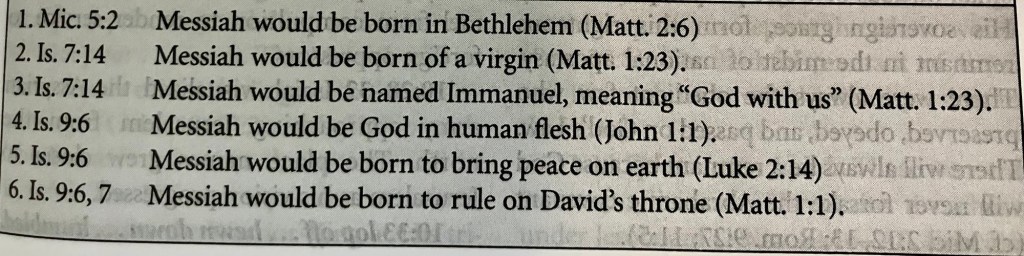
In Isaiah 24, we read about the impending judgment that will come upon the earth in the latter days. The passage highlights the desolation and decay of the earth, emphasizing that this is a consequence of the sins committed by the people. The specific laws, statutes, and everlasting covenant mentioned in the passage have been subjects of interpretation and debate among scholars and commentators.
According to the Faith Life Study Bible, if we consider only Judah or Israel in view, the covenant referred to would be the Mosaic covenant, indicating that the Israelites had failed to uphold the Law. However, considering the larger context of Isaiah 13-23, the indictment seems to be against all peoples, not just Judah. This raises the question of which specific laws and statutes are being referred to.
The Bible recap suggests that the only covenant encompassing all people is found in Genesis 9:8-16, where God promises not to flood the earth again. However, this covenant is contingent upon the agreement that people honor life. Since mankind has broken this law, they are now under the curse of that covenant.
The Believers Bible commentary sheds light on the idea that the judgment of God begins with the land of Israel but extends to include the entire earth and even the wicked beings in heaven. It states that the cause of the worldwide pollution is the breaking of the everlasting covenant. While some argue that this could refer to the Noahic covenant (Genesis 9:16), which was unconditional and depended entirely on God, others believe it is related to the covenant people had with God to obey His Word. The commentary dismisses the idea that the Mosaic law is referred to, as it was given only to Israel and is not explicitly described as an everlasting covenant.
In summary, the exact details of the laws, statutes, and everlasting covenant referred to in Isaiah 24 may remain open to interpretation. However, the passage emphasizes the consequences of mankind’s transgressions and their impact on the earth as a whole.
Chapters 40-66
Throughout these chapters, the foolishness and futility of idols is addressed, as well as Israel’s disobedience. In chapter 40, it is stated twice, “Whom can we liken to God, whom shall be his equal?” This same sentiment is echoed from the beginning, even in the book of Job. There is none like God. In chapter 41, we see more evidence of God’s vast strength and eternality. Israel is comforted by God’s words, “Fear not, For I am with you; be not dismayed, for I am your God. I will strengthen you. Yes, I will help you. I will uphold you with my righteous right hand.” It is interesting to note that Hebrews 10:12-13 states, “But when Christ had offered for all time a single sacrifice for sins, he sat down at the right hand of God…” This makes the former verse sound like another foreshadowing of Jesus to come, as God’s righteous right hand.
In chapter 43, the Word of the LORD declares, “I, even I am the LORD and beside me there is no savior” (verse 11) and “there is no one who can deliver out of my hand” (verse 13). In verses 18-21, He speaks of a new thing, how He will make a road in the wilderness – all pointing to the plan that will come to fruition in the book of John. Jesus is the way. He is the Word made flesh. Isaiah 53 is considered the “forbidden chapter” in Jewish Synagogues because of how accurately Jesus is depicted as the fulfillment of the prophesied Messiah. Here is a video that provides more insight on this topic.
Now, let’s focus on Isaiah 56:1-7. I wrote a whole article about it, examining the concept of the Sabbath. The language used in these verses does sound very much like the Sabbath is still expected, even in a future setting. You can read my article, The Relevance of Sabbath: Lingering on Isaiah 56:1-7 and let me know your thoughts.
The setting of Chapters 65 and 66 leads into the not-yet-fulfilled millennial reign when the Lord will be King on earth. This book primarily deals with the Israelites, addressing them as rebellious people regarding their abominable practices, such as eating pork, while still acting holier than thou. However, in chapter 66, starting at verse 15, the Lord is depicted as coming on chariots of fire to judge all the nations. Again, He addresses those who sanctify and purify themselves, yet eat pork, detestable things, and mice, and how they will all come to an end together. Pilgrims from all nations will come at the appointed times to worship. Isaiah describes new moons and Sabbath observance in a future context. This raises the question of why feasts, new moons, Sabbaths, and dietary laws seem to be of importance again in the future millennial reign if they’ve been done away with because of the fulfillment in Jesus Christ.
During that time, will those who are left for tribulation once again be judged by the law rather than grace? This is an interesting point for discussion.
The Forbidden Chapter: Isaiah 53 in the Hebrew Bible video
The Relevance of Sabbath: Lingering on Isaiah 56:1-7 article
Jeremiah
The LORD used yet another prophet, Jeremiah, to warn both Israel and Judah, much in the same way he used Isaiah. Jeremiah’s prophetic ministry spanned over forty years, during which he warned the people of Judah about the imminent destruction of Jerusalem and the Babylonian captivity.
The book of Jeremiah contains prophecies of judgment, lamentations, as well as promises of restoration for God’s people. In Jeremiah 3:11, it is recorded how Israel and Judah both played the harlot. At one point, Judah turned back to the LORD, but it was a false conversion because they were still playing the harlot.
Jeremiah 6:16 stood out, “Thus says the LORD: ‘Stand in the ways and see, and ask for the old paths, where the good way is, and walk in it; then you will find rest for your souls.’ But they said, ‘We will not walk in it’.” It’s like the key verse, the answer. The LORD wants to bless people, but they refuse Him. To have the answer, the solution to all of the turmoil, and yet refuse it is astonishing. Calamity was brought on the people because they would not listen to the LORD’s words or His law.
Jeremiah 7:9-11 are powerful verses with cross-reference fulfillment found in both John 2:13-17 and Luke 19:45-48 when Jesus comes to cleanse the temple. “Will you steal, murder, and commit adultery and swear falsely, and offer sacrifices to Baal and walk after other gods that you have not known, then come and stand before Me in this house, which is called by My name, and say, ‘We are delivered!’–that you may do all these abominations? Has this house, which is called by My name, become a den of robbers in your sight? Behold, I, even I, have seen it,” declares the Lord.
In Jeremiah 23, Jesus is again prophesied of, “Behold, the days are coming,” declares the Lord, “When I will raise up for David a righteous Branch; And He will reign as king and act wisely and do justice and righteousness in the land. In His days Judah will be saved, And Israel will dwell securely; And this is His name by which He will be called, ‘The Lord our righteousness.’”
Chapter 25 delves into end times prophecy with the seventy years of desolation which cross-references with Daniel’s 70 weeks. Jeremiah 31 speaks to the New Covenant, a time when a new covenant will be made with the house of Israel and the house of Judah. “But this is the covenant which I will make with the house of Israel after those days,” declares the Lord, “I will put My law within them and on their heart, I will write it; and I will be their God, and they shall be My people”. This new and better covenant will be ushered in with Jesus. In chapter 33, we learn that this will be an unbreakable covenant because it is in Jesus.
In the final chapters we learn that the people wanted to be re-enslaved in Egypt even though they had been set free. So, God’s judgment begins to pour out on all of the nations, with utter destruction to Babylon.
Lamentations
The book of Lamentations, traditionally attributed to the prophet Jeremiah, reflects on the destruction of Jerusalem and the Babylonian exile. It is comprised of five poetic laments, expressing deep sorrow and mourning. I often identify with the sentiments in this book because of my own lamenting. Verse 3:17 “The LORD has done what He purposed; He has fulfilled His word Which He commanded in the days of old” and verse 3:37 remind me of God’s sovereignty, “Who is he who speaks, and it comes to pass, when the LORD has not commanded it?”. Verse 3:40 shows the humble nature we should have, “Let us search out and examine our ways and turn back to the LORD”. Verse 4:6 shows us that the sins of the house of Judah and Israel were as grave, and in fact worse than the days of Sodom and Gomorrah. Seeing the similarities of this society to ours in America and even internationally truly causes me concern, trepidation really, for those that will fall under the final judgment of God’s wrath.
Ezekiel
Ezekiel, a watchman and prophet, was sent to Israel. He was a contemporary of Jeremiah and was exiled to Babylon with the first wave of captives. The book of Ezekiel contains a series of visions and symbolic acts that portray the judgment, restoration, and future glory of Israel. It also includes detailed prophecies about the coming Messiah and the millennial kingdom.
In chapter 8, abominations are occurring in the Temple, the wicked are slain, and the LORD’s glory departs the temple by chapter 10. Idolatry and harlotry will be punished. Essentially, these lands, including Jerusalem, will reap what they’ve sown. They’ve become more wicked than Samaria and Sodom, just as it was with the other prophets’ warnings. The people became increasingly even more wicked.
Yet, God remembers His everlasting covenant. It is not the Lord’s desire that the wicked shall perish but that they should turn from their ways and live. “For I have no pleasure in the death of anyone who dies,” declares the Lord God. “Therefore, repent and live (Ezekiel 18:32)”.
Proclamations are made against Ammon, Edom, Philistia, Tyre, Sidon, Egypt, and the evil leaders. Lamentations are given for each as well. In Ezekiel 33:30, it is clear that we are to be doers of the word, not just hearers. Although our righteous works don’t save us, we are called to righteousness. This is again made clear as it was in Jeremiah, we’re not delivered to do abominations!
God left the first temple that Solomon built when the Babylonians invaded. But, He gave Ezekiel a new temple vision in Chapter 40. This vision shows Ezekiel and the Israelites God’s plan for restoration. According to The Bible Recap, there are three eschatological views that can be taken from Ezekiel’s vision.
- It’s literal, there will be a third temple rebuilt for the millennial reign.
- It’s symbolic, with words and numbers having values that represent restoration and hope, as in there will not be a third temple rebuilt because our hope is fulfilled in Jesus.
- It’s a combination with literal and symbolic components. If it is indeed a literal vision to take place in the end times, then that has implications for both Christians and those who will be alive during the times of tribulation.
In Chapters 45 through the end, Ezekiel describes the governing laws, the observance of feasts, the manner of Sabbath worship, and the presence of healing waters and trees for food and medicine along the river flowing from the sanctuary. The city from that day shall be called: THE LORD IS THERE (Ezekiel 48:35).
Sabbath keeping and observance of feasts is repeatedly emphasized throughout the Old Testament. In future-oriented prophecies, the emphasis on these being kept in the millennial reign becomes more evident. Keeping the New Testament in mind, it is notable that Jesus himself observed both the feasts and Sabbaths, despite being Lord over them. He fulfilled the spring feasts to signify that He is the Messiah. Therefore, it seems logical to anticipate His future fulfillment of the Fall Feasts, such as Rosh Hashanah, Yom Kippur (also known as the “Day of Atonement”), and Sukkot (also known as “Tabernacles”) upon His second coming.
Daniel
The book of Daniel contains a combination of prophecies, historical narratives, and personal experiences of the prophet Daniel. It includes well-known accounts such as Daniel in the lion’s den and the fiery furnace. The prophecy in Daniel gives insight into future kingdoms and events including the rise and fall of empires, the Antichrist, and the final victory of God’s people. Daniel and his friends obey God, and Daniel correctly interprets King Nebuchadnezzar’s dream, a secret that was revealed to Daniel in a night vision.
Daniel thanks God, acknowledging God’s sovereignty. He explains the dream, revealing that kingdoms will rise and fall but God in heaven will set up a Kingdom that will not fall. The King declares to Daniel, “Surely your God is a God of gods and a Lord of kings and a revealer of mysteries, since you have been able to reveal this mystery (Daniel 2:47).”
Daniel and his friends are then promoted by the King, but Daniel’s friends disobey the King by not bowing down to the idol of Gold that King Nebuchadnezzar had made. So, the King has the three friends of Daniel, Shadrach, Meshach, and Abed-Nego, thrown into the fiery furnace. Yet, four emerge unharmed – it’s thought that the LORD was the fourth man. Nebuchadnezzar once again praises God.
Nebuchadnezzar has another dream which troubles him; Daniel again correctly interprets the dream. Daniel then correctly interprets writings on the wall for Belshazzar, King of Chaldeans, and that night Belshazzar is slain. The governors and satraps plot to have Daniel killed. So Daniel is thrown into the lion’s den, which God also saves him from. He then has a vision of four beasts which represent four kingdoms.
He also has a vision of the Ancient of Days Reign: “I kept looking until thrones were set up, and the Ancient of Days took His seat; His vesture was like white snow, and the hair of His head like pure wool. His throne was ablaze with flames, its wheels were a burning fire. A river of fire was flowing and coming out from before Him; thousands upon thousands were attending Him, and myriads upon myriads were standing before Him; The court sat, and the books were opened (Daniel 7:9-10).”
The vision then goes onto describe Jesus and His eternal Kingdom: “I kept looking in the night visions, and behold, with the clouds of heaven, one like a Son of Man was coming, and He came up to the Ancient of Days and was presented before Him. And to Him was given dominion, glory and a kingdom, that all the peoples, nations and men of every language might serve Him. His dominion is an everlasting dominion which will not pass away; and His kingdom is one which will not be destroyed (Daniel 7:13-14).”
Daniel envisions the rise of the Antichrist who will prosper and thrive. He shall destroy the mighty and the also the holy people through his cunning. He shall cause deceit to prosper under his rule. Daniel is sickened by the vision for days afterward. He confesses and repents on behalf of the nation’s sins, praying for the people.
Then Daniel has the seventy-week prophecy. After 62 weeks, Messiah shall be cut off, but not for himself. This is a reference to Jesus’s death. This is the time period we’re currently living in. Chapter 12 describes the prophecy of the end time, including great tribulations before the final judgment.
Minor Prophets
Hosea
Through his own troubled marriage to an unfaithful wife, Gomer, Hosea prophetically illustrates God’s relationship with the faithless nation, calling them to repentance. Hosea’s prophecies primarily focus on the northern kingdom of Israel and contain recurring themes of sin, prophetic warning, and calls to repentance.
Joel
The name Joel means “Yahweh is God.” It is believed that this book was written before the exile, during the time of Ezekiel. Joel, a minor prophet, delivers his message in three phases of prophecy: to the near future of his time, the time of Pentecost, and the end times of the latter days. He calls the people to repentance and warns of impending judgment. A plague of locusts will devastate the land, leaving no wine or grain offerings for the Lord. This will severely disrupt the agricultural society, leading to natural consequences such as starvation and drought.
Joel also prophesies about the outpouring of the Holy Spirit, anticipating the events of Pentecost described in the book of Acts. God promises to restore the land, redeem His people, and bring them back to their homeland. The final portion of the book contains imagery reminiscent of Ezekiel’s vision of the temple, including a spring that flows out from the house of the Lord.
Amos
Chronologically, Amos appeared after Isaiah 8 in the reading plan. Amos, a shepherd and fig tree farmer, was called by God to deliver messages of judgment against Israel and surrounding nations for their injustice, idolatry, and oppression of the poor. He warned the nations, Judah, and Israel of the impending judgment coming. He warned, lamented, and called for repentance multiple times, but the people were stubborn. It seriously reminds me of the state of not just the U.S. but of all nations currently. Israel will be destroyed, but there will be a remnant that remains and a future restoration and the hope of the Messiah for the people that are being addressed.
Obadiah
The book of Obadiah is short, taking up just one page of the Bible. It contains a prophecy against the nation of Edom, which had mistreated and gloated over the downfall of Judah. It assures the restoration and vindication of God’s people.
Jonah
The book of Jonah, although relatively short with just 4 chapters, contains a profound message. It tells the story of the prophet Jonah, who is called to preach to the people of Nineveh. Initially, he tries to flee God’s call by escaping to Tarshish, but a storm at sea leads to his being consumed by a whale. In his deepest despair, Jonah cries out to the LORD and is delivered after the LORD speaks to the fish, causing it to vomit Jonah onto dry land. Jonah then journeys to the city of Nineveh; the people repent and believe. Jonah becomes angered when the people are shown kindness by God. God uses a plant to provide shade for Jonah, who is grateful, but later allows the plant to be consumed by a worm, leaving Jonah without shade and wishing for death. When Jonah becomes upset about the plant, the LORD reminds Jonah that he had pity on the plant, asking Jonah if it’s right for him to be upset. Jonah thought he did indeed have the right to be upset. The LORD then emphasizes the need for pity on the people of Nineveh, with more than 120,000 persons. This story conveys the depth of God’s love, the lengths He goes to reach His people, and His sovereign plan to use anything to accomplish His purposes, even unwilling prophets, plants, and worms.
Micah
Micah prophesied throughout the reigns of various kings of Judah. Like Amos and other prophets, he warned of God’s judgment upon Israel and Judah for their sins. Micah laments how Israel’s transgressions afflicted Judah with an incurable wound and pronounces woes upon the evildoers for their wicked deeds.
Micah confronts the false prophets who lead the people astray and perpetuate injustice, taking money for prophesying and demanding money for teaching. He also addresses the issue of idolatry and the consequences of sin. In Chapter 4, Micah prophesies about the future establishment of the mountain of the house of the Lord. He prophecies of a time when many nations will gather there, and the law will flow out from Zion.
In Chapter 5, Micah offers hope and speaks of the birth of the Messiah in Bethlehem. He declares, “And I will execute vengeance in anger and wrath on the nations which have not obeyed.” Through Micah, the Lord pleads with the people to do what is right, to act justly, love mercy, and walk humbly. God pleads with Israel. Although the Lord must punish Israel for their sins, He feels sorrow. The book ends with the hope that God will forgive Israel.
Nahum
Nahum is appointed as the burden against Ninevah. In this book, the prophetic vision of Nahum the Elkoshite concerns the impending judgment and destruction of Nineveh, the capital of the Assyrian empire. The text begins with a solemn warning about the LORD’s vengeance and wrath, emphasizing His patience and great power: “The LORD is slow to anger and great in power; and will not at all acquit the wicked” (Nahum 1:3). Nahum focuses on declaring God’s judgment and highlighting goodness towards His people. Through this prophecy, the impending doom of Nineveh is foretold, accompanied by solemn warnings and declarations of woe.
Habakkuk
The writing tells the story of the time period following the Israelites, as God deals with Judah, specifically the Chaldeans, through the prophet Habakkuk. He questions God’s justice in light of the wickedness in Judah. God responds and assures Habakkuk, saying “I will work a work in your days which you would not believe…”. God will punish the wicked and vindicate the righteous. The righteous live by faith. 5 woes are given to the wicked. Habakkuk models faith in action through prayer. In a world filled with chaos, he prays. We can follow this model by also praying for the work of God. In chapter 3, we see that God’s wrath and holiness are inexplicably woven together. Habakkuk remembers the goodness of God in verses 3:15, and in 3:17-19, a hymn of faith is presented. “Though the fig tree should not blossom and there be no fruit on the vines, though the yield of the olive should fail, and the fields produce no food, though the flock should be cut off from the fold and there be no cattle in the stalls, yet I will exult in the Lord, I will rejoice in the God of my salvation. The Lord God is my strength, and he has made my feet like hinds’ feet, and makes me walk on my high places”. These verses encourage me that even if the worst imaginable circumstances occur, I can still rejoice in the LORD of my salvation and strength.
Zephaniah
Zephaniah is the great-great-grandson of King Hezekiah and a distant relative of King Josiah. His name means “Yahweh hides or protects.” He prophesies coming destruction on Judah (the Southern Kingdom) and speaks of end-times judgment.
The book opens with a grave warning about the Day of the Lord—a time of reckoning for Judah, Jerusalem, and the nations:
“I will utterly consume everything from the face of the land,” says the Lord. “I will consume man and beast; I will consume the birds of the heavens, the fish of the sea, and the stumbling blocks along with the wicked. I will cut off man from the face of the land,” says the Lord (Zephaniah 1:2–3).
Clearly, this points to a future context.
Yet there is hope for those who seek the LORD—the repentant, the humble of the earth who keep His commands and pursue righteousness. Perhaps the LORD will hide them on the day of His wrath.
This prophecy was written around 640–612 BC—about 600 years before the Messiah, Jesus Christ, and long before the New Testament was written. So, those who first heard these words would have understood “commandments” in the context of the Scriptures available at the time—specifically the Book of the Law (Torah/Deuteronomy), as referenced in the accounts of King Josiah in 2 Kings and 2 Chronicles.
Zephaniah goes on to describe how Judah and the surrounding nations will face destruction—even Gaza will be abandoned. That one hit close to today’s headlines for me!
Chapter 3 delivers a woe to the rebellious and defiled. The LORD will gather the nations to pour out His wrath—fire will consume.
But He will also gather a remnant of Israel: the humble and lowly, those who grieve over the appointed feasts and the reproach of exile. They will take refuge in the name of the LORD. They will shout for joy—for the LORD has taken away His judgments from them.
Haggai
The book of Haggai encourages the people of Judah, who had returned from exile, to rebuild the temple. It focuses on seeking God’s kingdom first and restoring their relationship with Him; a sentiment which is again echoed throughout the New Testament to come. Haggai consists of two small but mighty chapters. In this book, the prophet Haggai conveys the Lord’s command to the people to rebuild His temple. However, their focus seems to lie more on their own homes, oblivious to the famine, drought, and lack of provision caused by their disobedience in neglecting the Lord’s temple. The Lord stirs the people, prompting them to resume work on the temple. His sovereignty is clearly on display in this book.
First, it is evident that God’s grace abounds. Like most of the Old Testament books, Haggai shows me that where sin increased, grace abounded all the more. Contrary to the belief that God was a God of wrath in the Old Testament and a God of Grace in the New Testament, the consistent message throughout the entire Bible is that God is holy, merciful, and abounding in love.
Second, I am reminded of God’s sovereignty. It is awe-inspiring to see how He has the power to stir the hearts of people and work through all things according to His will, even when sin seems to prevail. The book of Haggai serves as a profound reminder that God is in control, and His plans and purposes will ultimately come to pass.
Zechariah
Zechariah, a contemporary of Haggai, offers messages of encouragement to the returning exiles and speaks prophetically about the coming of the Messiah, His triumph, and the restoration of Jerusalem. This book holds dual prophecy, the first 11 chapters were fulfilled when Jesus lived, was betrayed for 30 pieces of silver, died for our sins, resurrected, and ascended. Chapters 12-14 are prophetic of Jesus’ second coming, the new heaven and new earth, and millennial reign. I have linked a sermon that I found additionally helpful to the Book of Zechariah: Jesus our Messiah-King | The Book of Zechariah | Gary Hamrick Chapter 14 specifically gave me pause for further exploration. The setting is leading into the millennial reign when the Lord will be King overall. Around verse 16, the passage describes people traveling to Jerusalem to celebrate the Feasts of Booths (Sukkot), and for those that don’t, the punishment is drought and plague, with which the Lord smites those that do not go to the Feast of Booths. ESV and John MacArthur’s commentaries elaborate that two additional feasts will be observed, cross-referencing Ezekiel. It made me genuinely question, if the feasts were observed by the earliest believers (past) and will be observed (future), then why aren’t they commonly observed now? It seems like the feasts hold a lot of weight to the Lord, based on what I’ve read.
Malachi
The prophecies of Malachi primarily address the spiritual decay and hypocrisy among the priests and the people of Judah (Malachi 1-4). He also speaks about the coming of Elijah, who prepares the way for the Messiah (Malachi 4:1-6). As with all the predecessor prophets in this article, God addresses the people through Malachi. They had offered polluted offerings, offering defiled food on the altar. The LORD did not take pleasure in the people or their offerings. The priests had become corrupt, departing from the ways of the law and causing others to stumble, no longer keeping the law but showing partiality. Judah profaned the LORD’s holy institution. “You have wearied the Lord with your words; Yet you say, ‘In what way have we wearied Him?’ ” In that you say, “Everyone who does evil is good in the sight of the Lord, And He delights in them,” Or, “Where is the God of justice?” (Malachi 2:17). Malachi then prophesies the coming of the Lord, stating He will come near for judgment against the sorcerers, adulterers, perjurers, those who exploit wage earners and widows and orphans, who turn away an alien and do not fear the Lord (Malachi 3:1-5). There is also a rebuke given concerning robbing God of tithes and offerings, along with instructions for giving and the blessing that accompanies giving (Malachi 3:6-12). The book of remembrance is mentioned, of those who fear the Lord and meditate on His name. The final chapter concludes with the Great Day of God, a warning of the time when the wicked will become stubble and be burned up (Malachi 4:1). A promise to send Elijah the prophet before the coming of the great and dreadful day of the Lord is given (Malachi 4:5-6).
This final chapter is followed by a 400-year period of silence known as the intertestamental period. It would be completely silent, with no word from the LORD until the New Testament and coming of Jesus Christ, the prophesied Messiah, foreshadowed throughout the entirety of the Old Testament.
Key Takeaways from the Major and Minor Prophets:
- 75% of the Bible is composed of the Old Testament, the majority of which addresses the repetitive cyclical nature of sin, and God’s warnings and calls to repentance through prophet after prophet.
- The Old Testament mirrors our sin-prone human nature, yet the Israelites never truly returned to the LORD, reflecting the same propensity in our culture today.
- The observance of Sabbath and Biblical feasts, as depicted in the Old Testament, particularly in unfulfilled future prophecies, still holds relevance.
- God detests religious practices devoid of genuine faith.
- Jesus is evident throughout the Old Testament.
- Our righteous works don’t save us, but we are called to righteousness.
- The consistent message throughout the entire Bible is that God is holy, merciful, and abounding in love, contrary to the belief of a wrathful God in the Old Testament and a gracious God in the New Testament.
- God is in control, His plans and purposes will ultimately come to pass, even when sin seems to prevail, displaying His sovereignty.
Wrapping it up – Until Next Time!
Thank you for sticking with me through this series. We have covered 75% of the Bible! I invite you to join me in reading through the New Testament with Tara Leigh Cobble’s “The Bible Recap,” starting on January 1, 2024! I am excited to engage in discussions with fellow believers as we delve into the Word of the Lord together. If you’re on Mobile, you can access the YouVersion Bible App and joint “The Bible Recap – New Testament” Bible Study Plan through this link.

 Vintage Virtues
Leave a comment