In commemoration of Reformation Day on October 31st, our co-op middle school-aged group participated in an engaging lesson, exploring the captivating history of the Reformation. I also completed this lesson plan with my 9-year-old son, solo. This lesson plan spans two sessions and includes the life of Martin Luther and his inspiration for the Reformation, interactive games, a themed snack time, and a dive into the history of hymns. Students were encouraged to dress up in Reformation-inspired attire. The Church that hosts our co-op also arranged a delightful Fall Festival, offering non-scary, non-Halloween Fall fun complete with a hayride and dunking booth. This festival happened to coincide with our Reformation Day lesson, providing a seamless complement to our celebratory medieval attire. If you’re interested in hosting your own memorable Reformation Day, follow along as I share the lesson plan, inspiring ideas, and photos.
Session 1 (9:30am – 10:15am): Introduction, Historical Context, and 95 Theses activity
Materials:
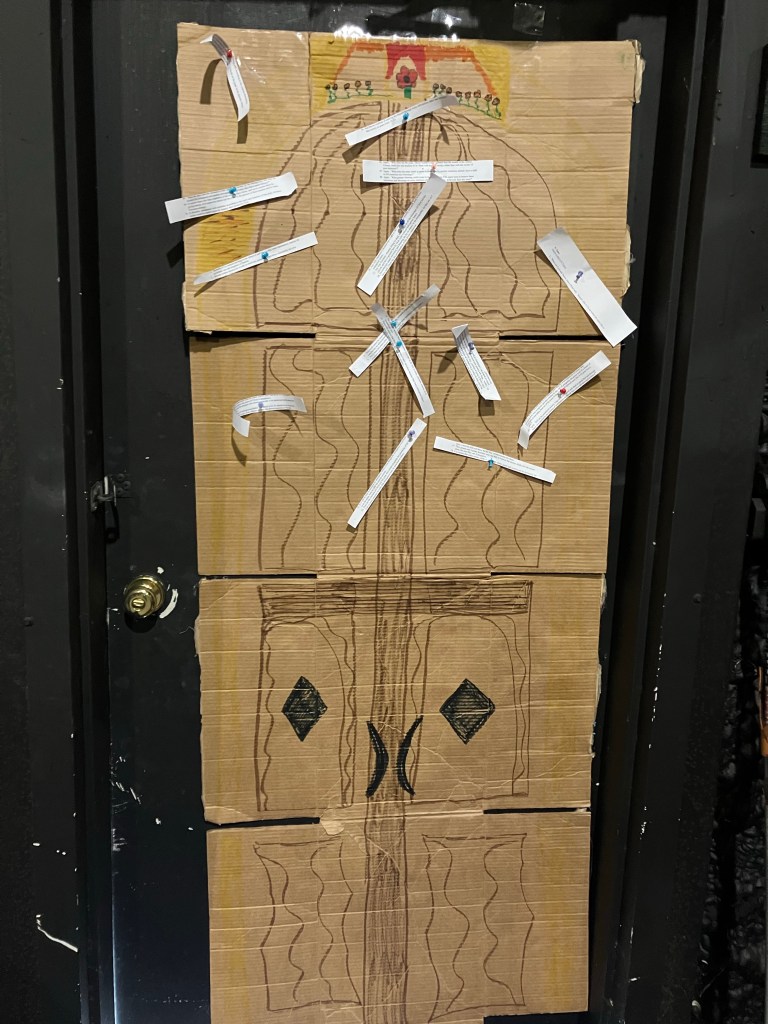
- Make-shift wooden board or cardboard resembling a door.
- Nails, pushpins, or thumbtacks
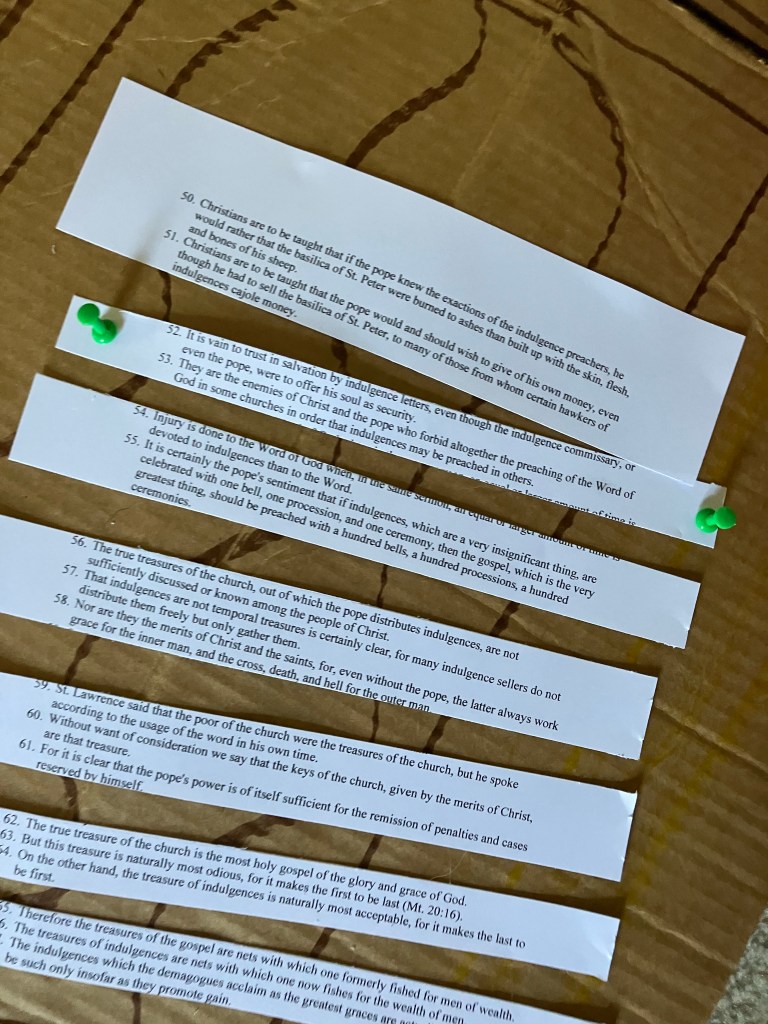
- Separate slips of paper with each of the 95 Theses Click Here for a full list of the 95 Theses.
- Gummy worms
- Handwriting materials (blank sheets, pens, pencils)
- Hymnals
Introduction and Historical Context (15 minutes)
- Begin by engaging students with a question: “Have you heard of Martin Luther and the Reformation?” Allow for responses.
- Provide a concise overview of Martin Luther and the Reformation. Emphasize Luther’s 95 Theses, which he famously nailed to the Castle Church’s door in Wittenberg on October 31, 1517. Explain that this act was a protest against the Roman Catholic Church’s sale of indulgences and marked the beginning of a transformative movement in Christianity and Europe.
- Discuss key principles of the Reformation, such as salvation by faith alone (sola fide) and the authority of Scripture alone (sola scriptura). Mention how the Reformation made the Bible more accessible by translating it into other languages.
- Explain the impact of Luther’s teachings on other reformers and the spread of Protestantism across Europe.
- Mention the profound cultural, social, and political effects of the Reformation, including its contribution to modern democracy and the diversification of Christian traditions.
- Show a brief, 5-minute video about Martin Luther and the Reformation for visual reinforcement. Link to Video
Thesis Selection and Scripture Copy Race Introduction (20 minutes)
- Transition into an interactive activity related to Martin Luther’s 95 Theses.
- Introduce the makeshift “wooden door”, nails (or thumbtacks) and slips of paper with each of the 95 Theses. Click Here for a full list of the 95 Theses.
- Instruct students to select a slip of paper with a different Theses and explain that this represents their symbolic “posting” of a Thesis on the door.
- Allow students to nail their chosen Thesis to the wooden board, simulating Martin Luther’s historic action.
- Encourage students to contemplate the significance of their chosen Thesis and address any questions or concerns they may have.


Scripture Copy Race (10 minutes)
- Explain the Scripture Copy Race activity, in which teams will hand-copy selected passages of Scripture that played a crucial role during the Protestant Reformation. These passages include Romans 1:17, Romans 3:28, Romans 5:1, Ephesians 2:8-9, 1 Timothy 2:5, and 2 Timothy 3:16-17.
Diet of Worms Snack Break

Enjoy a Diet of Worms (gummy worms) and explain that The Diet of Worms was a formal assembly called by the Holy Roman Emperor Charles V to address theological issues raised by Martin Luther. Luther defended his writings and refused to recant unless convinced by Scripture or clear reason. The diet declared Luther a heretic and outlawed him, but this did not stop the spread of his ideas or the growth of the Reformation. The Diet of Worms solidified Luther’s break from the Catholic Church and the development of Protestantism.
Session 2 (10:45am – 11:30am): The Role of Hymnals in the Reformation and Psalm 46
Materials for Session 2:
- Hymnals
- A Bible
The Role of Hymnals in the Reformation (10 minutes)
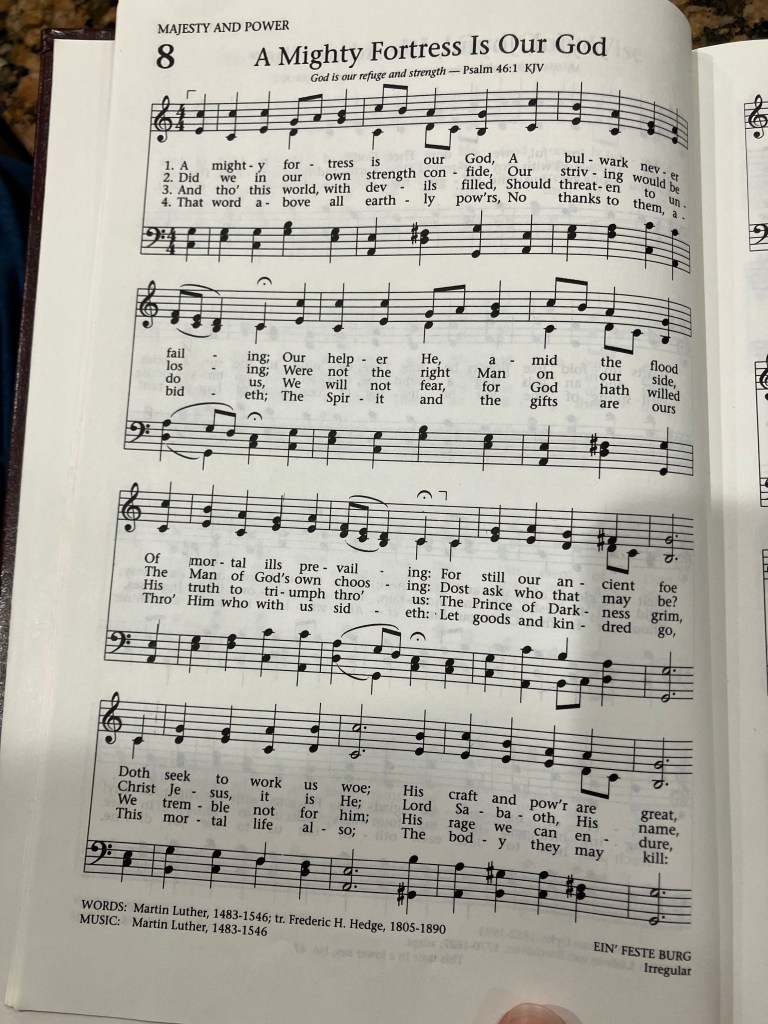
- Begin the second session by introducing hymns and discussing their importance during the Reformation. Discuss Martin Luther, the prolific hymn writer and composer of “A Mighty Fortress is Our God”, inspired by Psalm 46. There is an excellent video, with the historical story of this particular hymn, produced by Grace101. It’s not available for playback on this blog. But I was able to contact the organization for a free download of the story which I played for the students. Click here for a link to the YouTube video.
- Lead the students in an enthusiastic singing of “A Mighty Fortress Is Our God,” often referred to as the “Battle Hymn of the Reformation.” Highlight its historical significance and relevance to the Reformation.
Teaching Psalm 46 (15 minutes)
- Explore Psalm 46, explaining its significance both within its historical context and in Martin Luther’s life. Luther used this psalm as the basis for his famous hymn “A Mighty Fortress Is Our God.”
- Encourage students to reflect on the theme of God’s power and protection, which is central to both Psalm 46 and the hymn.
Conclusion (5 minutes)
- Summarize the key points of the lesson, highlighting the significance of Martin Luther’s actions, the role of hymnals in the Reformation, the effort required to preserve Scripture, doctrinal differences, and the inspiration found in Psalm 46.
Extension Activities and Final Thoughts
Extension Activities:
- Encourage students to discuss and explore the theological significance of the hymns they sang and the Scripture passages they copied.
- Facilitate a conversation about the enduring impact of the Reformation on Christian beliefs and practices today.
I hope you enjoyed this lesson. I’d love to give a big thanks to Expository Parenting who inspired me with their blog post on How to Throw a Protestingly Good Reformation Day Party — Expository Parenting Ministries. Check them out for more ideas!
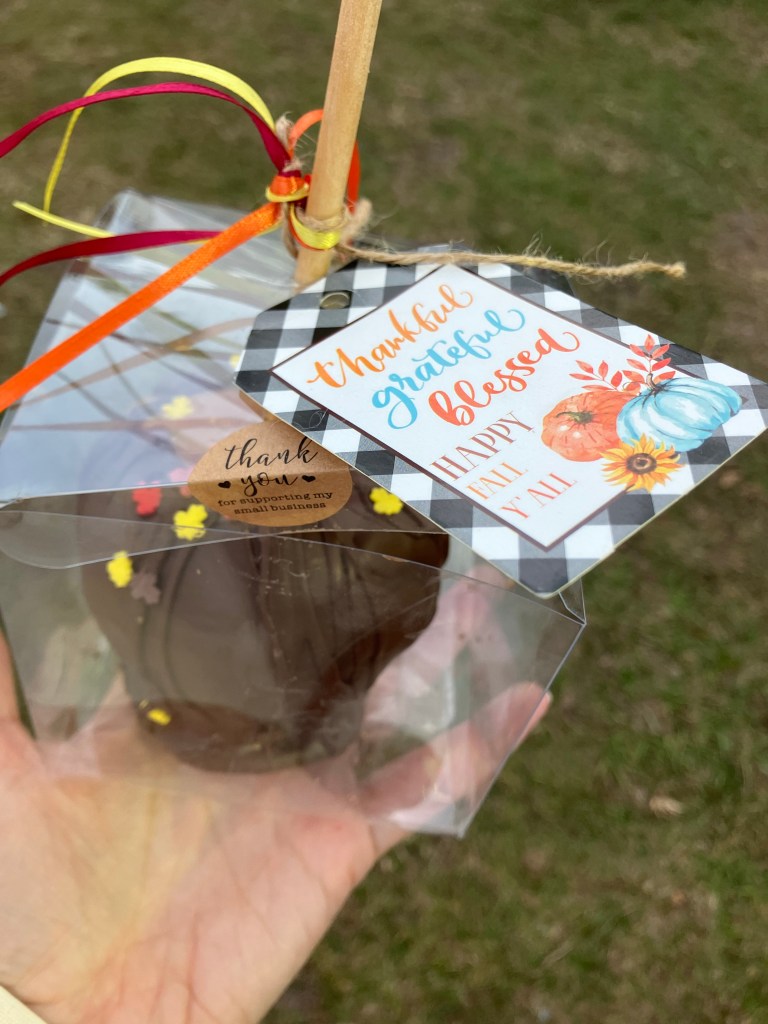
Fall Festival Mini Gallery




 Vintage Virtues
Leave a comment